
What Makes Wildfire Smoke So Dangerous Indoors
When people hear “smoke”, they usually imagine something visible, like haze or soot, or maybe that burnt smell in the air. The real issue is what you can’t see. Wildfire smoke is packed with PM2.5, particles that measure 2.5 microns or smaller, roughly 30 times thinner than a human hair (U.S. Environmental Protection Agency [EPA], 2023). That size changes everything. These particles don’t fall out of the air quickly like dust. They stay suspended, move easily, and slip into spaces you’d assume are protected. And wildfire smoke isn’t just burned wood. Once fires move into developed areas, they start consuming insulation, plastics, wiring, and roofing materials, turning the smoke into a mix of chemicals and fine particles that are far more complex and toxic than a typical campfire plume (California Air Resources Board [CARB], n.d.).The health impact builds quietly over time.
Because these particles are so small, they don’t just irritate your throat; they go much deeper. PM2.5 can reach the lower lungs and even enter the bloodstream, which is why exposure is tied to both respiratory and cardiovascular problems (World Health Organization [WHO], 2021). Research shows wildfire smoke exposure is associated with increased hospitalizations for cardiopulmonary conditions, especially among older adults and people with pre-existing health issues (WHO, 2021; EPA, 2023). What makes indoor exposure tricky is that it is not always obvious. You are not standing in visible smoke, but you are still breathing it in, just at lower levels over a longer period.How Smoke Enters and Spreads Inside Homes
Smoke doesn’t need an open window to get inside; it works its way through the small, everyday gaps most homes already have. Roof vents are one of the biggest entry points, especially during wind-driven wildfire events, allowing smoke to move straight into attic spaces. From there, it can drift down through ceiling gaps, recessed lighting, or ductwork.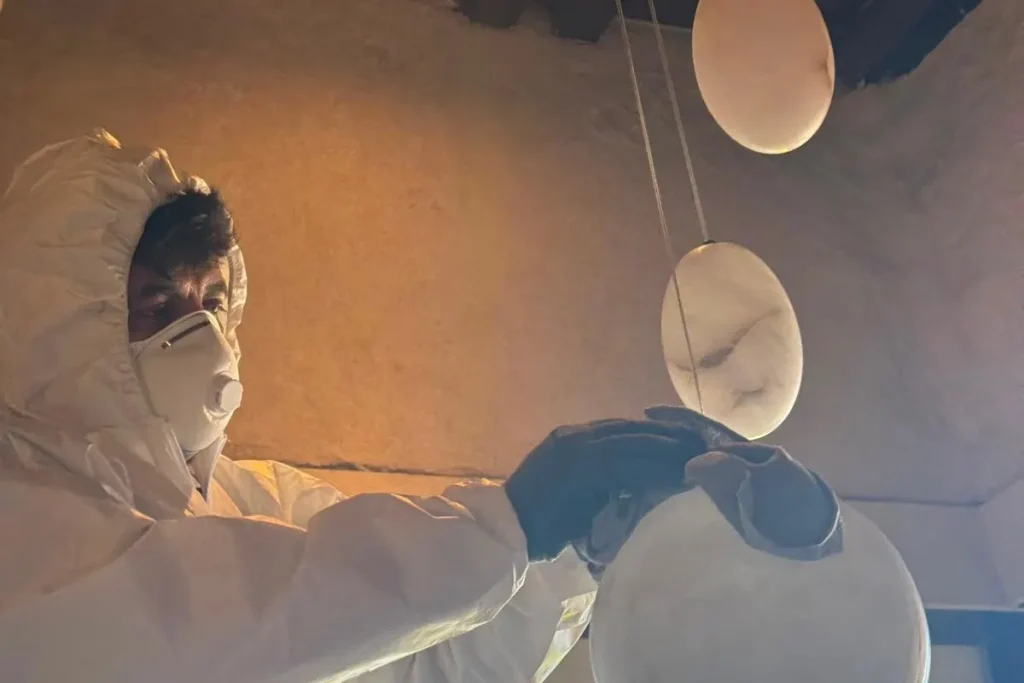
Secondary Smoke Contamination
Once smoke gets in, the bigger issue is what gets left behind. This is called secondary smoke contamination: a thin layer of residue made up of fine particles and chemical compounds that settle onto surfaces throughout the home. That residue doesn’t just sit there harmlessly. Over time, that residue can keep re-entering the air when things are moved around, cleaned, or when airflow picks it up again. Soft items like carpets and upholstery tend to trap the most, but smoke doesn’t really stay limited to what you can see. It also settles into hidden spaces like wall cavities and HVAC systems, where it quietly lingers. The challenge is that this type of contamination isn’t always visible or easy to detect. A home might look clean and even smell normal while still holding onto smoke-related pollutants. That is why the problem gets underestimated and why proper cleanup can be more involved than people expect.The Real Financial Costs of Smoke Damage
The first wave of costs usually hits within days of a wildfire. Even if a home hasn’t burnt, smoke can make it uncomfortable or unsafe to stay in. Homeowners start with emergency smoke odor clean up just to make the space livable again: wiping surfaces, running portable air scrubbers, and replacing HVAC filters multiple times in a short span. Professional cleaning crews may be brought in early, especially if there’s visible residue or a strong odor, and that alone can run into the hundreds or thousands depending on the size of the home and level of exposure.Long-Term Structural Damage Costs
The more expensive problems tend to show up later. Smoke doesn’t just stay on the surface – it works its way into materials. Drywall can absorb fine particles and odors, insulation can trap contaminants deep within wall cavities, and exposed wood framing can hold onto that smoky residue for months. At that point, basic cleaning isn’t enough. Restoring indoor air quality may require removing and replacing sections of drywall or insulation, sealing wood surfaces, and deep-cleaning or even replacing parts of the HVAC system. Restoration industry estimates suggest that moderate smoke remediation can cost several thousand dollars, while more extensive cases – where materials need to be removed – can climb well beyond $20,000 depending on the home’s size and contamination level (Institute of Inspection Cleaning and Restoration Certification [IICRC], n.d.). It’s not a single fix; it’s a layered process, and each step adds to the total.Damage to Interiors, Furniture, and Personal Belongings
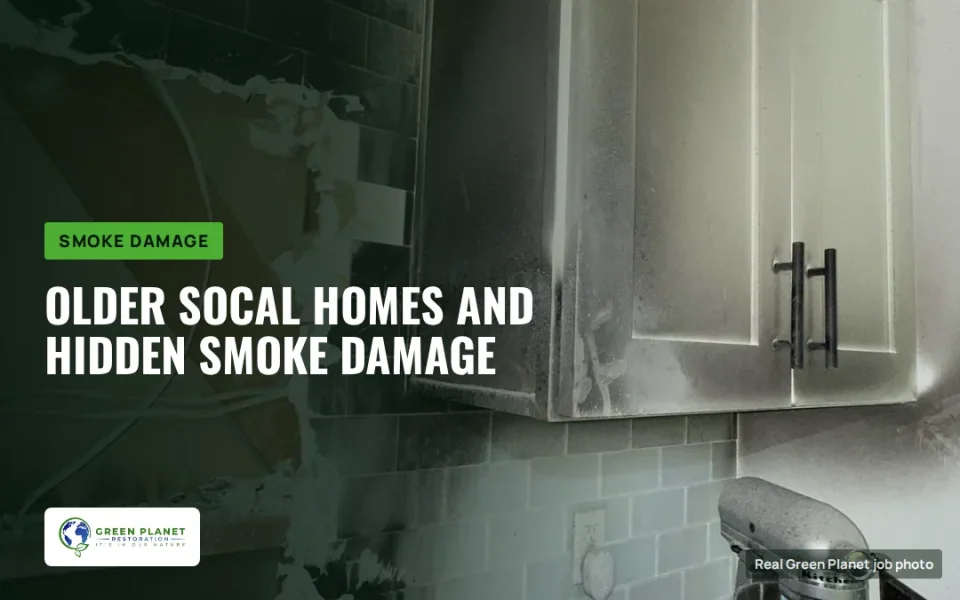
Soot particles settle onto walls, ceilings, and hard surfaces, creating subtle staining that regular cleaning doesn’t fully remove. You might wipe things down and still notice a dull, grayish cast or streaking in certain light. Odor is usually the bigger issue. Smoke gets absorbed into everyday materials – paint, wood finishes, and even cabinet interiors. That lingering smell is the first sign that smoke has gone deeper than it looks. The real trouble starts with porous materials. Upholstered furniture, mattresses, and carpets act like sponges for smoke particles. Once those particles settle in, they’re hard to pull out completely, even with professional cleaning. You might improve the smell, but not completely remove it. This kind of damage isn’t always visible, but it affects how things function and how long they last.When Replacement Becomes Necessary
At a certain point, homeowners have to decide whether cleaning is worth it. For lightly affected items, professional cleaning can restore appearance and reduce odor. But when smoke has penetrated deeply, the cost of repeated treatments can come close to, or exceed, the cost of replacement. Carpets and heavily upholstered furniture are usually the tipping point. If odor persists after thorough cleaning, replacement tends to be the more practical option. The same goes for lower-cost electronics or items where internal contamination is likely. It is not an easy decision, but in many cases, replacement is important for finally getting rid of contamination that cleaning can’t fully solve.Indoor Air Quality and Health Costs
When wildfire smoke gets indoors, the exposure becomes less obvious – but not less harmful. Fine particles (PM2.5) are small enough to bypass the body’s usual defenses, settling deep in the lungs and, in some cases, entering the bloodstream. In the short term, that shows up as irritation – burning eyes, sore throat, coughing, or headaches. For people with asthma or allergies, even a few days of indoor exposure can trigger flare-ups that take weeks to settle. Longer-term exposure is where the concern grows. Research from the U.S. Environmental Protection Agency (EPA) and the World Health Organization (WHO) links PM2.5 to reduced lung function and increased risk of cardiovascular issues, particularly with repeated exposure during wildfire seasons (EPA, 2023; WHO, 2021). What makes indoor exposure tricky is duration and lower levels over more time.Hidden Healthcare Costs
The health costs build slowly, not all at once. It often starts with something small, like persistent coughing, tightness in the chest, or maybe a clinic visit just to be safe. From there, it can turn into prescriptions like inhalers or anti-inflammatory meds, and sometimes antibiotics if things get worse. According to Efraim Haim, who was recently interviewed by ABC7 Los Angeles News Channel, taking these proactive steps can help minimize smoke infiltration. As wildfires rage, poor air quality becomes a pressing concern. Here are Top Tips for Protecting Your Home and Health During and After Wildfires. Also watch the interview here: What people do not always factor in is everything around that. Missed work, lower productivity, and just feeling off for days at a time. The CDC has also noted that wildfire smoke exposure is tied to more outpatient visits and higher medication use, even at moderate exposure levels (CDC, 2022). Individually, these costs may seem manageable. But over the course of a wildfire season, or repeated events, they become part of the broader, mostly overlooked cost of indoor smoke exposure.Smoke Damage Restoration: What It Actually Involves
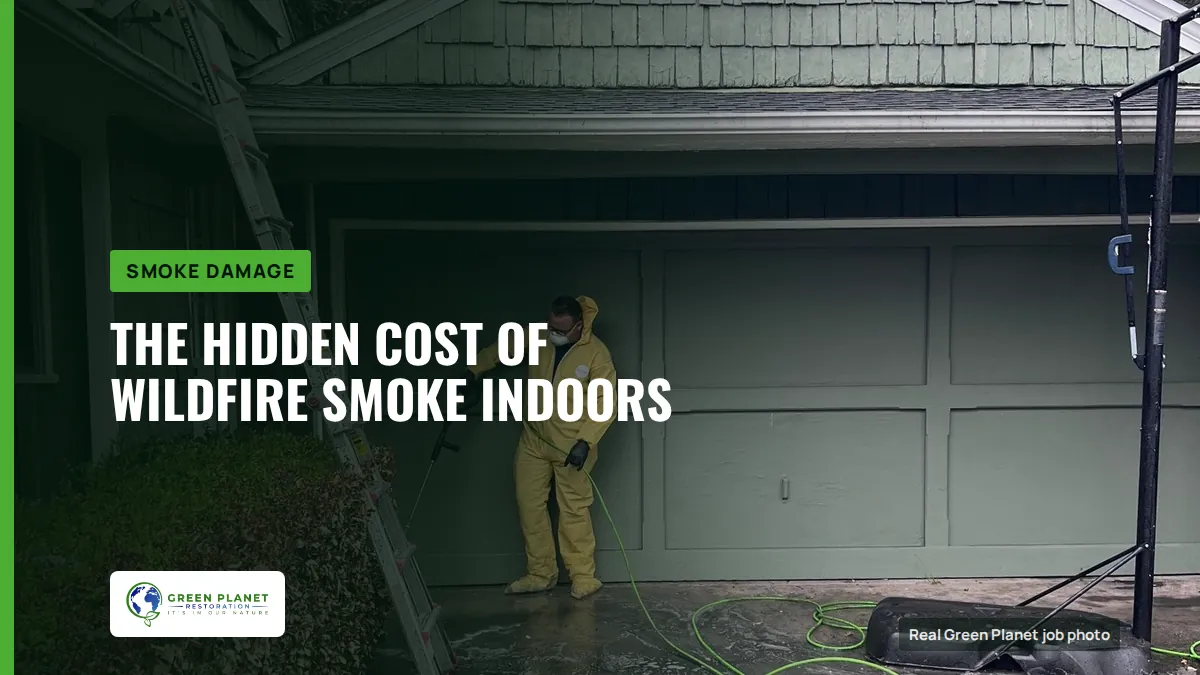
Wildfires like the Sandy Fire Simi Valley have devastated many acres of forest land across Southern California in the past decade. Homes have been exposed not only to direct fire damage but also to lingering smoke contamination that can travel far beyond the actual burn zone. Even properties that appear untouched on the surface may still contain soot residue, airborne toxins, and persistent smoke odors trapped inside walls, insulation, HVAC systems, carpets, and furniture. These contaminants can affect indoor air quality, damage surfaces over time, and make a property uncomfortable or unsafe to occupy without proper cleanup. Oak Park Smoke damage restoration is basically the process of bringing an Oak Park home back to a safe, livable condition after wildfire smoke exposure. These services remove fine particles, neutralize odors, and address contamination that is not always visible. In most cases, it involves a mix of deep cleaning, air treatment, and sometimes partial material removal, depending on how far smoke has spread through the home.Core Techniques
There is not a single method that fixes smoke damage. Damage restoration companies like the Green Planet Restoration of Oak Park usually combine several approaches depending on severity.- Air scrubbers are usually the first thing brought into a smoke-affected home. They run continuously during cleanup, pulling indoor air through industrial-grade filters to reduce the concentration of fine particles that hang around after a wildfire. It’s less about quick fixes and more about steadily bringing the air back to a breathable state.
- HEPA filtration is the next layer. These filters are designed to capture extremely small particles like PM2.5 – far smaller than what standard household filters can handle. You’ll see them used in portable air units or built into HVAC systems during remediation, mainly to keep indoor air from getting re-contaminated while cleaning is still underway.
- Thermal fogging for odor removal is applied in the next phase. Instead of just masking smells, it releases a fine mist that can penetrate deeper into materials like upholstery, wood, and drywall. That’s important because smoke odor rarely sits only on the surface – it tends to work its way into anything porous.
- In more stubborn cases, ozone treatment may be used, but it is handled carefully. It can react with odor-causing compounds and reduce lingering smells, but it’s not something used casually. Spaces need to be completely unoccupied during treatment because of the potential health risks at high concentrations.
How Much Does Smoke Remediation Cost?
Costs vary a lot depending on how far the smoke has spread. When it’s mostly surface-level, cleanup, filtration, and deodorizing usually land somewhere around $2,000 to $5,000. Once smoke reaches HVAC systems or deeper materials, the range typically moves into $5,000 to $15,000. In more severe situations – where insulation, drywall, or structural components are affected – costs can go well beyond $20,000, especially in larger homes.Is Wildfire Smoke Dangerous Indoors?
Yes. Once smoke gets inside, those fine PM2.5 particles do not just disappear; they hang in the air and keep moving through the house if the ventilation system is not filtering them well. The EPA points out that during wildfire events, indoor levels can stay high and, in some cases, get close to outdoor levels when filtration is limited (EPA, 2023). So even if the outside air looks better, indoor exposure can continue quietly in the background. That’s what makes it worth paying attention to, not intensity, but duration.Can Smoke Damage Furniture and Walls?
It can, and it usually does in some form. Walls and furniture don’t just get dirty from smoke; they absorb it. Paint, wood finishes, and coatings can hold onto odor and residue long after the visible layer is gone. Soft furnishings are even more vulnerable. Carpets, couches and mattresses trap particles deep in their fibers, which is why smells come back even after cleaning. In heavier exposure cases, materials can start to break down gradually if smoke has been sitting for a while without treatment.Does Insurance Cover Smoke Damage?
Most wildfire-related smoke damage is covered under standard homeowners insurance policies, but it is not always straightforward. Coverage can depend on how the damage is documented and whether it is clearly linked to a declared wildfire event. The challenge is that smoke damage isn’t always visible. Because of that, insurers require detailed proof, inspection reports, photos, and sometimes even air quality testing before approving full remediation costs. Without that level of documentation, damage restoration claims can be reduced or only partially covered.How Long Does Smoke Contamination Last?
Smoke doesn’t just clear out when the air outside improves. In many homes, particles stick around for weeks – sometimes longer – especially once they’ve settled into carpets, furniture, insulation, or ductwork. You might get some improvement with ventilation or filters, but if the smoke has worked its way deeper into materials, it usually doesn’t fully go away without proper remediation. In cases where no remediation is done, smoke residues can remain embedded for years. Over time, they may continue to release odors or particles back into the indoor air, particularly with changes in temperature or humidity.Prevention and Cost Reduction Strategies
Small gaps around windows, doors, attic openings, and utility lines are usually enough for fine smoke particles to slip through during wildfire conditions. Simple sealing with weatherstripping or caulk doesn’t feel like much, but in heavy smoke events, it genuinely helps reduce how much gets inside. Inside the home, filtration becomes the next line of defense. Portable HEPA air purifiers are one of the most effective tools homeowners can use during smoke events. The EPA notes that when these units are properly sized and run continuously, they can cut indoor PM2.5 levels by around 50% or more (U.S. Environmental Protection Agency [EPA], 2023). That difference is noticeable, especially over several days of smoke exposure. HVAC systems matter just as much. If the system supports it, upgrading to MERV 13 or higher filters can significantly reduce how much fine particulate gets circulated through the house. Research from California air quality agencies shows that homes using higher-efficiency filtration consistently maintain lower indoor particle levels during wildfire events compared to homes without it (California Air Resources Board [CARB], n.d.).Smoke Damage Doesn’t Go Away on Its Own
Smoke damage is easy to underestimate because it doesn’t look like traditional disaster damage. No burned walls, no obvious destruction, just a faint smell, a bit of haze, and the assumption that it will eventually clear out. But in reality, the particles behind that smell don’t just disappear. They settle into fabrics, move through ventilation systems, and linger in places you can’t immediately see. The longer smoke stays inside, the deeper it spreads and the more difficult and expensive it becomes to remove. Acting early, especially with basic filtration and airflow control, can significantly reduce both the health risks and the cleanup burden later on. At a practical level, a mix of simple prevention and timely professional help is usually what keeps smoke events from turning into long-term damage problems. _______________________References
Centers for Disease Control and Prevention. (2022). Wildfire smoke and health. U.S. Department of Health & Human Services. https://www.cdc.gov/disasters/wildfires/smoke.html California Air Resources Board. (n.d.). Wildfire smoke and health effects. State of California. https://ww2.arb.ca.gov/resources/wildfire-smoke Institute of Inspection Cleaning and Restoration Certification. (n.d.). Smoke and odor removal guidelines. IICRC. https://www.iicrc.org U.S. Environmental Protection Agency. (2023). Wildfire smoke: A guide for public health officials. EPA. https://www.epa.gov/wildfire-smoke-guide U.S. Environmental Protection Agency. (n.d.). Wildfire smoke and your patients’ health: Why wildfire smoke is a health concern. EPA. https://www.epa.gov/wildfire-smoke-course/why-wildfire-smoke-health-concernProperty damage right now?
We find the damage, dry or clean the structure and repair it. On site in about 45 minutes, 24/7.

Written by the Green Planet Restoration team
Our articles are written and reviewed by the crews who handle water, fire and mold damage every day across Southern California, Seattle, Miami-Dade and Las Vegas. About us