
Why Blood Spatter Analysis Matters in Criminal Investigations
It sounds clinical, but it’s really just the study of how blood behaves when it leaves the body, where it lands, how it pools or streaks or sprays, and what that tells someone about what happened in the room. Investigators have relied on bloodstain pattern analysis for decades because bloodstain patterns can provide valuable forensic evidence when interpreted alongside witness statements, physical evidence, and other investigative findings. A round drop with smooth edges is different than a long streak across the floor. A fine mist on the wall behaves nothing like blood that’s pooled from someone lying still. Trained analysts can examine these patterns to help reconstruct where people were positioned, the direction and nature of the force involved, and other details that may assist the broader forensic investigation. This is part of why the investigation phase takes as long as it does. It’s not bureaucracy for the sake of it. Detectives are essentially reading a room the way the rest of us read a sentence, except every stain is a word and they can’t afford to misread a single one.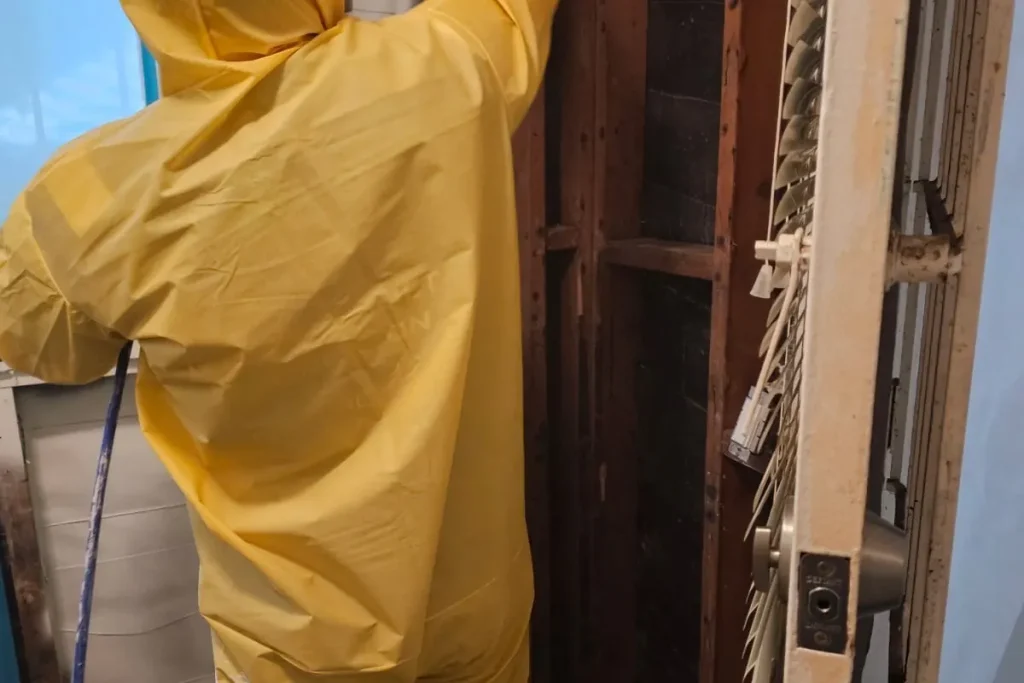
The Science That Backs It Up
What a lot of people don’t realize is how much science backs this up. It’s not just an investigator eyeballing a wall and making a guess. There’s physics involved; how blood moves depends on velocity, angle, gravity, and the surface it lands on. Analysts generally classify bloodstains into several categories, including passive stains, transfer stains, and impact patterns. Examining these different bloodstain patterns helps investigators understand how events unfolded while preserving evidence for the investigation. Sprays like luminol can pull up blood that’s been scrubbed, painted over, or sitting untouched for years. Some of the newer detection methods can pick up amounts so small you’d never see them with the naked eye. So even if someone tried to clean a crime scene themselves before police arrived, odds are good that evidence is still there, just waiting for the right test.What Happens After Investigators Leave
Once investigators release the property back to you, the hard part is not actually over. It is just starting. Blood is not something you handle with bleach and paper towels. Blood and other bodily fluids may contain bloodborne pathogens or other infectious microorganisms like MRSA. That is why proper containment, disinfection, and disposal procedures are mandatory during biohazard cleanup. California has strict regulations governing the handling, transportation, and disposal of biohazardous waste. Hiring trained biohazard professionals helps make certain that contaminated materials are handled safely and in accordance with applicable requirements.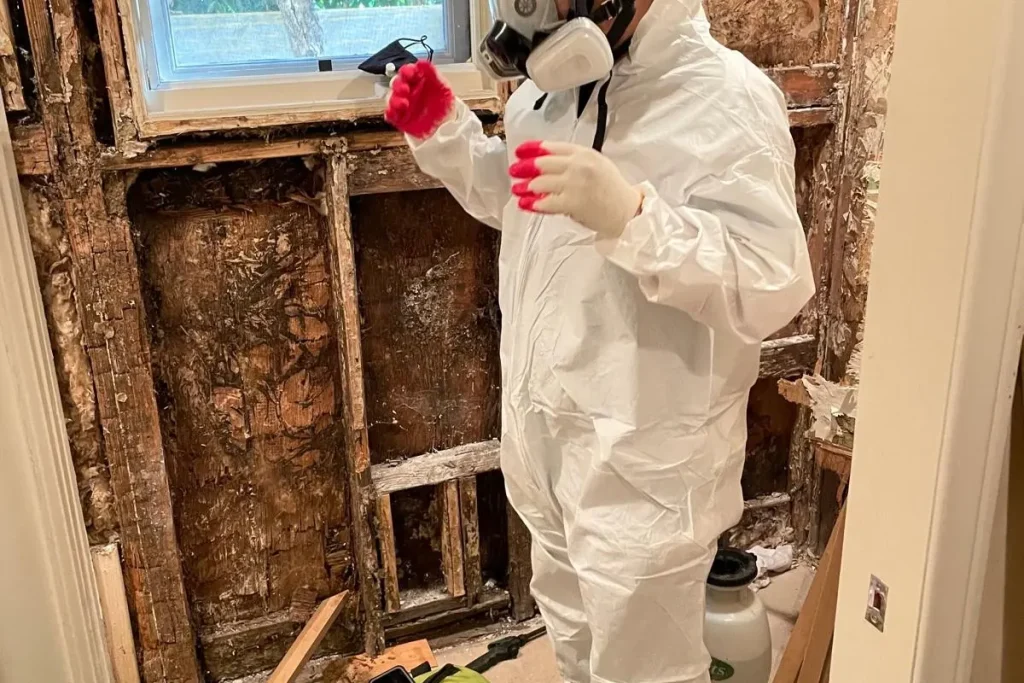
How We Help When the Investigation Is Done
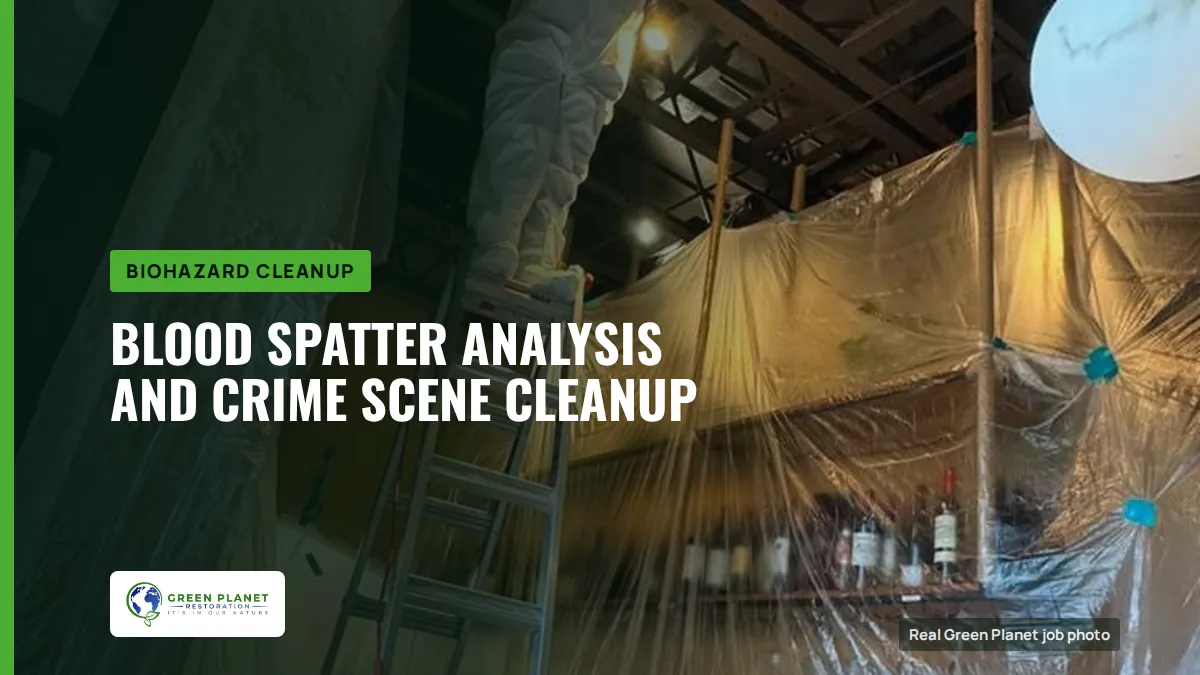
Green Planet Restoration of Santa Clarita focuses on biohazard and crime scene cleanup across California. This isn’t something we do once in a while. Our IICRC-trained biohazard technicians regularly perform cleanup and restore for homes, apartments, commercial properties, and other facilities throughout California. We have worked in many difficult situations. We know California’s requirements, and we understand what families and property owners are going through. Most people call us on one of the hardest days of their lives. That is why we work quietly, respectfully, and with care. We also take care of the details people don’t think about. We also help with insurance claims and talk directly to your insurance adjuster. We coordinate with investigators when needed. And we make sure nothing is disturbed before it is cleared. A proper cleanup helps protect the property and prevents future problems. More importantly, it makes the space safe for people to return to. Blood spatter analysis helps investigators better understand how an incident occurred. Once law enforcement releases the property, our job begins. We clean, disinfect, and restore the affected areas so families, property owners, and businesses can safely move forward. If investigators have released your property and professional biohazard cleanup is needed, Green Planet Restoration of Santa Clarita is available 24/7. Whether you need crime scene cleanup Santa Clarita or anywhere else in Southern California, our IICRC-trained biohazard technicians respond quickly, work discreetly, and help restore your property safely.Answers to Common Questions (FAQs)
1. What is blood spatter analysis, and why does it matter before crime scene cleanup?
Blood spatter analysis, also called bloodstain pattern analysis, is a forensic technique used to examine the size, shape, location, and distribution of bloodstains at a crime scene. Investigators use these patterns along with other physical evidence to help reconstruct how an incident occurred. This process can provide valuable information about the sequence of events, points of impact, and movement within the scene. Property owners often wonder why investigators remain on-site for hours or even days. Much of that time is spent carefully documenting evidence before anything is disturbed. Once law enforcement officially releases the property, professional crime scene cleanup can begin.2. When can a restoration company begin cleaning a crime scene?
A restoration company can begin work only after law enforcement or the appropriate investigating agency has officially released the property. Investigators must first complete evidence collection, photography, fingerprint processing, and bloodstain pattern documentation before any cleanup takes place. Entering the scene too early could interfere with an active investigation. Once clearance is given, our IICRC-trained biohazard technicians inspect the affected areas, identify contaminated materials, and develop a cleanup plan. The process includes removing biohazard waste, cleaning and disinfecting surfaces, deodorizing the property, and disposing of hazardous materials according to applicable regulations. Acting quickly after the release helps reduce odors, prevent additional damage, and make the property safe for occupants to return.3. Why shouldn’t homeowners clean blood after a crime scene investigation?
Cleaning blood after a traumatic event involves more than removing visible stains. Blood and other bodily fluids may contain bloodborne pathogens or other infectious microorganisms that are not visible to the naked eye. Household cleaners and disinfectants are not designed to decontaminate biohazard scenes or safely dispose of contaminated materials. Our restoration crew uses EPA-approved cleaning agents, personal protective equipment (PPE), and specialized equipment to clean, disinfect, and remove affected materials. We also inspect hidden areas where blood may have seeped beneath flooring, inside walls, or into porous building materials. Proper cleanup helps reduce health risks, prevents lingering odors, and restores the property to a safe condition after investigators have completed their work.4. How does blood spatter analysis affect the timeline for crime scene cleanup?
Blood spatter analysis can extend the time before cleanup begins because investigators must carefully document every bloodstain that may have evidentiary value. They photograph the scene, record measurements, examine bloodstain patterns, and preserve physical evidence before releasing the property. The length of this process depends on the complexity of the investigation rather than the amount of visible blood. Once the investigation is complete, our IICRC-trained biohazard technicians remove biohazard materials, disinfect affected areas, and the restoration crew restores the property so it can be safely occupied again. Prompt cleanup after release helps property owners begin moving forward sooner.5. Can all blood stains be completely removed after a crime scene?
Many blood stains can be removed successfully, but the outcome depends on the surface, the amount of contamination, and how long the blood has been present. Non-porous materials such as tile, glass, and metal often respond well to professional cleaning and disinfection. Porous materials like drywall, carpeting, insulation, and unfinished wood may absorb blood, making removal impossible without replacing the affected sections. Our restoration specialists inspect each area individually to determine the safest approach. The focus is not only on removing visible stains but also on eliminating hidden contamination, odors, and biohazard risks. The result is a property that has been cleaned, disinfected, and restored using accepted biohazard remediation practices. _________________References
- Centers for Disease Control and Prevention. (2024). Bloodborne infectious diseases: HIV/AIDS, hepatitis B, hepatitis C. https://www.cdc.gov/niosh/topics/bbp/
- Federal Bureau of Investigation. (n.d.). Crime scene investigation. https://www.fbi.gov
- International Association of Bloodstain Pattern Analysts. (n.d.). About bloodstain pattern analysis. https://iabpa.org
- National Institute of Justice. (2009). Crime Scene Investigation: A Guide for Law Enforcement (2nd ed.). U.S. Department of Justice. https://nij.ojp.gov/library/publications/crime-scene-investigation-guide-law-enforcement
- Occupational Safety and Health Administration. (n.d.). Bloodborne Pathogens Standard (29 CFR 1910.1030). U.S. Department of Labor. https://www.osha.gov/bloodborne-pathogens
- Occupational Safety and Health Administration. (n.d.). Bloodborne pathogens and needlestick prevention. U.S. Department of Labor. https://www.osha.gov/bloodborne-pathogens
- California Department of Public Health. (n.d.). Medical waste management program. https://www.cdph.ca.gov/Programs/CEH/DRSEM/Pages/Medical-Waste-Management-Program.aspx
- California Legislative Information. (n.d.). California Medical Waste Management Act (Health and Safety Code, Division 104, Part 14). https://leginfo.legislature.ca.gov
- National Institute of Justice. (2008). The biological evidence preservation handbook: Best practices for evidence handlers. U.S. Department of Justice. https://nij.ojp.gov
- Institute of Inspection Cleaning and Restoration Certification. (n.d.). ANSI/IICRC S540 Standard for Trauma and Crime Scene Cleanup. https://iicrc.org
Disclaimer
This article is provided for general informational and educational purposes only. It is not intended as legal, medical, forensic, or law enforcement advice and should not be relied upon as a substitute for guidance from qualified professionals. Blood spatter analysis, also known as bloodstain pattern analysis, is performed as part of a forensic investigation by qualified personnel. Green Planet Restoration of Santa Clarita does not perform forensic investigations or determine the cause, manner, or circumstances of a crime. Any discussion of investigative procedures is intended to provide general background information only. If you are dealing with an active crime scene, do not enter the property, disturb potential evidence, or begin cleanup until the property has been officially released by the appropriate law enforcement agency. Once the scene has been released, professional biohazard cleanup should be performed in accordance with applicable federal, state, and local regulations. Every situation is different, and cleanup requirements may vary depending on the condition of the property, the type of contamination, and local regulations. If you require assistance after a crime scene has been released, contact a qualified biohazard restoration company for an on-site assessment and appropriate cleanup services.Need a biohazard cleanup crew?
We find the damage, dry or clean the structure and repair it. On site in about 45 minutes, 24/7.

Written by the Green Planet Restoration team
Our articles are written and reviewed by the crews who handle water, fire and mold damage every day across Southern California, Seattle, Miami-Dade and Las Vegas. About us