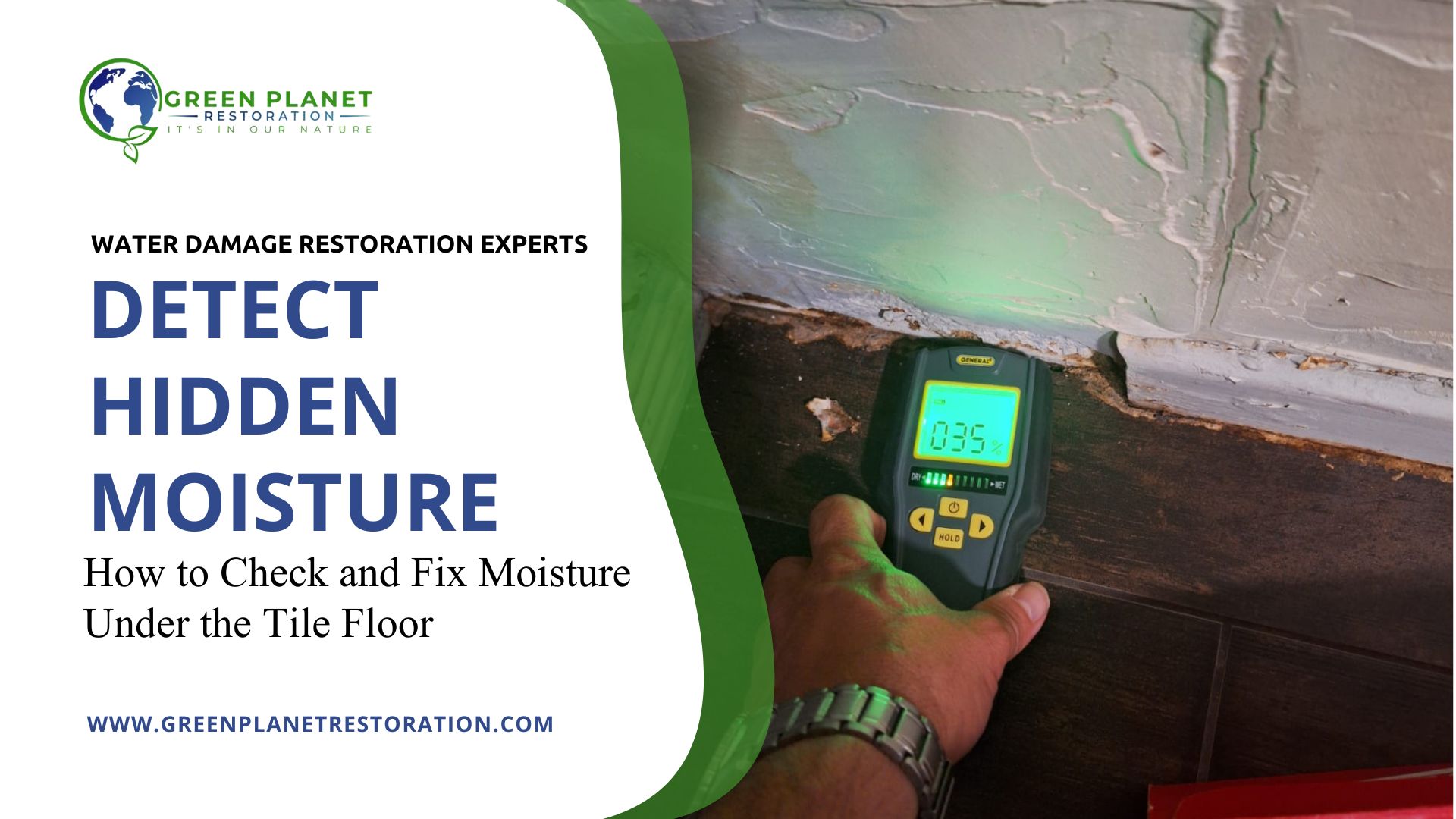
Tiles are an excellent and beautiful choice for walls and floors, but they are not fully safe from moisture for a long time. The moisture under the tile floor or around it can cause damage to the subfloor and weaken adhesives. If you feel a wet floor without any leakage, or if your tiles are coming loose, there might be hidden moisture behind them. So how would you detect hidden moisture? And what methods should be applied to dry it out? Let’s find out!
Signs of Moisture Under or Behind Tiles

Moisture under the tile floor may lead to severe damage if it is ignored. Here are the most common signs of hidden moisture under or behind the tiles.
- Stains appearing around the edges or grout
- A musty or unpleasant odor
- Moisture on the floor without any visible leakage
- An empty sound when you knock gently on the tiles
- Tiles are becoming loose or shifting from their place.
If any of the above signs are prominent, it is wise to have a professional water damage inspection conducted on the premises. Water damage restoration experts conduct thorough inspections using specialized equipment to detect hidden moisture and prevent further damage to your property. Don’t delay addressing moisture issues under or behind tiles, as it can lead to costly repairs and potential health hazards.
How to Find Moisture Under the Tile Floor
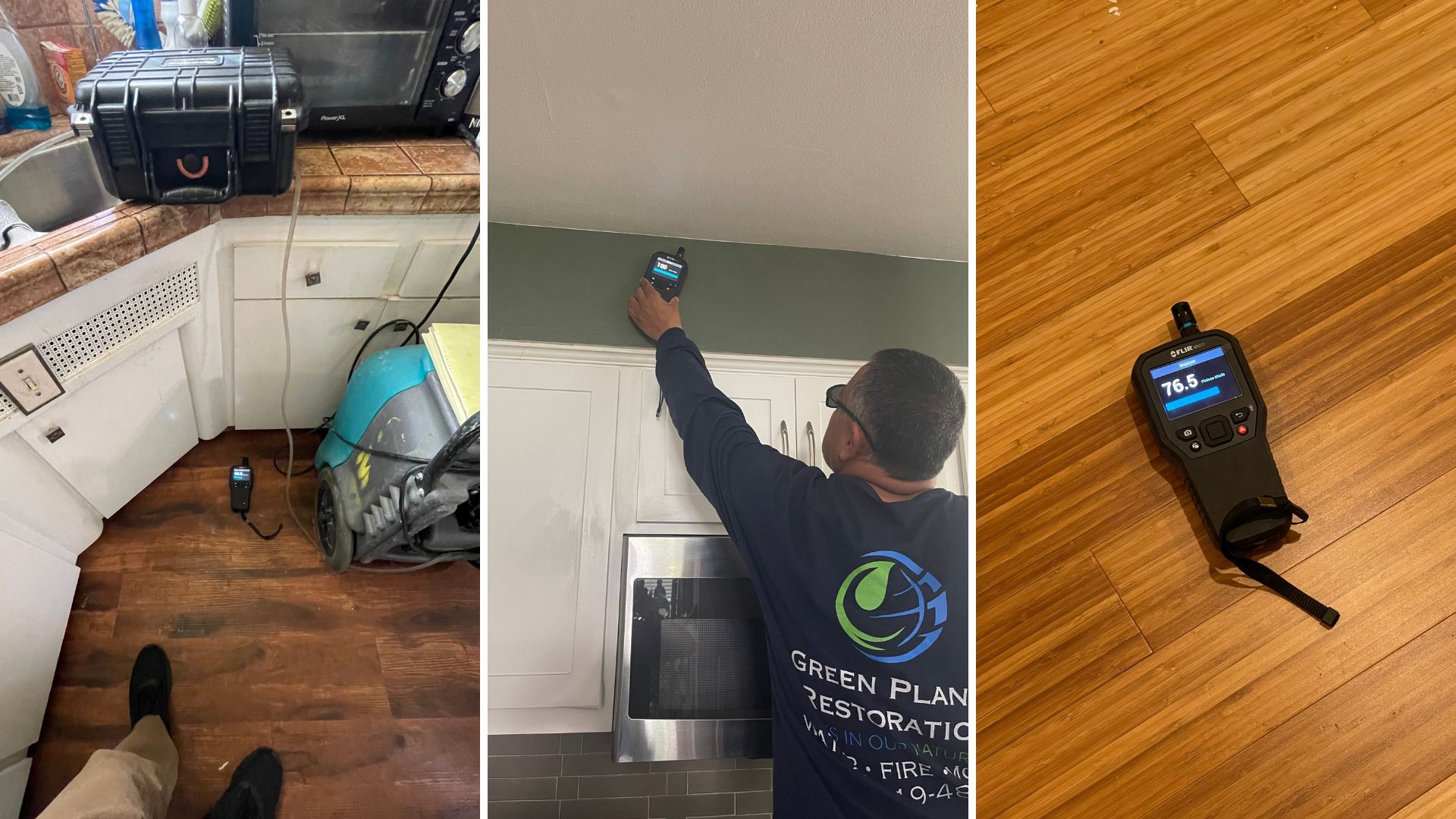
There are several methods applied to detecting hidden moisture. Broadly, they are divided into two categories: non-invasive and invasive. Non-invasive methods involve detecting hidden moisture without penetrating the surface in excess, which might lead to structural repairs later. You might have to poke a hole here and there, but that can be patched up with some plaster if nothing is found under the surface below.
However, invasive methods are a more aggressive approach and may lead to some serious drilling in the surface. We will start with the non-invasive methods as listed below:
1. Visual Check
Look closely at the grout lines, tile edges, and nearby walls. Stains, cracks, or dark patches are usually the first signs of trapped moisture. The problem may be addressed in some cases by paying attention to the grout lines. If water has penetrated through the damaged or old grout, it is possible to remove the grout and leave the layer below to dry. Once the floor is completely dry, the tiles may be re-grouted using new material with a superior resistance to water.
2. Plastic Sheet Test
Place a small plastic sheet on the tile surface and tape it down tightly. Leave it for 24 hours. If you notice water droplets under the plastic sheet. It means moisture is trapped under the floor.
3. Moisture Meter
A moisture meter is the best tool to detect hidden moisture behind or under tile. It gives an accurate and quick reading of how much wetness is under the surface. The normal moisture meter reading is less than 5%, but when it is high, it means there is too much water. The Pin Moisture meter is usually applied here for probing the tile floor.
Read more: Pin vs Pinless Moisture Meters: What’s the Most Accurate Moisture Meter for Walls?
4. Infrared Camera
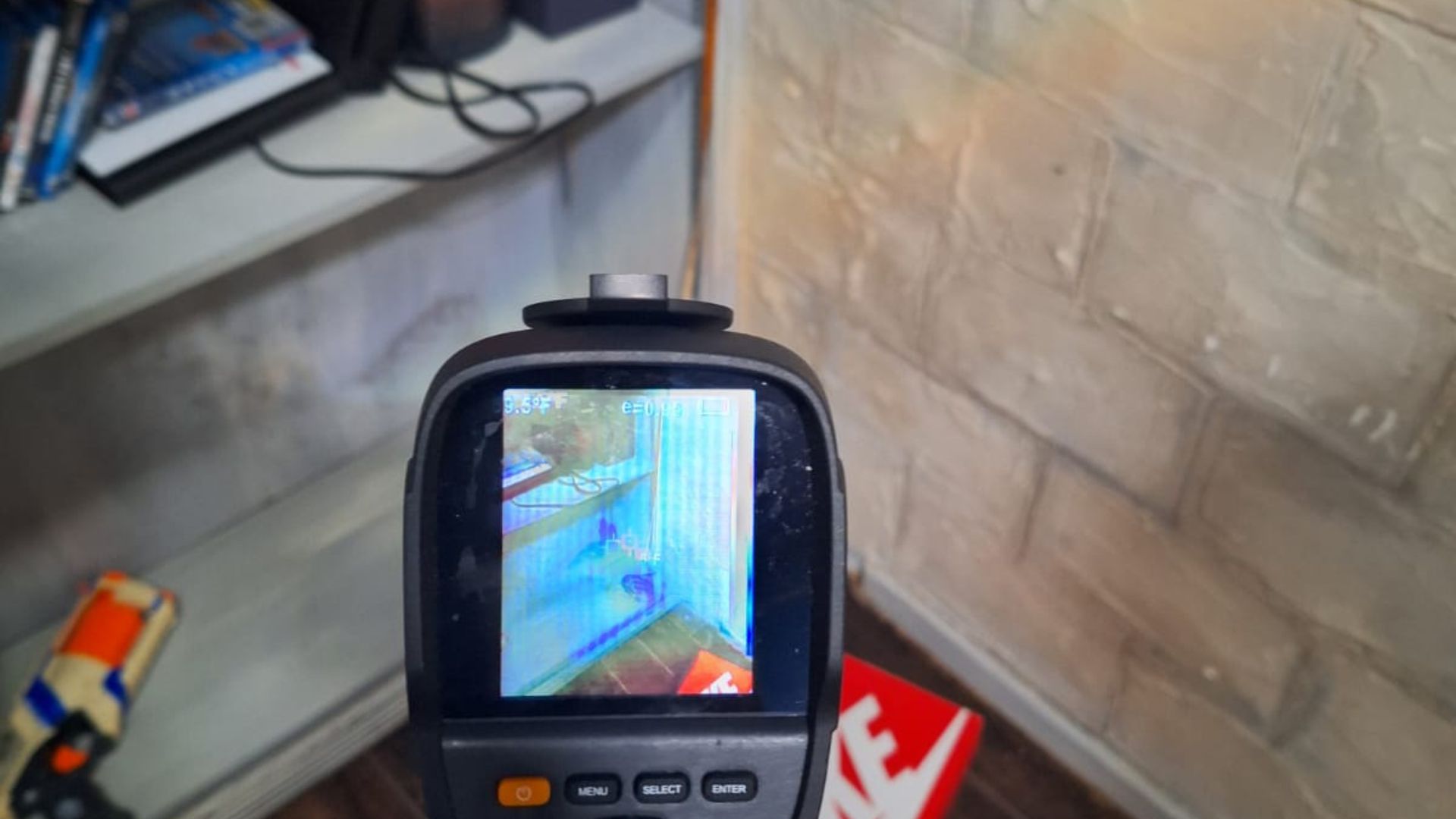
If you want a more accurate picture, an infrared camera gets you a better picture of what’s beneath the surface. Water damage restoration experts use these cameras because they can detect temperature differences on a surface. The camera gives a clear thermal image that shows exactly where the moisture is hiding.
These methods work well for small checks at home. When the problem appears to be serious, the team may suggest drilling some holes.
How to Remove Moisture from Floor Tiles
After detecting hidden moisture, the next step is to remove all traces of the water from the surfaces below. This needs to be done within the 24 to 48 hour window; otherwise, there is a probability of mold growth. Any further delay will also cause structural weaknesses in the tiles. Depending on the quantity of moisture and its effect, there are many different ways to remove it safely.
Using Dehumidifiers
To dry out the moisture under the tile floor, one of the common ways is to use dehumidifiers or fans. It works by extracting extra water from the air. If you use a dehumidifier and a fan, it will help to draw out any hidden water behind tiles. This method works best when the problem is not too severe and can be managed with good air circulation.
- Refrigerant (Compressor) Dehumidifiers: This is the most common type of dehumidifier for general use. They cool air to condense moisture and work best in warmer conditions (above ~65°F / 18°C).
- Desiccant Dehumidifiers: They use a moisture-absorbing material and work well in lower temperatures. Often used in cooler basements or when faster drying is needed.
- LGR (Low Grain Refrigerant) Dehumidifiers: They are used for severe water damage restoration; they are more powerful for continuous operation and very wet conditions.
A refrigerant or desiccant dehumidifier (depending on temperature) is used, paired with air movers or strong axial fans to circulate dry air across the floor surface, helping draw out moisture from under tiles and grout lines.
Learn more about How LGR Dehumidifiers Prevent Secondary Damage
Heat Drying System
For a high level of moisture, our professionals use a heat drying system. These machines are especially designed for professional use to blow warm and dry air beneath the tiles. This heat evaporates the water swiftly and dries the subfloors and tiles. It is useful when simple dehumidifiers and fans are unable to remove water from behind the tiles.
- Direct-Fired Heaters: Burn fuel (propane or natural gas) to directly heat the airstream.
- Indirect-Fired Heaters: Burn fuel to heat a metal exchanger, and air is blown over the hot exchanger.
- Electric Heaters: Use electric elements to heat the air.
- Tile and Floor Mat Drying Systems: These are specialized setups that use flexible mats or hoods connected to air movers and heaters.
- Injectidry Systems: A proprietary system that uses specially designed tools to create a vacuum seal on the tile, pulling dry air directly through the grout and under the tile.
- Heated Air Movers: These are heavy-duty air movers (like centrifugal fans) with built-in heating elements. They deliver a high-volume, focused stream of warm air directly to floor surfaces and edges to drive moisture out.
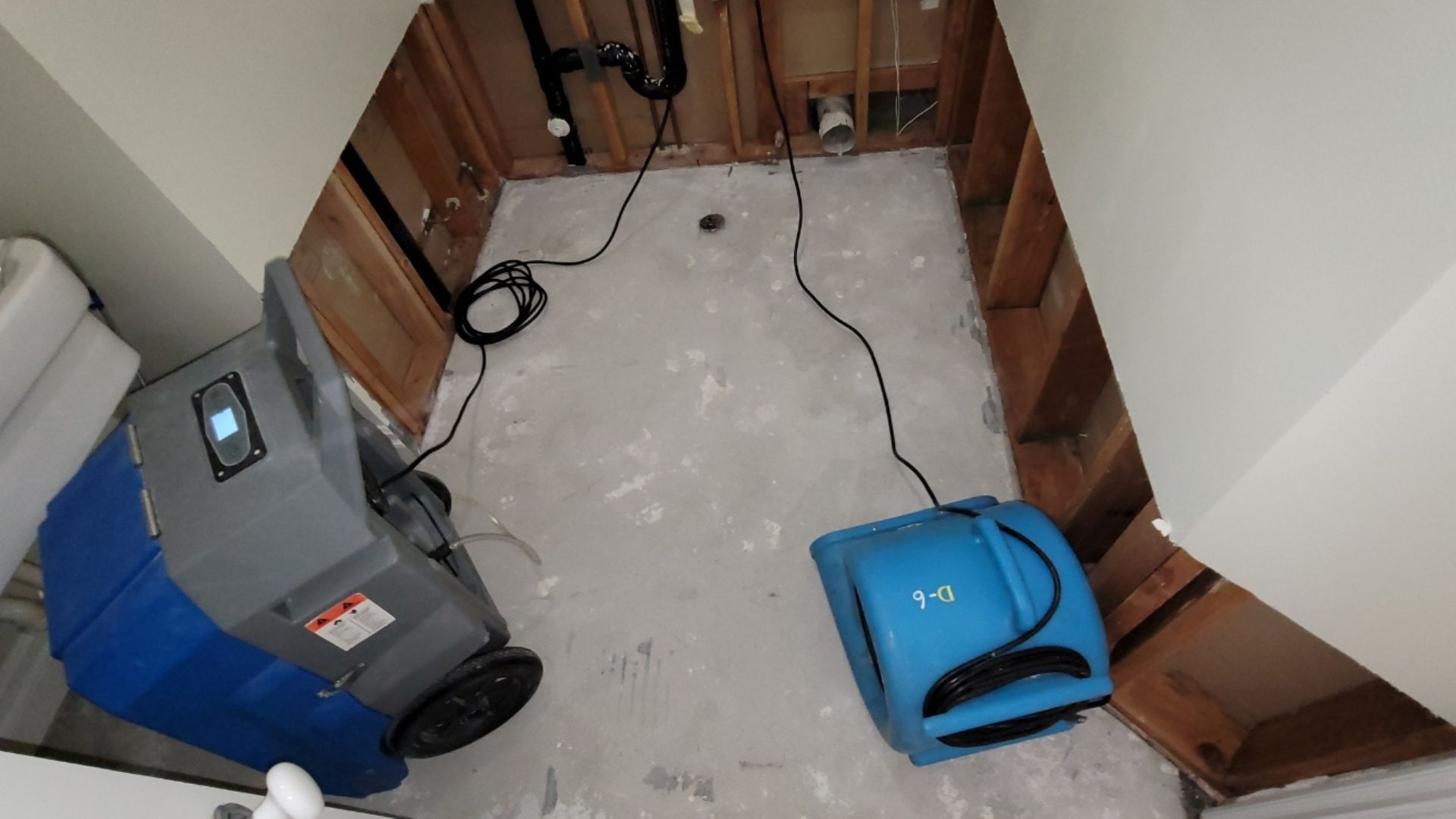
Water damage restoration experts often use an indirect-fired heat drying system paired with specialized floor drying mats or injection systems. This delivers a safe, dry heat to effectively warm up and dry the air under the tiles. Psychrometry in water damage restoration helps monitor the moisture levels, and the professionals are able to confirm the effectiveness of the drying process.
Call in the Professionals Before Hidden Moisture Turns into Structural Damage
Are your tiles feeling damp, loose, or unusually cold with no visible leak in sight? Moisture under the tile floor may lead to severe damage if it is ignored. When you observe significant water damage, mold, or structural issues, contact a professional immediately. Water damage restoration experts, like Green Planet Restoration, detect hidden moisture, repair water damage, and restore your home safely. Be sure to call them at +1 (800) 719-4808 and book an inspection right away. They usually arrive within 45 mins of your call.