
Why Emergency Board Up Is Important
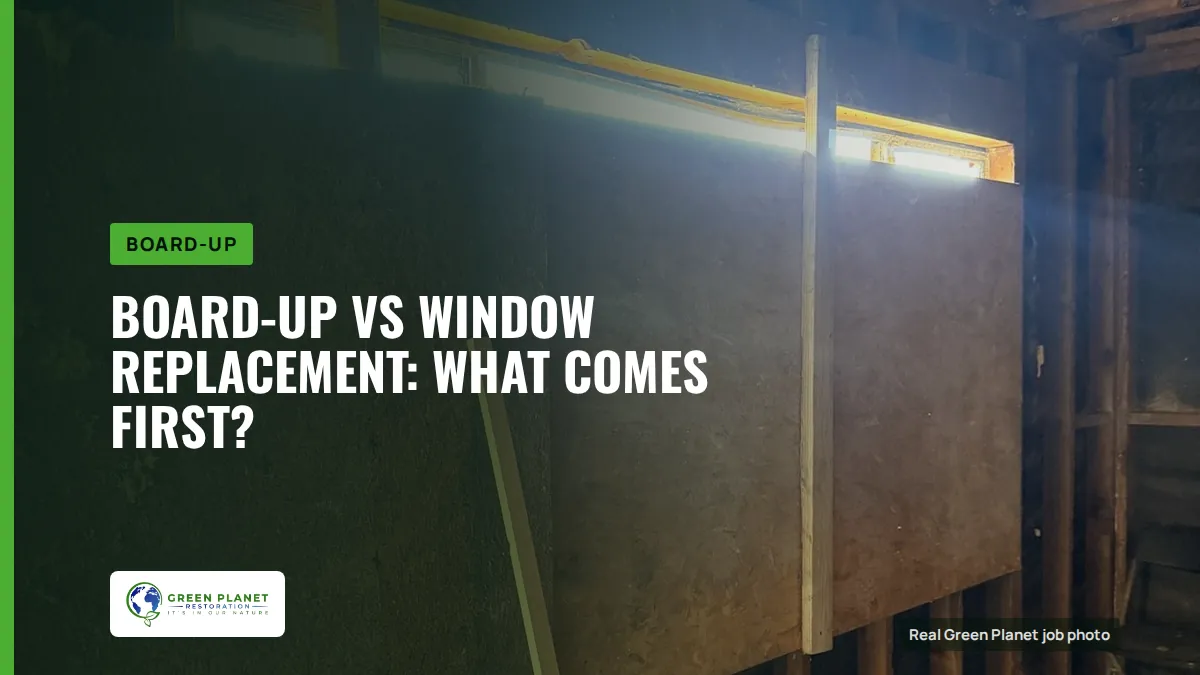
Boarding up is a temporary fix that helps to protect your home immediately after windows are destroyed. In California, weather and environmental hazards can change rapidly. If you leave a broken window open, rain from a storm can get inside, wildfire embers can enter, or debris from an earthquake can cause more damage. Boarding up windows right away prevents:Extra Damage
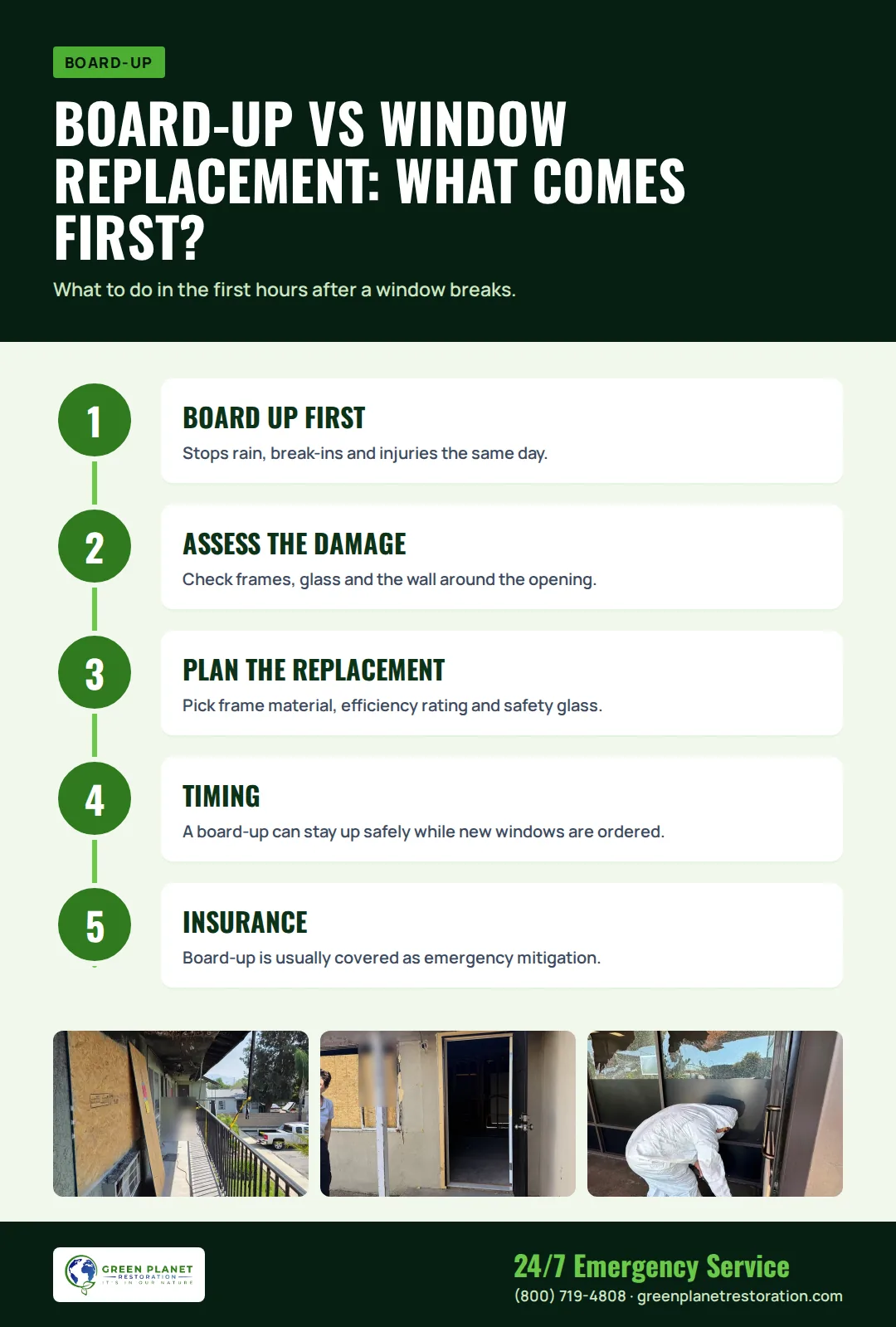
Break-ins and Vandalism
Damaged homes can attract burglars. Securing your windows with boards reduces this risk and gives you peace of mind.Injuries
Broken glass can cut family members, pets, or even emergency responders. To cover openings, professional restoration teams use materials like pressure-treated plywood or robust polycarbonate panels. They know how to fit boards without damaging window walls and window frames. In California, hiring professionals to board up in an emergency is always the safest option. Boarding up also gives you time to plan your next steps. Replacing windows can take time because tempered or fire-resistant glass may need to be ordered, contractor schedules must be arranged, and damage restoration insurance billing claims need to be processed. A quick board up keeps your home safe while you prepare for permanent repair.When to Consider Window Replacement
After your home is secure, window replacement is the permanent solution. New windows restore your home’s safety, energy efficiency, and appearance. California building codes recommend tempered or fire-resistant glass in areas prone to wildfires. These types of windows handle heat, impact, and debris better than regular glass. When picking new windows, think about:Frame Materials
Vinyl, wood, and aluminum frames perform differently depending on your home and local climate. Vinyl works well in coastal humidity, while wood adds a classic look but needs more care.Energy Efficiency
Energy Star-rated windows help keep your home cooler during hot summers and can lower electricity bills.Safety
Laminated or impact-resistant glass reduces the risk of injury if a window breaks and makes your home harder to enter. Replacing windows immediately is not always the best choice. Earthquake damage can weaken frames, and water or smoke from firefighting can still be present inside the house. Boarding up first keeps your home protected while professionals inspect the damage and prepare for full replacement. Board up acts as a temporary fix, letting you plan, work with contractors, and coordinate with insurance. This approach keeps your home safe, prevents extra damage, and makes sure the repairs last for years.Assessing the Damage Before You Decide
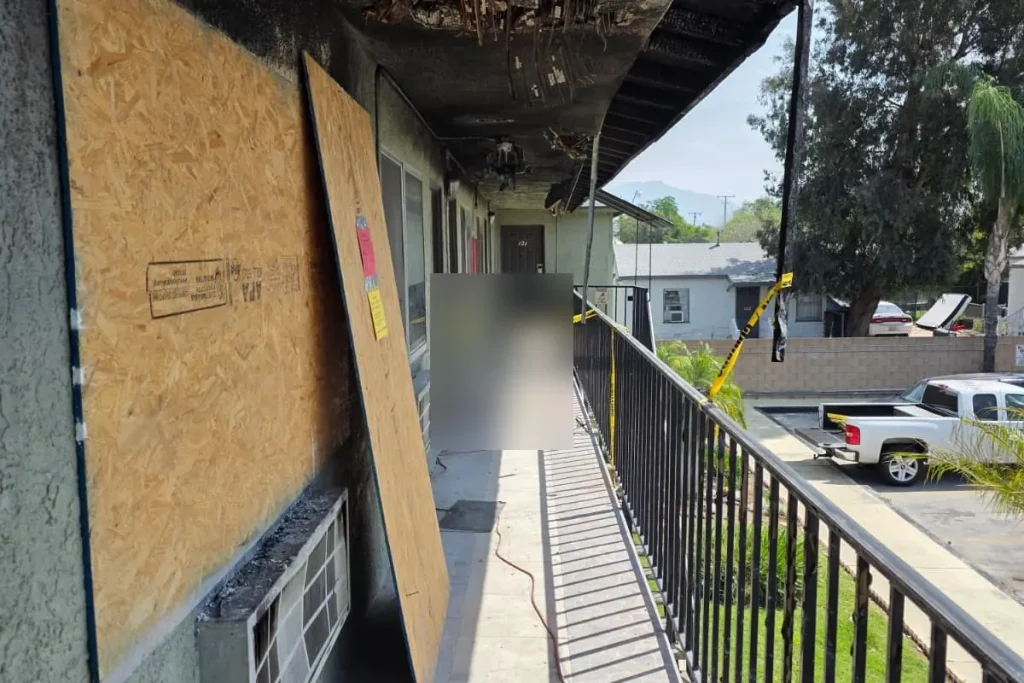
- Window frames: Look for cracks, warping, or separation from the wall. Even if the glass looks fine, a weak frame can make the window unsafe.
- Surrounding structures: Look at the walls, window sills, and seals for water or smoke damage. Moisture can cause mold, and burned wood might need to be replaced.
- Glass integrity: Small cracks may not be noticeable, but they can spread over time. Tempered or laminated glass is more resistant to breaking but should still be inspected.
Timing: Board Up vs Window Replacement
| Option | Purpose | Speed | Cost | Best Use |
| Emergency Board Up | Temporary protection | Same day | Lower | Immediate damage control |
| Window Replacement | Permanent repair | Several days–weeks | Higher | Long-term restoration |
- Insurance inspections are complete: The adjuster looks at the damage. Having boards up right away shows you acted quickly to protect your home.
- Contractors confirm safety: Check that window frames and surrounding areas are stable before new glass is installed. Replacing too early can cause more problems.
- Weather conditions are safe: California storms or high winds can make immediate replacement difficult and risky.
Costs and Planning
Temporary board up costs are usually much lower than full replacement. In California, professional emergency board up services in California commonly range from $150 to $500 per window, depending on opening size, access difficulty, and materials used. Full window replacement costs vary widely – usually $400 to $1,200 per window for standard glass, and more for impact-resistant or fire-rated options. Planning can save money. Use the board up period to:- Compare quotes from multiple contractors
- Check energy efficiency and safety ratings for replacement windows
- Coordinate insurance claims and payments
What to Do Immediately After Window Damage in California
If your windows have just been damaged, the order of your actions matters. Here is what to do right away:- Keep everyone away from broken glass. Do not let family members, pets, or visitors walk through the affected area until it has been cleared.
- Do not attempt to remove broken glass yourself without thick gloves and protective footwear. A single mishandled piece can cause a serious cut.
- Photograph all damage immediately – before board up begins. These photos are essential for your insurance claim.
- Call a licensed board up company right away. The longer a window stays open, the more risk of rain, smoke, debris, or unauthorized entry.
- Notify your insurance provider and let them know board up services are being arranged. Most California policies cover this step under loss mitigation.
How to Choose a Window Replacement Contractor in California
The blog mentions contractors several times – but how do you actually choose the right one? Here is what to look for:- California State License Board (CSLB) verification. Check the contractor’s license number at cslb.ca.gov before agreeing to any work.
- Experience with disaster damage. A contractor who specializes in post-fire or post-storm restoration understands California building codes and insurance requirements better than a general glazier.
- Written estimate before work begins. Any legitimate contractor will provide a detailed written quote including materials, labor, and timeline.
- Insurance coordination experience. Contractors who regularly work with insurers can help document the work properly and reduce claim disputes.
- Knowledge of California fire codes. In wildfire-prone areas, replacement windows must meet specific tempered or fire-resistant glass standards. Make sure your contractor knows this.
Bottom Line
Board up and window replacement are not competing options. They are two steps of the same process. In California, taking action quickly with a board up protects your home from storms, wildfires, and earthquakes. It keeps your family and belongings safe while giving you time to assess damage, work with contractors, and plan permanent repairs. When conditions are safe and frames are stable, your windows can be replaced to regain home security, comfort, and energy efficiency. The best approach is simple — board up first, assess carefully, then replace. Call Green Planet Restoration 24/7 for fast emergency board up anywhere in California and protect your property before more damage occurs. ____________________Frequently Asked Questions
Should I board up or replace windows first after a storm in California?
Always board up first. Window replacement is a permanent solution that takes time – glass may need to be ordered, frames need to be inspected, and insurance adjusters need to assess the damage. Boarding up immediately after the damage protects your home during that entire process and shows your insurer you took responsible action.How long can I leave windows boarded up?
Properly installed exterior-grade plywood can protect an opening for several weeks to a few months. However, board up is always a temporary measure. Once insurance inspections are complete, frames are confirmed stable, and weather conditions allow safe work, permanent replacement should begin as soon as possible. Extended board up periods can affect indoor air quality and property value.Does insurance cover window board up in California?
Yes, in most cases. California homeowners’ insurance policies typically cover emergency board up under loss mitigation provisions. Your insurer considers it a necessary step to prevent further damage. You will need written documentation – photos, an itemized invoice, and service records from your board up company – to support your claim. Always notify your insurer before or immediately after board up services begin.Property damage right now?
We find the damage, dry or clean the structure and repair it. On site in about 45 minutes, 24/7.

Written by the Green Planet Restoration team
Our articles are written and reviewed by the crews who handle water, fire and mold damage every day across Southern California, Seattle, Miami-Dade and Las Vegas. About us