
Blood Carries Pathogens That Survive Long After It Dries
Fresh or dried, blood can still be dangerous. The CDC confirms that blood can transmit viruses, including HIV, Hepatitis B, and Hepatitis C. Hepatitis B in particular is stubborn. It can survive on surfaces for up to seven days. Hepatitis C is more widespread than most people think, with an estimated 2.4 million Americans currently living with the infection. What makes this concerning is that blood doesn’t stay on the surface. It soaks into carpet fibers, wood grain, grout lines, and concrete, sometimes going deep enough that you can’t see it at all. Someone can walk into a room hours or even days later and have no idea they are being exposed to a bloodborne pathogen.Wiping It Up Is Not the Same as Making It Safe
This is the part that trips people up the most. You can remove every visible trace of blood from a surface and still leave dangerous pathogens behind. Standard household cleaners, even bleach in basic concentrations, aren’t formulated to fully neutralize bloodborne pathogens for blood disinfection on porous surfaces. OSHA estimates that nearly 5.6 million U.S. workers face exposure risk to bloodborne diseases every year, largely because of incomplete cleanup. Professional biohazard technicians use hospital-grade, EPA-approved disinfectants specifically designed to penetrate porous materials and remove what you can’t see. That’s not something you can replicate with products from a grocery store shelf.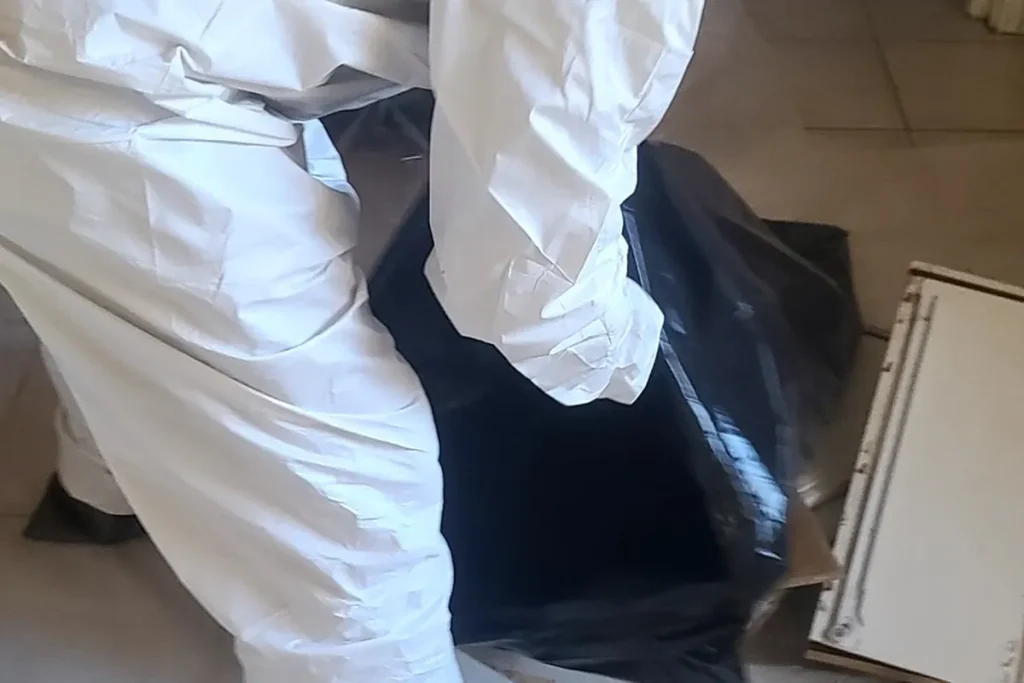
Where Blood Spills Actually Happen
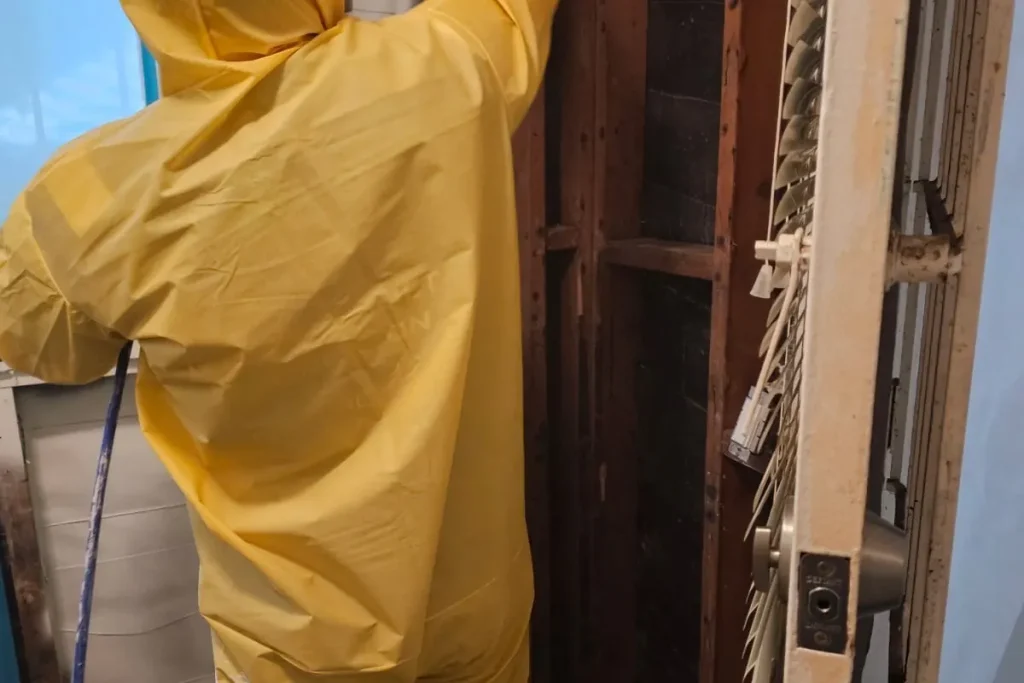
Under federal OSHA guidelines, blood is classified as a biohazard. Blood spills do not only occur in hospitals or crime scenes. They happen in homes, after accidents, medical emergencies, or violent incidents. Once police or paramedics leave the scene, the cleanup responsibility falls on the property owner. That’s an unfair and genuinely hazardous position. Without proper training, equipment, and vaccinations, this puts owners in a genuinely hazardous position. Proper cleanup means sealing off the area, using EPA-approved disinfectants, removing contaminated materials like carpet or drywall when necessary, and disposing of biohazardous waste according to state regulations which happen to be very specific.In California, these disposal steps are legally mandated. The handling, storage, and disposal of biohazardous waste are strictly governed by the California Medical Waste Management Act (MWMA) – codified under Health and Safety Code sections 117600–118360. Administered by the California Department of Public Health (CDPH) and enforced by Local Enforcement Agencies (LEAs), these regulations require certified containment and specialized transport. Throwing blood-soaked items into standard municipal trash can result in severe legal and environmental penalties.
What Happens If You Skip Professional Cleanup
Final Thoughts
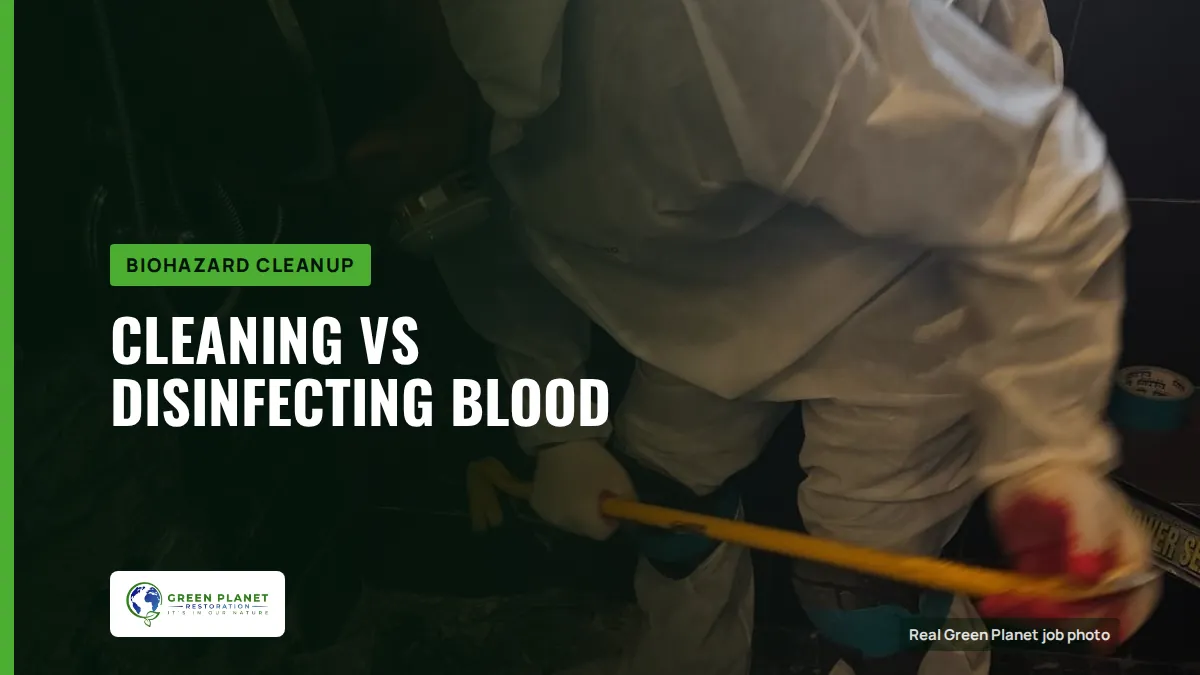
Disinfection comes first, always. Before anyone touches a blood spill, the area needs to be treated with the right disinfectants to neutralize pathogens. Cleanup follows. Doing it the other way around, or skipping disinfection entirely, just moves contaminated material around. If you are dealing with a blood spill in your home or a property you manage, the safest move is to keep people out of the area and call a licensed biohazard remediation company. Green Planet Restoration handles professional blood disinfection and crime scene clean up across California. Our team uses EPA-approved disinfectants before any cleanup begins and follows all state and federal safety protocols. We restore properties to their pre-incident condition. If you need a response you can trust, reach out to our cleaning specialists today. _______________________References
California Department of Public Health. (2026). Medical Waste Management Act: California Health and Safety Code Sections 117600 through 118360. California Department of Public Health, Environmental Management Branch. Occupational Safety and Health Administration. (2020). Bloodborne pathogens standard (29 CFR 1910.1030). U.S. Department of Labor. https://www.osha.gov/laws-regs/regulations/standardnumber/1910/1910.1030 Centers for Disease Control and Prevention. (2020). Hepatitis B questions and answers for health professionals. U.S. Department of Health and Human Services. https://www.cdc.gov/hepatitis/hbv/hbvfaq.htm Centers for Disease Control and Prevention. (2020). Estimated prevalence of hepatitis C virus infection in the United States, 2013–2016. U.S. Department of Health and Human Services. https://www.cdc.gov/nchhstp/newsroom/2020/hepatitis-c-prevalence-estimate.html Occupational Safety and Health Administration. (1992). Occupational exposure to bloodborne pathogens (OSHA Fact Sheet No. 92-46). U.S. Department of Labor. National Institute for Occupational Safety and Health. (2018). Preventing worker exposure to bloodborne pathogens during cleanup of biohazards. U.S. Department of Health and Human Services, Centers for Disease Control and Prevention. IBISWorld. (2025). Biohazard remediation services in the US: Market size, growth & industry trends (2020–2030) (Report No. OD5622). IBISWorld.Need a biohazard cleanup crew?
We find the damage, dry or clean the structure and repair it. On site in about 45 minutes, 24/7.

Written by the Green Planet Restoration team
Our articles are written and reviewed by the crews who handle water, fire and mold damage every day across Southern California, Seattle, Miami-Dade and Las Vegas. About us