
Technicians know a structure is fully dry when moisture readings in the wet materials match readings taken from the same materials in parts of the house the water never reached. That target, set on day one and checked with meters every day after, is the only honest finish line; how the room looks or feels doesn’t count.
Drywall can feel dry to the touch while the bottom plate behind it is still soaked. Pros don’t guess. They measure, write the numbers down, and keep the equipment running until the numbers say stop. If you want the bigger picture of how extraction and drying fit together, our guide to water extraction and drying walks through the whole process.
Below is how that verification works, what tools are involved, and what you should expect to see on paper before anyone closes up a wall.
Why “it looks dry” isn’t good enough
Water moves. It wicks up drywall, soaks into wood framing, pools under vinyl plank and sinks into concrete. Surfaces dry first because they’re exposed to moving air. The inside of a stud, the paper face behind baseboard or the slab under a floor can stay wet for days after the room seems fine.
That hidden water is what causes trouble later. The EPA says water-damaged areas and items should be dried within 24 to 48 hours to prevent mold growth (U.S. Environmental Protection Agency [EPA], 2026a). Materials that stay damp past that window give mold a place to start, and you often won’t see it until it has spread inside the wall.
Smell and touch are poor tests. So is the calendar. A job isn’t dry because the equipment has run for three days; it’s dry when the readings prove it.
This is the point where a homeowner with a box fan and a hardware-store meter usually stops being able to tell. If water got into walls, under flooring or into a ceiling, you need someone who can read inside those spaces.
Setting the target: the dry standard and the drying goal
The IICRC S500 water damage standard gives restorers two terms to work with. The dry standard is a reasonable approximation of a material’s moisture content before the water got there. The drying goal is the moisture level the material has to reach by the end of drying (Woolen, 2021).
To set the dry standard, a technician takes readings from similar materials in rooms the water never touched: drywall in a dry hallway, subfloor in a back bedroom, baseboard on the far side of the house. Where no unaffected area exists, they can use historical data for the region (Woolen, 2021). Restoration trade guidance describes an acceptable result as within about 10% of what those similar, unaffected materials read (Woolen, 2021).
Each material gets its own target. Drywall, wood framing, hardwood and concrete hold water differently and read on different scales, so a single number for the whole house would be meaningless.
The team at Green Planet Restoration, led by CEO Efraim Haim, records these baseline readings before any equipment goes in. Without them, nobody can prove later that the structure got back to where it started, and that proof matters to you and to your insurance adjuster.
The tools that do the measuring
No single tool tells the whole story. A typical drying job uses three or four, each covering a gap the others leave.
Penetrating (pin) moisture meters
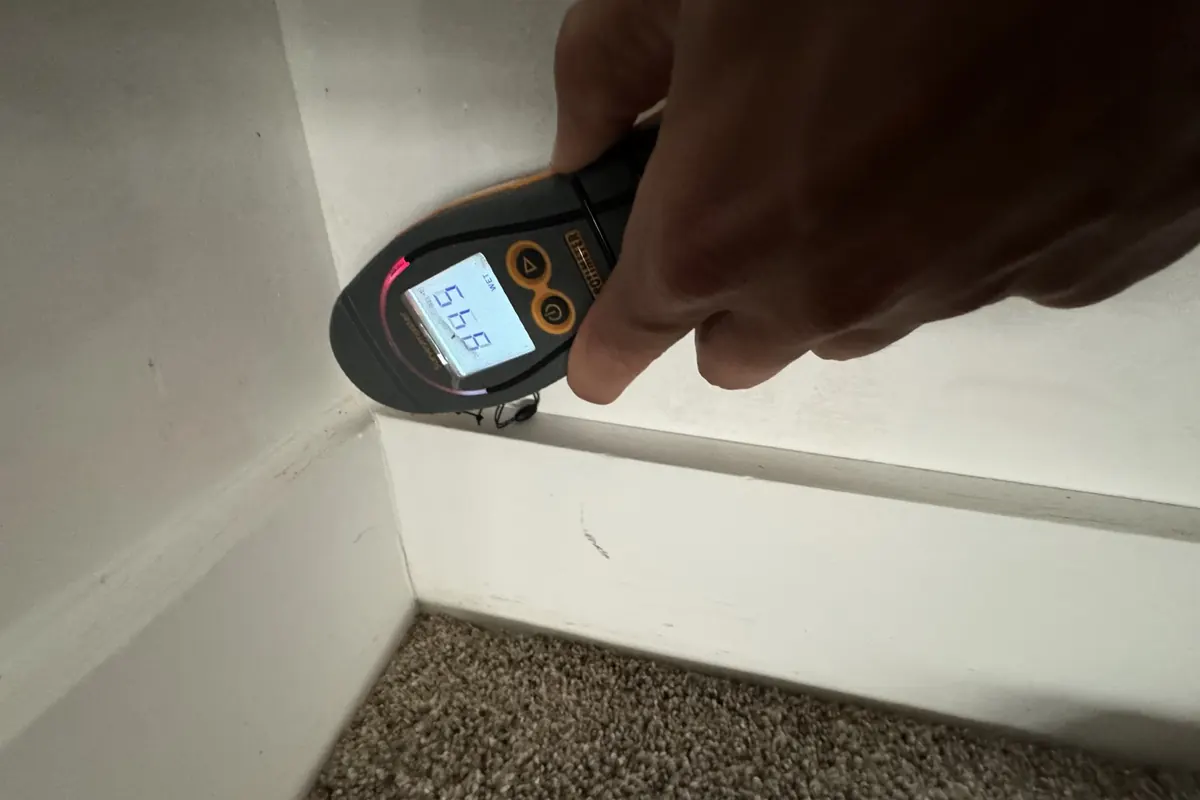
Two pins go into the material and the meter reads moisture between them. These give the most direct reading for wood and can reach below the surface. They leave tiny holes, so technicians use them where it counts, like the bottom of a stud bay. Our comparison of pin vs pinless moisture meters covers the tradeoffs.
Non-penetrating (pinless) meters
These press flat against a surface and read a shallow depth without damage. They’re fast, so they work well for scanning a whole wall to find where wet stops and dry begins. That outline is what gets drawn on the moisture map.
Thermal imaging cameras
Evaporating water cools a surface, so wet areas often show up cooler on a thermal camera. The camera doesn’t measure moisture; it points to places worth checking with a meter. We explain how pros use it in thermal imaging for water damage.
Thermo-hygrometers
These read air temperature and relative humidity. From those, a technician calculates how much water is actually in the air (grains per pound). Tracking that number inside the drying area, outside, and at the dehumidifier exhaust shows whether the equipment is pulling water out or just moving damp air around. That science is called psychrometry.
Infographic
How pros verify a structure is fully dry
- 1Read dry materials firstReadings from unaffected rooms set the dry standard for each material.
- 2Map the wet areaMeters and thermal imaging outline where water went, wall by wall.
- 3Check the air dailyTemperature and humidity readings show the dehumidifiers are pulling water out.
- 4Re-read the same spotsMarked points are measured every visit so progress is a trend, not a guess.
- 5Sign off at the goalEquipment comes out only when wet materials match the dry standard, within about 10%.
What daily monitoring looks like
On the first visit, a technician sketches the affected rooms and marks reading points on the map: a spot on each wet wall, the subfloor near the source, the base of cabinets. Every one of those points gets a number.
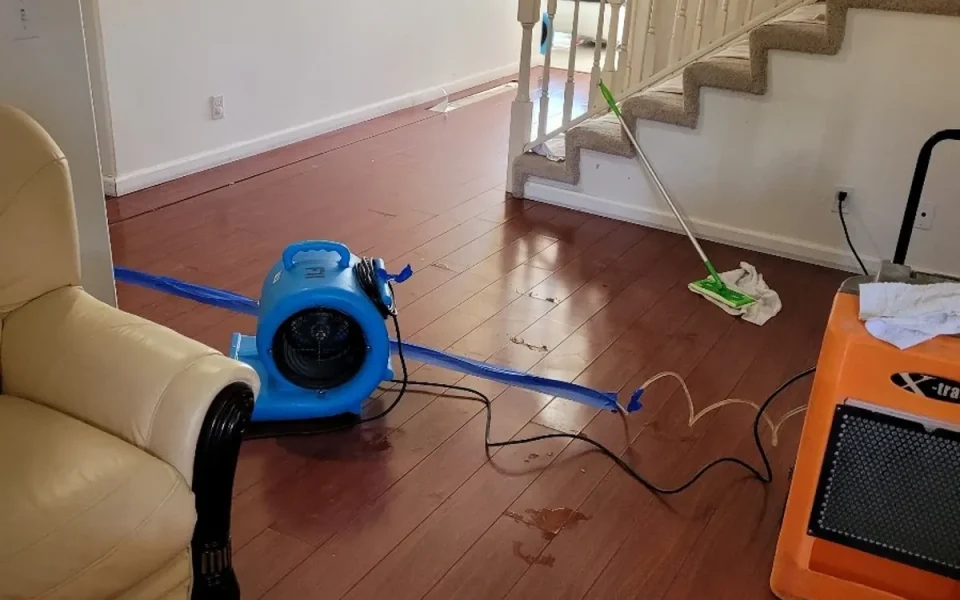
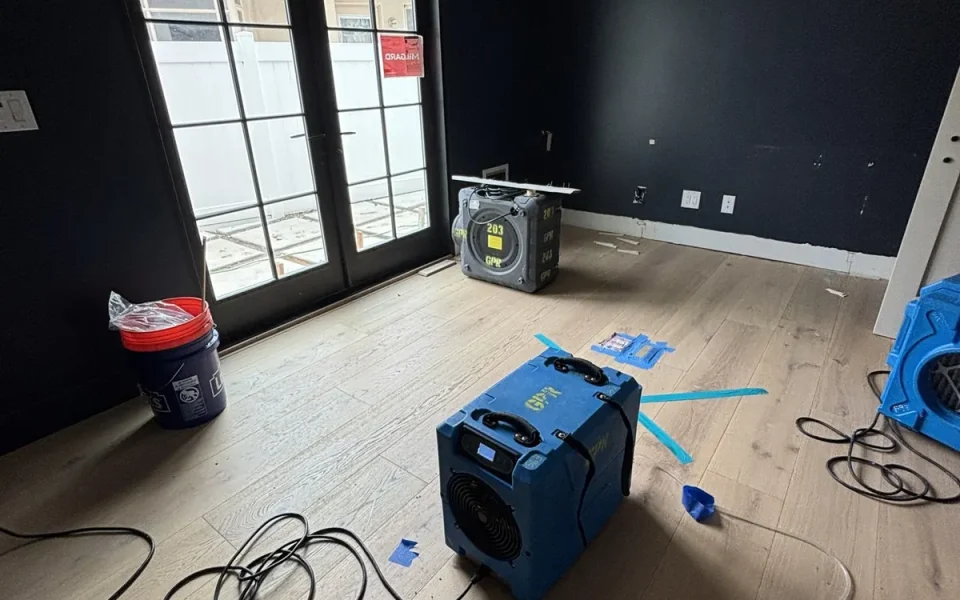
On each return visit, the same points get read again with the same meter. Those numbers go in a log next to the air readings. A healthy drying job shows wet materials dropping toward their targets day after day. If a reading stalls, something is wrong: water trapped behind a vapor barrier, a cabinet toe kick holding moisture, or a dehumidifier that isn’t keeping up. The fix might be opening a small hole, moving air movers or adding a low-grain refrigerant dehumidifier.
Air readings matter too. Indoor relative humidity should stay below 60%, ideally between 30% and 50% (EPA, 2026a). If the room air stays humid, wet materials have nowhere to release their water.
A drying log is also your evidence. GPR’s team, led by CEO Efraim Haim, recommends keeping a copy of every day’s readings, because adjusters often ask why equipment ran for the number of days it did. Clear numbers answer that question.
Materials that fool people
Some materials are notorious for looking dry long before they are.
Concrete slabs
Concrete soaks up water and gives it back slowly. A slab can feel cool and dry on top while holding enough water to ruin new flooring glued to it. Flooring installers often test the slab again before laying anything down.
Hardwood floors
Wood swells as it absorbs water and shrinks as it dries. Cupped boards may flatten over days or weeks, but only if the wood and the subfloor underneath reach their targets. Sanding or refinishing too early can lock in damage.
Wall cavities and insulation
Drywall dries from the room side, but the back face, the framing and any insulation in the cavity sit in still air. Technicians may drill small holes at the base of the wall or remove baseboard to get air inside, then read the framing directly.
Cabinets and built-ins
Water runs under kitchen and bathroom cabinets and stays there. Readings at the toe kick and the cabinet floor tell whether the base needs to come out.
If any of these are in play, a surface check with a cheap meter won’t tell you much. This is work for trained technicians with the right tools.
Drying in the Los Angeles area
Our Chatsworth crew sees a lot of slab-on-grade homes across the San Fernando Valley, in neighborhoods like Northridge, Reseda, Canoga Park and Woodland Hills. Many were built in the postwar boom and still have original copper or galvanized lines running through or under the slab. When one of those lines leaks, water spreads under flooring and into the bottom of walls where nobody can see it.
Dry Santa Ana air can make surfaces feel finished in a day or two, which tricks people into closing things up early. The winter rainy season brings the opposite problem: roof and window leaks soaking attic framing and ceilings. In both cases the answer is the same, readings against a dry standard. If you need water damage restoration in Los Angeles, call our local team at (818) 717-0203 and we’ll map the moisture before anything gets covered up.
Common questions
How long does it take for a house to dry after water damage?
It depends on how much water there was, which materials got wet and the weather. Small, clean-water losses often dry in a few days with equipment running. Slabs, hardwood and saturated framing can take longer. The readings decide when it’s done, not a set number of days.
Can I use a moisture meter from the hardware store?
You can use one to spot obvious wet areas. Without baseline readings from dry materials and knowledge of how each material reads on that meter, it’s easy to call something dry that isn’t. A professional moisture map covers walls, floors and cavities you can’t easily reach.
What happens if a wall is closed up before it’s dry?
Trapped moisture can lead to mold growth, swelling, peeling paint and odors inside the wall. The EPA ties mold prevention to drying within 24 to 48 hours (EPA, 2026b), so sealing in wet materials works against you. Fixing it later usually means opening the wall again.
Related reading
For more on the drying side of a water loss, read the science behind effective structural drying and how moisture meters prevent mold growth, or go back to the water extraction and drying guide.
When you’re ready for a crew that measures every step, our flood and water damage restoration service includes moisture mapping, daily monitoring and a written drying log, with help billing your insurance through our insurance billing team.
References
- Institute of Inspection, Cleaning and Restoration Certification. (n.d.). ANSI/IICRC S500 standard for professional water damage restoration. IICRC. https://iicrc.org/s500/
- U.S. Environmental Protection Agency. (2026a, February 18). A brief guide to mold, moisture, and your home. EPA. https://www.epa.gov/mold/brief-guide-mold-moisture-and-your-home
- U.S. Environmental Protection Agency. (2026b, November 10). Mold course chapter 2. EPA. https://www.epa.gov/mold/mold-course-chapter-2
- Woolen, J. (2021, June 3). What is acceptable dry? Restoration & Remediation Magazine. https://www.randrmagonline.com/articles/89445-what-is-acceptable-dry
Featured image: Green Planet Restoration photo.
We find the damage, dry or clean the structure and repair it. On site in about 45 minutes, 24/7.

Our articles are written and reviewed by the crews who handle water, fire and mold damage every day across Southern California, Seattle, Miami-Dade and Las Vegas. About us