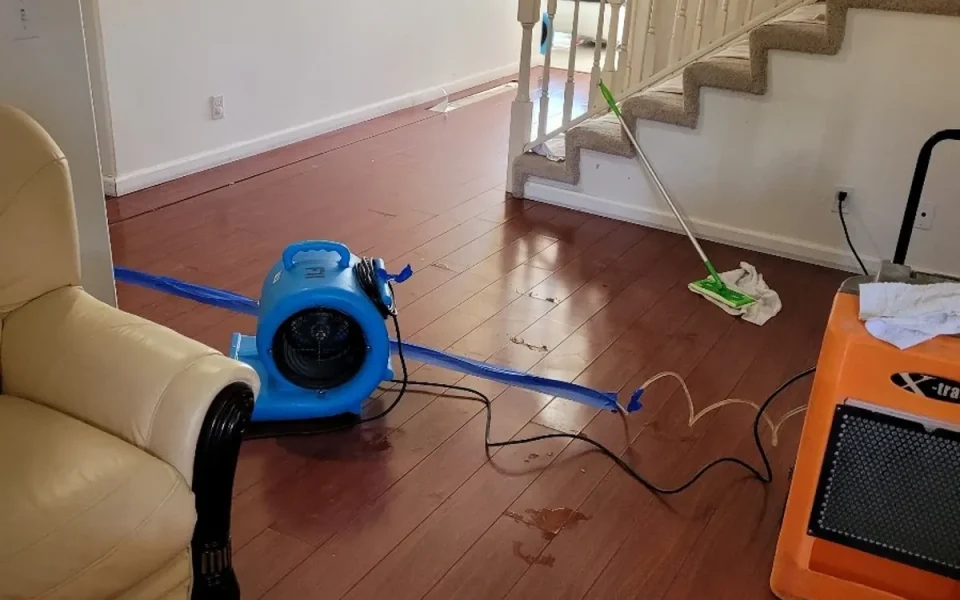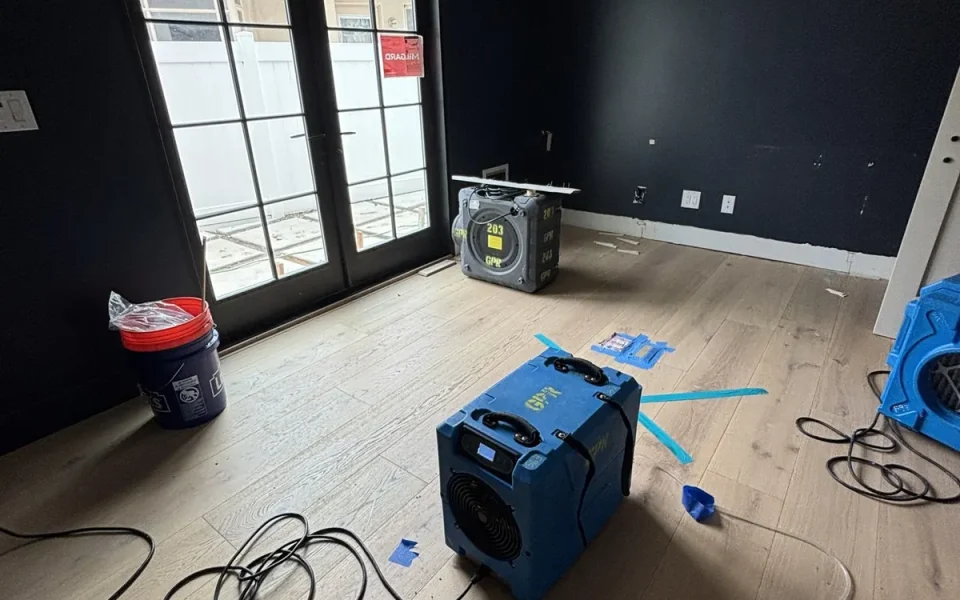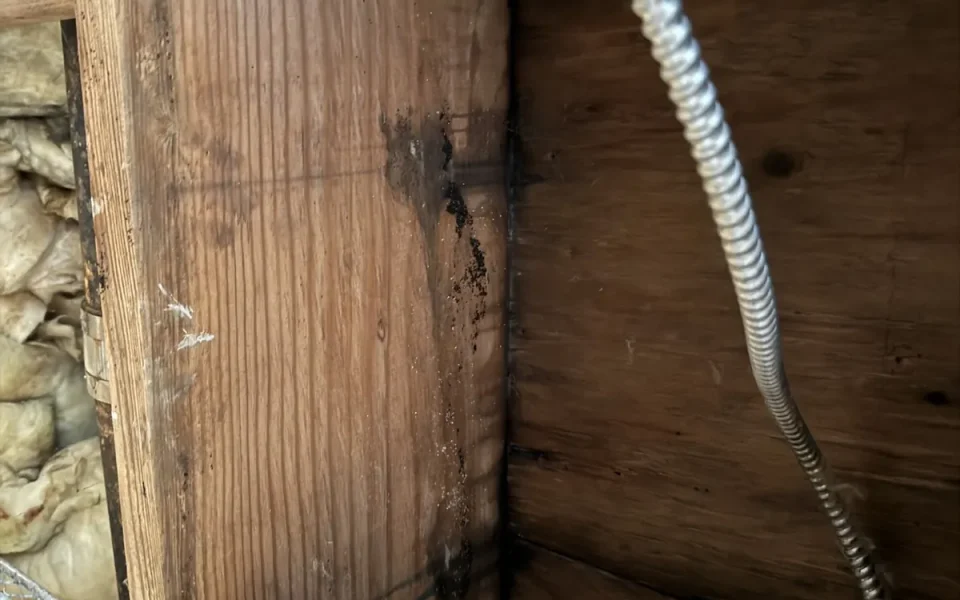

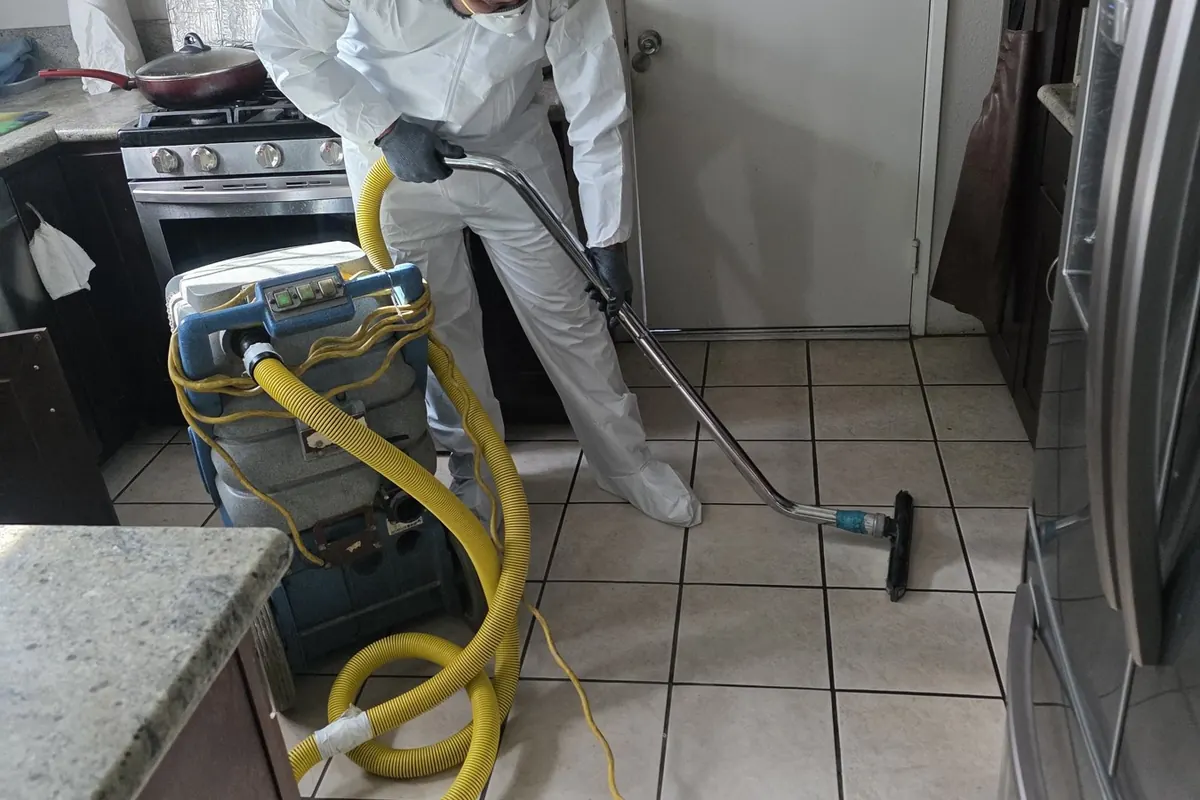
There are four classes of water damage, and they describe how much water soaked into a room and how hard it will be to dry. Class 1 is the smallest and easiest job, Class 3 is the wettest, and Class 4 covers dense materials like hardwood, plaster and concrete that hold water deep inside.
The classes come from the ANSI/IICRC S500, the industry standard for professional water damage restoration. Restoration crews use the class to decide how many dehumidifiers and air movers a room needs and how long drying should take. If you want the full picture, including how classes differ from water categories, our guide to water damage categories and classes covers both.
Knowing the class won’t dry your house. It does tell you whether you’re looking at a mop-and-fan cleanup or a job that needs moisture meters, containment and equipment running for days.
Classes vs. categories: two different questions
People mix these up all the time, and insurance adjusters use both, so it helps to keep them straight.
Category answers “how dirty is the water?” The S500 sorts water into three categories. Category 1 comes from a sanitary source, like a supply line. Category 2 carries significant contamination, like dishwasher or washing machine overflow. Category 3 is grossly contaminated and may carry disease-causing organisms, like sewage or floodwater from outside.
Class answers “how much is wet, and how deep?” A clean supply line that ran all weekend can be Category 1 and Class 3 at the same time. A small toilet backup can be Category 3 and Class 1. The category drives safety and what gets thrown out. The class drives the drying plan.
Under the S500, the class is set after any demolition or removal of ruined material is finished, because tearing out wet carpet pad or drywall changes how much wet material is left to dry.
Class 1: the least water
Class 1 is the lightest intrusion. Wet porous materials (carpet, pad, drywall, insulation) make up less than about 5% of the combined floor, wall and ceiling area in the space, according to an IICRC technical summary of the S500, and little water has soaked into low-evaporation materials like wood or concrete.
Think of a small sink overflow caught within minutes on a tile floor, or a slow drip under a cabinet that wet one corner of the subfloor. Most of the water sits on surfaces that don’t absorb much.
A homeowner can often handle a fresh, clean-water Class 1 spill: wipe it up, open cabinet doors, run a fan and a dehumidifier. It stops being a DIY job when the water reached carpet pad, wall cavities or the subfloor, when you can’t tell how long it leaked, or when the source was anything other than clean supply water. Hidden moisture under a vinyl plank floor won’t show up until the edges cup or it starts to smell.
Class 2: a significant amount of water
In a Class 2 loss, wet porous materials cover roughly 5% to 40% of the floor, wall and ceiling area. A whole room of carpet and pad is usually wet, and water has often wicked up the bottom of the drywall. Wood and concrete still haven’t absorbed much.
A washing machine hose that burst while you were at work, or a water heater that let go in a hallway closet, often lands here. The damage looks manageable from the doorway. The trouble is in the pad, the tack strip and the bottom few inches of wall, where a box fan can’t reach.
This is where most DIY drying attempts go wrong. Carpet can feel dry on top while the pad underneath stays soaked, and drywall can look fine while the back side and the bottom plate stay wet. The EPA advises drying water-damaged areas and items within 24 to 48 hours to prevent mold growth, and its remediation guidance calls for removing wet porous materials that can’t be dried in time. Once a full room is wet, that window is hard to hit without commercial dehumidifiers and air movers. GPR’s team, led by Efraim Haim, CEO of Green Planet Restoration, takes moisture readings at the start and on each visit so the drying record shows when every wall and floor reached a dry standard.
Infographic
The four classes of water damage at a glance
- 1Class 1: least waterUnder about 5% of floor, wall and ceiling area holds wet porous material. Little soaks into wood or concrete.
- 2Class 2: significant waterAbout 5% to 40% of the area is wet. Carpet, pad and the bottom of walls are soaked.
- 3Class 3: greatest waterMore than about 40% of the area is wet, often with water from above through ceilings and walls.
- 4Class 4: deeply held waterWater is bound inside dense materials like hardwood, plaster, brick and concrete. Slowest to dry.
Class 3: the greatest amount of water
Class 3 means more than about 40% of the floor, wall and ceiling area holds wet porous material. Water has usually come from above, so ceilings, insulation and walls are wet along with the floor.
A second-floor bathroom leak that ran through the ceiling below, a roof that failed in a storm, or a fire sprinkler discharge are typical Class 3 losses. Wet ceiling drywall can sag, and saturated insulation holds water against the framing for a long time.
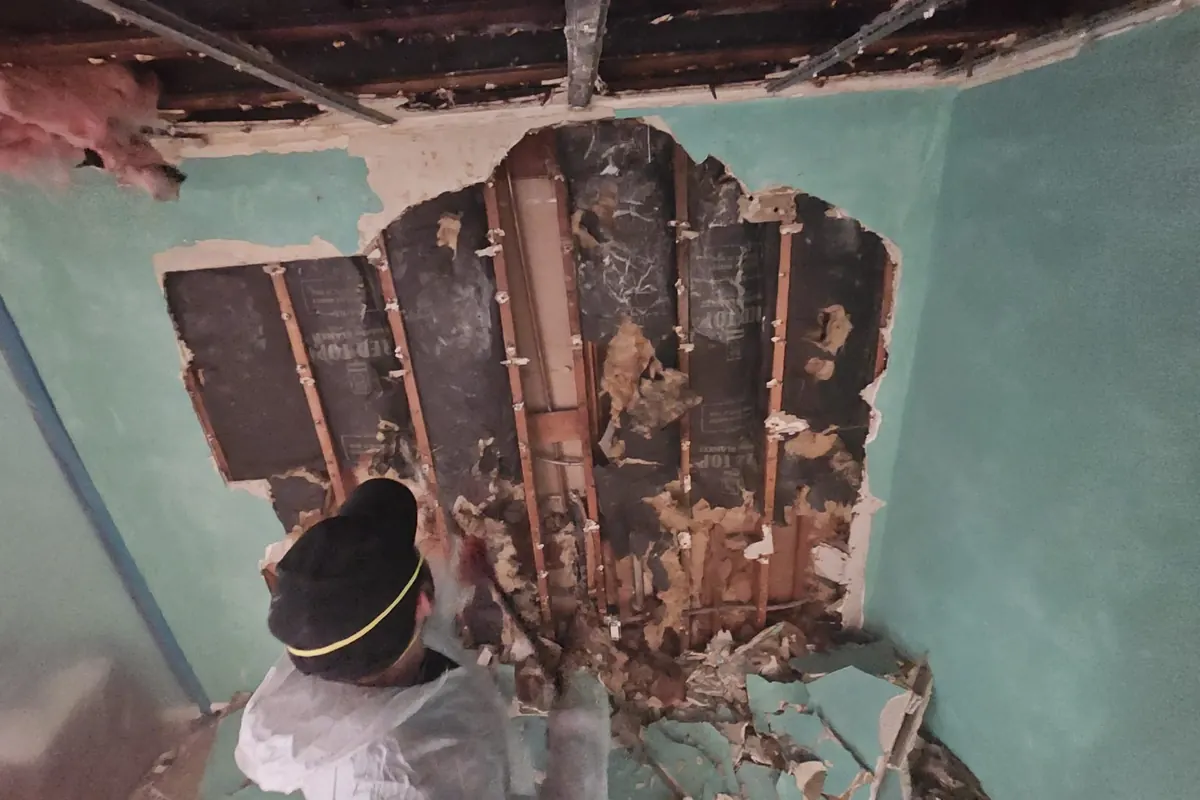
There’s no safe DIY version of a Class 3 job. A sagging ceiling can fall, and wet light fixtures and outlets are a shock risk, so keep people out of the room and shut off power to that area at the panel if you can do it while standing somewhere dry. Drying usually means removing wet ceiling material and insulation, setting up containment and running enough equipment to pull water out of a large volume of material at once.
Class 4: specialty drying for deeply held water
Class 4 is different from the other three. It isn’t about how much area got wet. It’s about water that has soaked deep into dense, low-porosity materials: hardwood floors, plaster, brick, stone, concrete slabs and heavy timber.
These materials take in water slowly and give it back slowly. Regular air movers dry the surface while the core stays wet, which is how hardwood ends up cupped months after the floor looked dry. Class 4 drying often calls for low-humidity conditions, heat, floor drying mats or injection systems that push dry air into wall cavities and under flooring.
If you have water on a hardwood floor or a finished basement slab, call early. A hardwood floor that’s dried properly can sometimes be saved. One that’s left to air dry often has to come out.
How the class changes your drying plan and your claim
The class sets the equipment count. Under the S500, technicians calculate how many dehumidifiers and air movers a space needs based on the class, the size of the room and conditions on site. A Class 3 room needs far more capacity than a Class 1 room of the same size.
It also shapes the paperwork. Adjusters look for the category, the class, daily moisture readings and photos. GPR’s team, led by CEO Efraim Haim, records all four from the first visit so the file supports what was removed and why equipment ran as long as it did. We can also help with insurance billing once the claim is open.
Your safety comes before any of that. If water came from outside, stay out of it. Ready.gov warns that floodwater can carry debris and can be electrically charged by downed or underground power lines.
Water damage classes in San Bernardino homes
In the San Bernardino Valley, most of the water losses we see start indoors: a burst supply line in Highland, a water heater in a Redlands garage, a slab leak under a Fontana tract home. Those often show up as Class 2, because the water runs under carpet and into wall bottoms for hours before anyone notices. Up the hill in Big Bear and Lake Arrowhead, winter freezes split pipes inside walls and ceilings, which can turn into Class 3 losses fast. Older homes with plaster walls can hold water like a Class 4 job. Our crews handle water damage restoration in San Bernardino from the office on Carnegie Drive. Call (760) 848-7118 for a free inspection.
Common questions
Is Class 4 water damage worse than Class 3?
Not always. Class 3 usually covers more wet area. Class 4 is about dense materials, like hardwood or plaster, that hold water deep inside and need specialty drying. A small Class 4 area can still take longer to dry than a large Class 2 room.
Who decides the class of water damage?
A trained restoration technician sets it after inspecting the space with moisture meters and, often, thermal imaging. Under the S500, the class is confirmed after any wet, damaged material has been removed.
Does the class affect my insurance claim?
The class itself doesn’t decide coverage. Your policy and the cause of loss do. The class does explain the drying plan and equipment time, so clear moisture records and photos help the adjuster follow the job.
Related reading
When the water has already spread past one small spot, our water damage restoration service can find every wet area and dry it to a measured standard. If you’re comparing companies first, read what to ask before hiring a restoration company.
References
- Institute of Inspection, Cleaning and Restoration Certification. (2021). ANSI/IICRC S500 standard for professional water damage restoration (5th ed.). IICRC. https://iicrc.org/s500/
- Mesenburg, D. (2020, June 18). Success on water losses: Using the IICRC S500. Cleanfax. https://cleanfax.com/iicrc-technical-tip/success-on-water-losses-iicrc-s500/
- Ready.gov. (n.d.). Floods. U.S. Department of Homeland Security. https://www.ready.gov/floods
- U.S. Environmental Protection Agency. (n.d.). A brief guide to mold, moisture and your home. EPA. https://www.epa.gov/mold/brief-guide-mold-moisture-and-your-home
- U.S. Environmental Protection Agency. (n.d.). Mold remediation in schools and commercial buildings guide: Chapter 4. EPA. https://www.epa.gov/mold/mold-remediation-schools-and-commercial-buildings-guide-chapter-4
Featured image: Green Planet Restoration photo.
We find the damage, dry or clean the structure and repair it. On site in about 45 minutes, 24/7.

Our articles are written and reviewed by the crews who handle water, fire and mold damage every day across Southern California, Seattle, Miami-Dade and Las Vegas. About us