Could there be water hiding in your home right now without you noticing? How do you know if a small leak is quietly damaging your walls, floors, or ceilings? Due to hidden moisture, walls can rot, mold can grow, and insulation can get ruined.
That is where thermal imaging for water damage becomes incredibly useful. It is the leading method for non-invasive water damage detection methods, allowing us to find problems without destruction. Green Planet Restoration uses thermal cameras to help find hidden water without cutting into walls or guessing where the problem might be. It is a smart tool that tells us where moisture is hiding before any visible signs appear.
This article explains how thermal imaging works, why it matters, how accurate it is, and how it fits into real‑world water detection for California homes.
How does thermal imaging work for water damage?
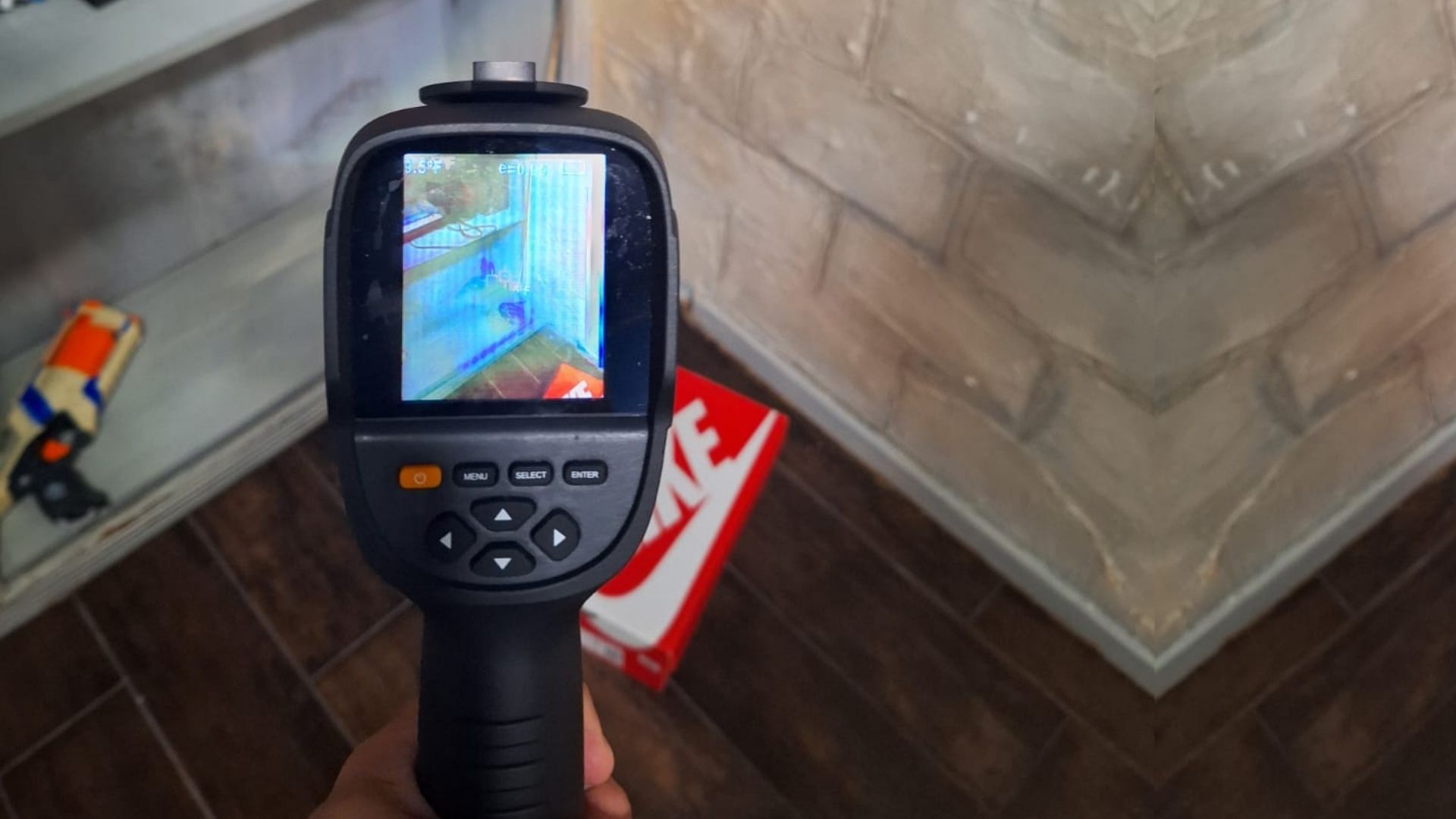
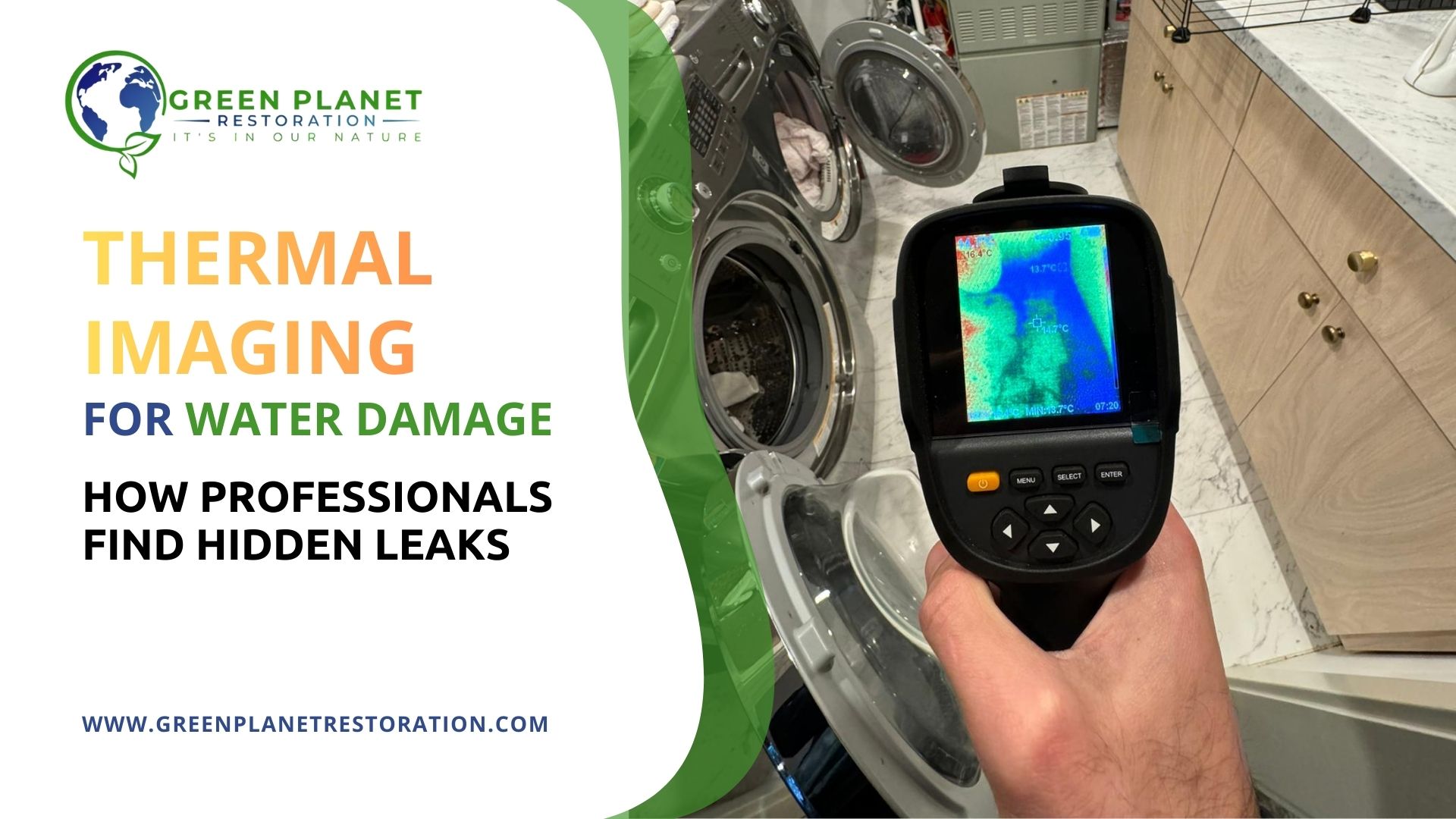
You may have seen police or firefighters use a thermal camera in movies. These cameras do not take ordinary pictures. Instead, they show heat. Everything around us gives off heat in some form. A thermal camera reads that heat and turns it into a picture called a thermogram.
In simple terms, thermal imaging lets you see temperature differences. Cooler objects and warmer objects show up as different colors or shades. When moisture is present, the temperature of building materials changes slightly, and thermal imaging can make those differences visible.
This does not mean the camera is finding water itself. Instead, it is finding changes in temperature that can be caused by water.
Why Hidden Water Problems Matter in California
Living in California, many homes experience moisture issues that are easy to miss at first. This is why using thermal imaging for mold detection is so effective. Since thermal imaging for water damage finds the moisture that causes mold, it allows us to address the problem at its source before mold has a chance to spread:
- In coastal areas, fog and humidity can lead to condensation inside walls.
- In inland areas, air conditioning units can leak or create moisture from condensation lines.
- Older plumbing in homes built decades ago can begin to fail slowly.
- Seasonal rains may find their way into roofs or exterior walls.
According to the U.S. Environmental Protection Agency, mold can begin to grow on wet materials within 24 to 48 hours after water exposure. That means a small leak left untreated can quickly become a much bigger problem.
Detecting that moisture early is necessary. The longer water stays in your home’s structure, the more likely you are to face bigger repair costs later.
Can thermal imaging detect water leaks behind walls?
If a homeowner smells something strange upstairs but sees no stains, it could mean water is hiding. A technician can use a thermal camera to check inside walls and ceilings. Here is how it usually works in practice:
Visual Check First
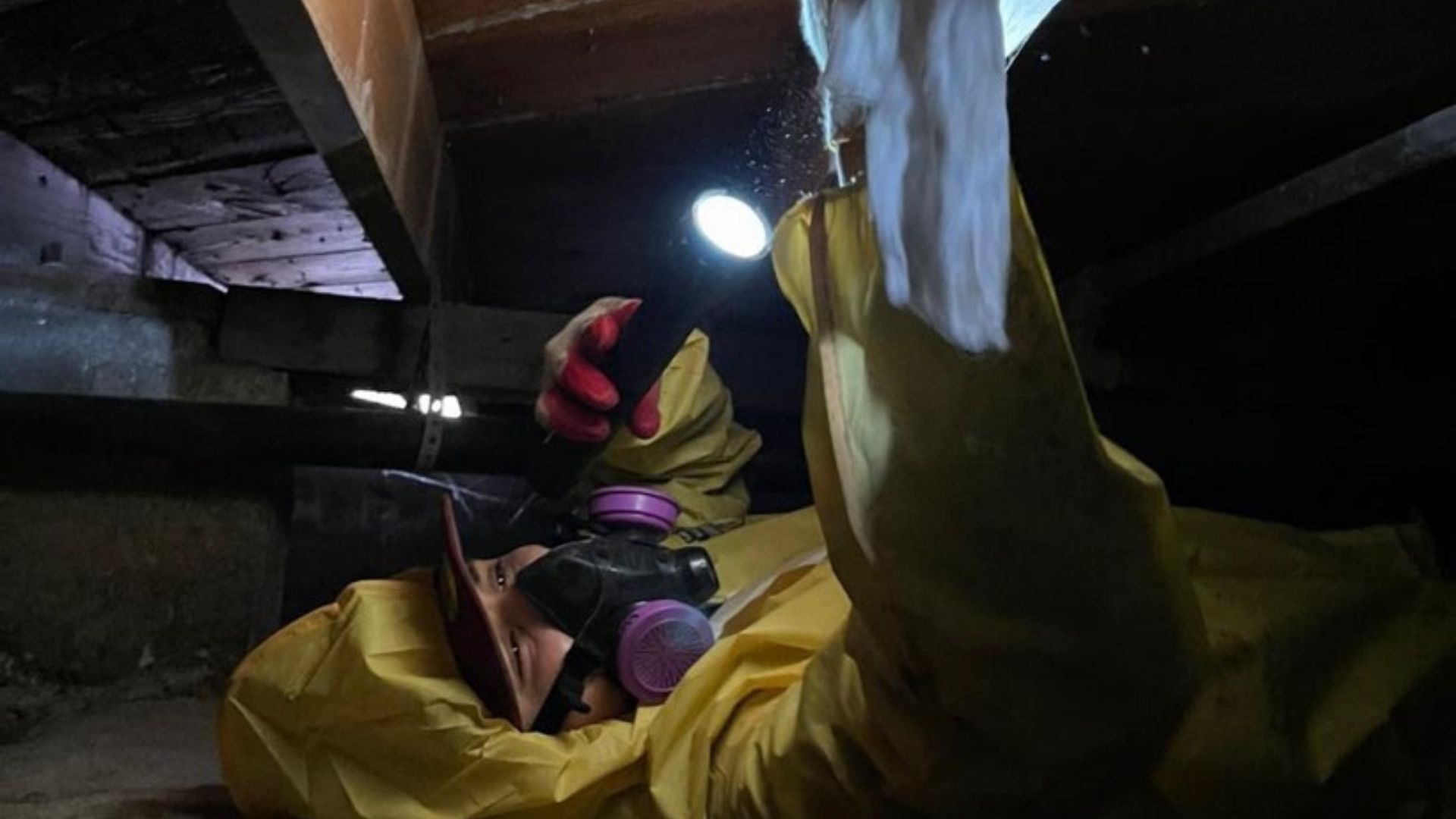
A trained technician does a quick visual walk‑through. We look for stains, warping, peeling paint, or soft drywall. These can be clues that moisture might be present.
Thermal Scan Comes Next
Using a thermal camera, the technician scans walls, ceilings, and floors. Wet materials will show up as a cooler patch in the thermal image because water cools more slowly than dry materials when temperatures change.
Comparing With Surroundings
The camera does not work in isolation. The technician compares one part of the wall or ceiling to nearby sections. If one area looks consistently colder than the areas around it, that is a sign we should investigate further.
Moisture Meter to Confirm

A moisture meter is used after the thermal camera displays that there could be a problem spot. This device is used to detect the moisture percentage by touching the surface. A thermal image may indicate something unusual in temperature, though the moisture meter will tell us whether there is water in the material.
This two-step process is important because the camera alone does not capture moisture. Using both the camera and the meter lets the technician find exactly where the water is and know what needs to be fixed.
Where Thermal Imaging Works Best
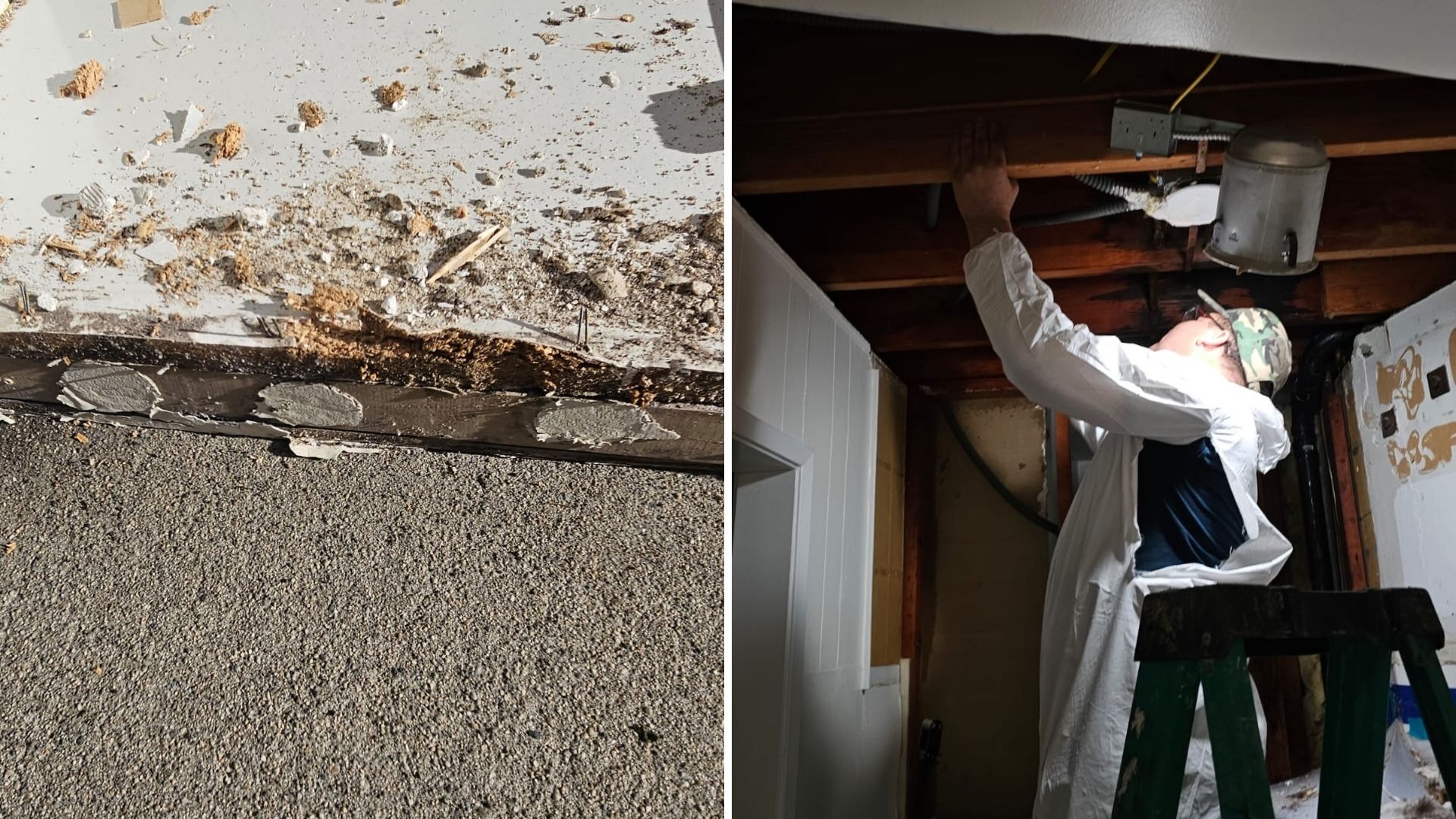
Over time, water seeps into framing and insulation. From the inside, you might smell something musty, but you cannot see the wet area. With a thermal camera, the technician can detect the temperature change quickly and guide testing in the right spot. For example, a slow leak from a bathroom upstairs may not drip through the ceiling immediately.
Thermal imaging for water damage is particularly helpful in finding roof leaks with infrared cameras. The detailed images we capture are perfect for thermal imaging for insurance claims documentation, providing undeniable visual proof of the issue for your adjuster.
Thermal imaging also helps in flood damage assessment with thermal cameras. By pinpointing the exact location of the water intrusion, thermal imaging can save time and money by avoiding unnecessary repairs.
Limitations of thermal imaging for water leaks
While thermal imaging is a powerful tool for finding hidden issues, it is important to understand its limitations so you know what to expect during an inspection.
- It does not detect water directly. Thermal cameras show temperature differences, not moisture itself. A cool spot suggests the possibility of water, but it needs to be verified.
- Environmental factors can skew results. Sunlight shining on a wall, air drafts from open windows, or air conditioning vents blowing on a ceiling can all create temperature changes that look like water but are actually just air movement or heat.
- Reflective surfaces can confuse the camera. Shiny surfaces like mirrors, tile, or metal vents can reflect heat from other objects, creating false readings.
Because of these limitations, a thermal scan is almost always followed by a moisture meter reading. The camera shows us where to look, and the meter tells us what we are dealing with.
Does thermal imaging detect mold directly?
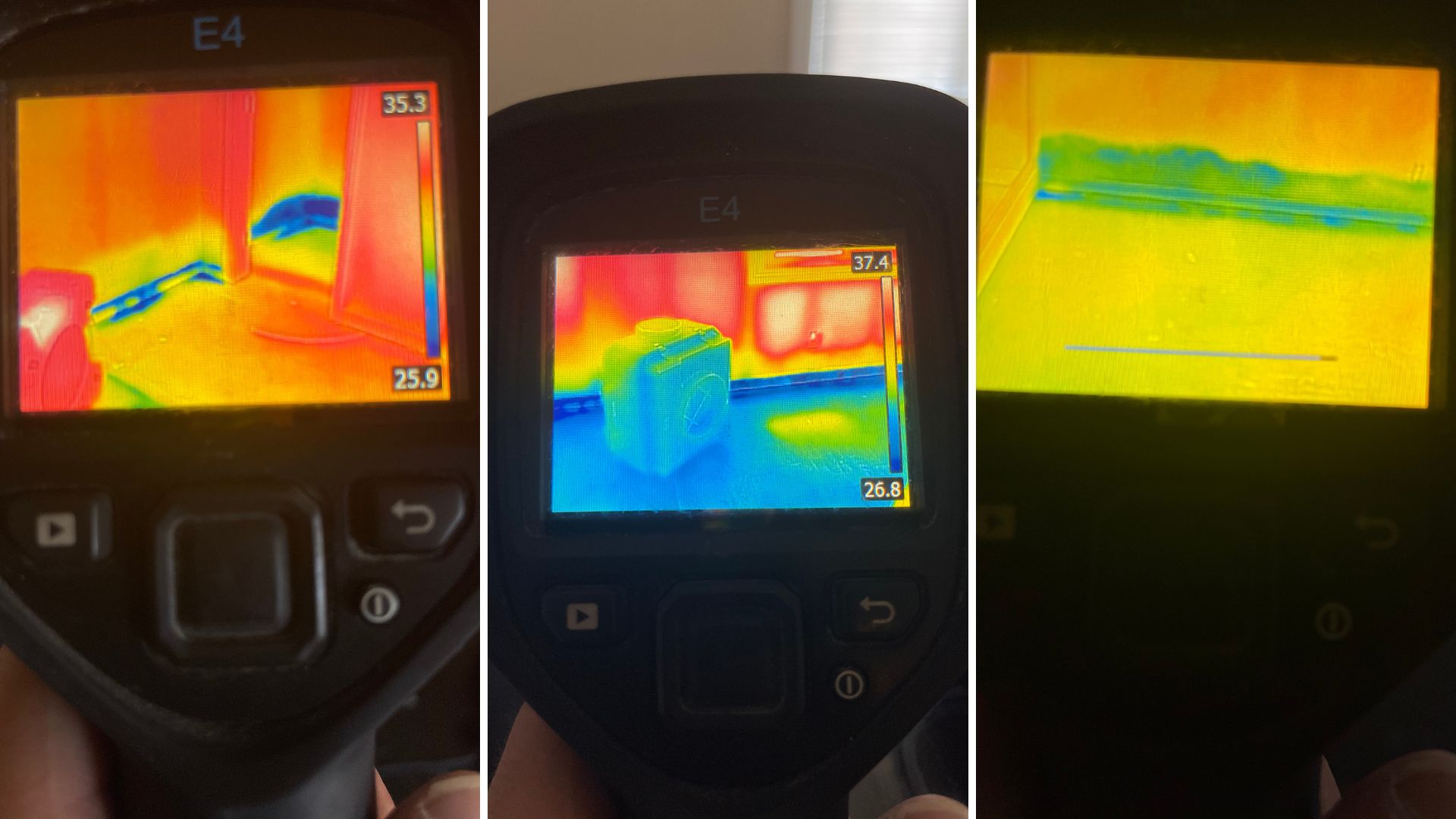
This is one of the most common questions homeowners ask, and the answer is important: No, thermal imaging cameras cannot see mold.
However, they are still the best tool for finding mold before you can see it. How? Since mold needs moisture to grow, thermal imaging finds the hidden moisture first.
Here is what thermal imaging does do well to help prevent mold:
- It helps technicians find areas of concern fast, before mold has a chance to establish itself (remember, mold can grow in 24-48 hours).
- It prevents unnecessary cutting into walls or floors to look for suspected mold.
- It works over large areas quickly to map out the full extent of a moisture plume.
- It guides technicians to the most likely source of a problem so they can verify it with a moisture meter.
So, while the camera doesn’t see the mold spores themselves, it sees the conditions that create mold. This allows us to dry the area out and stop the mold before it ever becomes a visible problem.
How Accurate Is Thermal Imaging?
When used by trained professionals, thermal imaging is very reliable for spotting potential moisture issues. It does not replace good inspection skills but enhances them. Accuracy depends on several factors:
- The skill and experience of the technician.
- The environmental conditions in the home at the time of inspection.
- The material being scanned.
- Whether the area has enough temperature difference for the camera to pick up.
In a cool house on a warm day, thermal imaging will show temperature changes more clearly. In very uniform temperatures, differences may be less noticeable. That is why technicians mostly pay attention to conditions like indoor temperature and humidity before scanning.
Another reason accuracy is higher when used properly is that thermal imaging for water damage helps avoid false negatives. Visual inspections alone miss hidden moisture because water can hide inside structural layers. A thermal camera uncovers those surprises.
Bottom Line
Finding water where you cannot see it is one of the toughest challenges for homeowners. Thermal imaging makes that task easier. It shows warm and cool spots, which means water hiding in walls, floors, or ceilings. Pairing it with a moisture meter and a proper inspection makes it easier to catch problems before they get worse.
Call Green Planet Restoration at +1 (800)-719-4808 when you see stains, a musty odor or high humidity. We will inspect the home and fix issues before they can result in severe consequences. Protect your family and home with certfied water damage services you trust.
________________
Related Posts
Guide to Flood Water Removal: How to Quickly Remove Flood Water from Your Home