
Understanding Your Policy Before Filing
Most standard California homeowners’ policies cover sudden storm-related damage, subject to deductibles, exclusions, and policy limits. In many policies, wind and hail damage fall under the same section that covers other acts of nature. Before a storm, review your policy to understand how it covers each of the following:- Dwelling coverage: Pays for structural repairs, including your roof, walls, and foundation.
- Other structures: Covers detached garages, fences, and sheds.
- Personal property: Pays for damaged belongings.
- Temporary housing coverage: Helps cover the cost of living elsewhere during repairs.
Step-by-Step Storm Damage Documentation
Before moving forward with repairs, the best thing you can do is document everything carefully. Accurate documentation isn’t just a suggestion; it’s evidence that helps with your claim.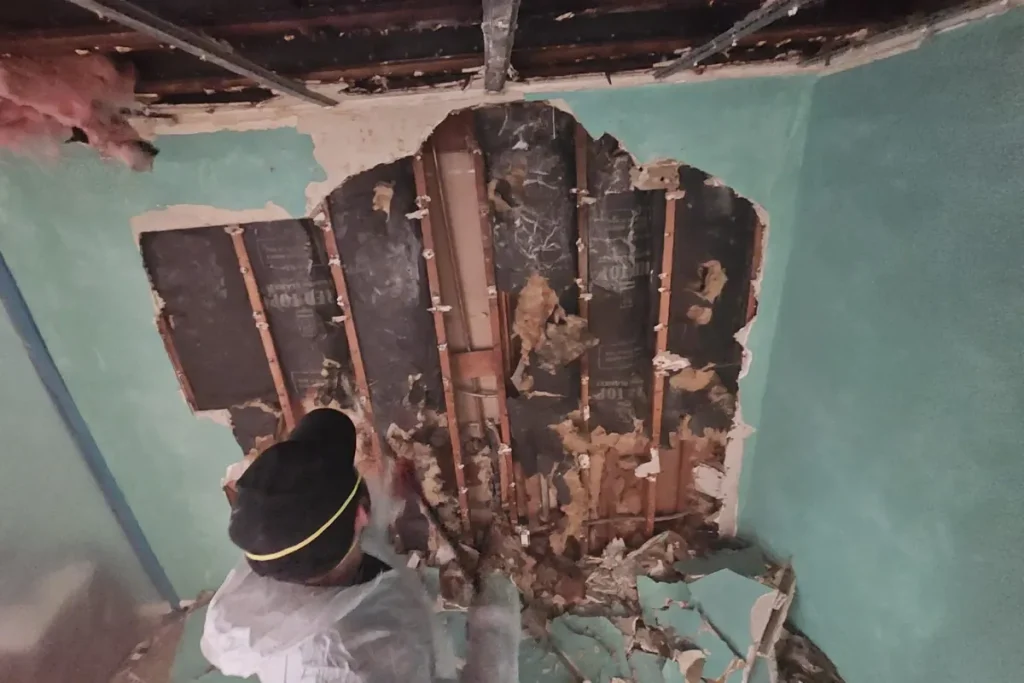
1. Take clear photos and videos
Walk through every area that was affected. Snap wide shots and close-ups of every damaged part of your roof, fascia, siding, windows, garage door, and landscaping features. Video narration helps you describe what you see in real time.2. Protect what you can safely protect
If tarps or boards are needed to prevent further water intrusion, put them up and note it in your documentation. Keep receipts for materials and labor. Reasonable emergency mitigation costs are often reimbursable, depending on policy terms.3. Record the exact date and time
Timing also matters because most insurance policies have deadlines for filing storm damage claims. Record key information as early as possible so nothing is forgotten.4. Make a list of all damaged items
For each personal item damaged by stormwater, include the approximate purchase date, cost, and photos. Adjusters use detailed documentation like this to understand the full extent of your loss when reviewing your claim.The Claim Process and What Adjusters Look For
Once you have documented the damage, notify your insurance carrier immediately online, via their app, or over the phone. The insurer will assign an insurance adjuster to visit your property, evaluate the damage, and write an initial repair estimate.
Being present during the adjuster’s inspection is highly recommended. You can hand them your documentation package and point out hard-to-see issues.
During the inspection, the adjuster will focus on several key areas:
-
The Roof: They will check for missing shingles, cracked tiles, broken flashing, and signs of water intrusion underneath the roofing material.
-
Consistency Patterns: Adjusters look for damage that matches local weather reports. For instance, if shingles are lifted in a uniform direction matching the storm’s wind patterns, it validates your claim.
-
Wear and Tear vs. Storm Damage: Adjusters will try to differentiate between sudden storm damage and long-term maintenance issues (like old, rotted wood or pre-existing leaks), which are not covered.
Repair Estimates and Supplemental Claims
One of the biggest frustrations Southern California homeowners face is receiving an adjuster’s estimate that doesn’t cover the real-world cost of repairs.
Insurance adjusters typically rely on generalized regional software databases to calculate material and labor costs. However, Southern California homes feature incredibly diverse architectural styles, complex roof pitches, and expensive materials (such as Spanish clay tile or specialty metal roofing) that general pricing calculators often underprice.
When to Request a Supplemental Estimate
A supplemental claim is a request for additional funds submitted when the initial insurance payout falls short of the actual contractor costs. You should work with a professional contractor to request a supplement if:
-
Your contractor discovers hidden structural damage (like rotted roof underlayment or trapped wall moisture) after construction begins.
-
The insurance company’s pricing database fails to match current local market rates for specialized labor and materials.
-
Local Southern California building codes require structural upgrades during the repair process that weren’t accounted for in the initial estimate.
A professional restoration company like Green Planet Restoration can provide a detailed, line-item estimate supported by photographic evidence and building code references to justify and secure your supplemental funding.
Common Claim Mistakes That Delay or Reduce Storm Damage Claims
Many storm damage insurance claims in Southern California are delayed or underpaid due to avoidable mistakes made early in the process.- Delaying the claim report is one of the most common mistakes. Waiting too long after a storm can make it harder to prove the cause of damage.
- Insufficient documentation is another issue. Limited photos or missing details, such as roof edges or interior stains, can reduce claim accuracy.
- Starting permanent repairs too early is also a problem. While emergency mitigation is encouraged, full repairs before inspection can limit what insurance can verify.
- Lastly, relying only on the adjuster’s assessment without contractor input can result in missed damage and lower settlements.
Tips to Avoid Claim Denials
A claim denial is one of the biggest fears for homeowners. But many denials occur not because damage wasn’t real, but because documentation or timing fell short.-
Report Immediately: Contact your carrier the moment damage is discovered.
-
Keep a Communication Log: Save every email, text, and letter from your insurer in a single, dedicated digital folder.
-
Be Precise: Avoid vague statements like, “I think this leak might have started months ago.” Unclear timelines give insurers a reason to categorize the issue as neglected maintenance.
-
Get Expert Assistance: A certified restoration contractor can inspect your property alongside the adjuster to ensure no hidden structural flaws are overlooked.
Final Thoughts
Storm damage insurance claims are not all about fixing visible damage. Extreme weather may affect building elements and cause concealed defects, like water intrusion, decay of materials, or failure of roof designs, that can cause permanent damage when ignored. By involving an experienced restoration company, the homeowner will be assured that their property is safe and will withstand any future storms, as it meets the insurance and industry standards. Call Green Planet Restoration today for fast storm damage inspection and expert insurance claim support. _______________________Frequently Asked Questions
What should I do first after storm damage in Southern California?
Your first step should be safety. Avoid hazardous areas such as unstable roofs, exposed wiring, or flooded rooms. Once it is safe, document all damage with photos and videos, then contact your insurance company and a licensed restoration contractor to begin the claim and mitigation process.How long do I have to file a storm damage insurance claim?
While California law generally allows up to one year to file a property claim from the date of loss, your policy requires you to report it “as soon as reasonably possible.” Delaying your filing gives the insurer room to argue that the damage worsened due to homeowner neglect.Does homeowners’ insurance cover all types of storm damage?
Not always. Most policies cover wind and hail damage, but exclusions may apply. For example, flooding from rising water typically requires separate flood insurance. Wear-and-tear damage or long-term maintenance issues are also usually not covered.What is a supplemental claim in storm damage insurance cases?
A supplemental claim is a request for additional payment when the initial insurance estimate does not fully cover repair costs. This often happens when hidden damage is discovered or when local repair costs exceed the insurer’s original estimate.Why is documentation important for storm damage insurance claims?
Documentation serves as proof of damage and helps insurance adjusters evaluate the claim accurately. Photos, videos, receipts, and written notes strengthen your case and can prevent delays or underpayment.We find the damage, dry or clean the structure and repair it. On site in about 45 minutes, 24/7.

Our articles are written and reviewed by the crews who handle water, fire and mold damage every day across Southern California, Seattle, Miami-Dade and Las Vegas. About us