
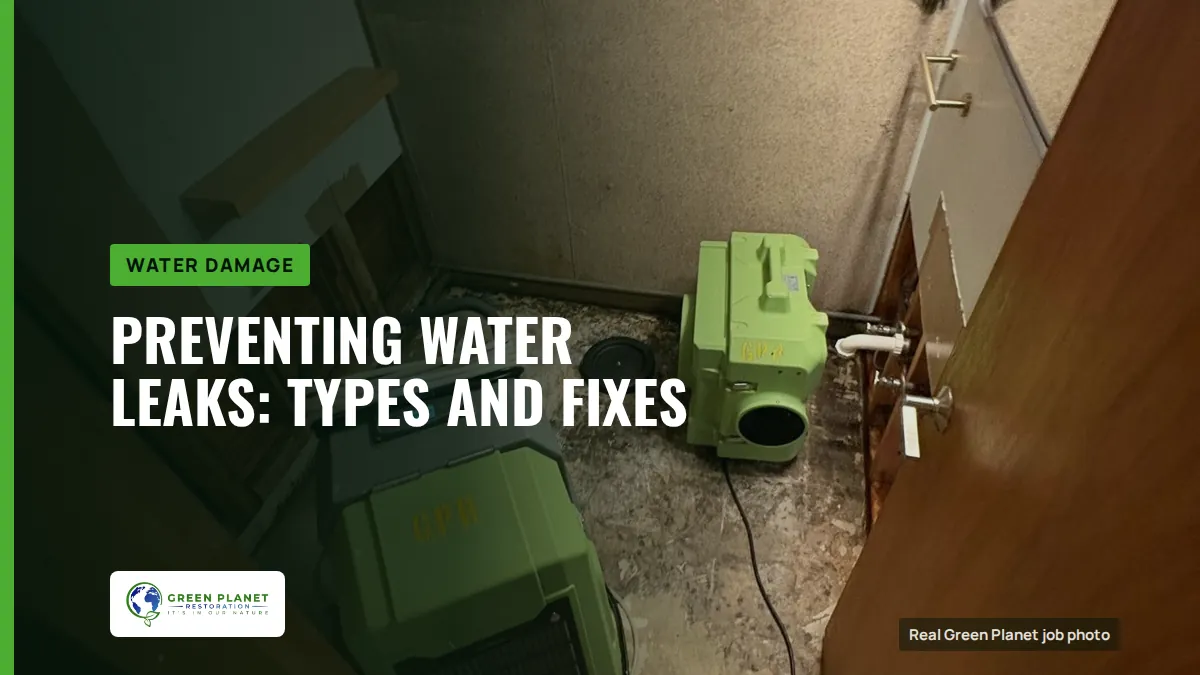
Preventing water leaks starts with understanding where leaks happen and how quickly they can damage a home. A lot of people don’t realize that hidden leaks can also lead to mold and other serious damage in just a day or two. Sometimes the problem starts behind a wall or under the floor, where you can’t easily see it. Whether you live in an older home in Oak Park or a newer house, learning the common signs of leaks can help you avoid costly repairs and keep your home in good shape. If water damage has already occurred, Green Planet Restoration is available 24/7 for emergency response across Southern California.
Why should you Prevent Water Leaks?
Water damage can be destructive and expensive. It can damage your home, create mold problems due to high humidity levels, waste large amounts of water, and lead to electrical or gas safety issues in the house. Therefore, you should actively identify leaks early and take steps to prevent them.
According to the EPA’s WaterSense program, household leaks waste nearly 1 trillion gallons of water across the U.S. every year. Beyond water waste, an undetected leak leads to:
- Structural damage to drywall, subfloor, and framing within days
- Mold and mildew growth begins within 24–48 hours of moisture exposure
- Reduced property value and costly repairs at the time of sale
- Potential electrical hazards if water reaches wiring or panels
Water Leak Types
1. Leaky Faucets
One of the most common types of a water leak is a leaky faucet. When you see an increase in your monthly water bill, this can be a good indicator that there’s a problem with one or more of your taps. They are also fairly easy to fix yourself if they don’t need professional attention – all you have to do is remove the faucet handles and tighten up the washers.
A faucet dripping just once per second wastes more than 3,000 gallons of water per year. If replacing the washers does not fix the drip, the valve seat may be corroded and a licensed plumber should inspect it.
2. Pipe and Valve Leaks
Pipe and valve leaks are often harder to detect because they commonly develop behind walls or beneath flooring. This type of leak can be difficult to find because it often occurs behind a wall or under your floorboards, where you might not expect it to show up. If you notice that there’s an issue with one of these components, etc., then your best bet is to call in a professional plumber.
Galvanized steel pipes – common in older Oak Park homes built before the 1980s – are especially prone to internal corrosion and pinhole leaks. PVC and PEX pipes are more resistant but can still crack under sustained high water pressure or physical stress.
3. Appliance and Fixture Leaks
Appliance and fixture leaks are another common source of hidden water damage in homes. These types of leaks are often found near the toilet or washing machine, where you don’t always expect them to be – keep an eye out for dirty walls and floors.
A running toilet can silently waste up to 200 gallons per day, usually caused by a worn flapper valve at the base of the tank. Washing machine supply hoses are another frequent culprit – rubber hoses degrade over time and should be inspected every six months. Consider upgrading to braided stainless steel hoses for significantly better durability.
4. Hidden Leaks in Walls and Ceilings
Next, we’ll talk about leaks that are not always easily detectable and may only show up when there is a disaster. Hidden leaks inside walls or ceilings are among the most damaging because they often go unnoticed for long periods. These types of leaks can lead to extensive damage if left alone for too long. These kinds of leaks are hard to find, so it is always a good idea to get an expert opinion or hire someone who knows what they’re doing.
If you suspect hidden moisture, a restoration professional can use moisture meters and thermal imaging to locate the source without unnecessary damage to your walls or flooring.
5. Slab Leaks
A slab leak occurs when water or drain lines running beneath your home’s concrete foundation develop a crack or break. These are especially common in older Southern California homes and can go undetected for months. Signs include warm spots on tile floors, the sound of running water with all taps off, and unexplained increases in your water bill. Slab leaks require professional diagnosis – do not attempt to address them without a licensed plumber.
Early Warning Signs of a Water Leak
Catching a leak early is the difference between a minor repair and a major restoration project. Watch for these indicators:
- Unexplained spike in your monthly water bill
- Sound of running water when all fixtures are turned off
- Wet or discolored patches on walls, ceilings, or floors
- Musty or earthy smell in bathrooms, under sinks, or in enclosed spaces
- Soft or warped spots in drywall, wood flooring, or cabinetry
- Visible mold growth near plumbing fixtures — see our guide on signs of mold growth in your home
- Reduced water pressure without explanation from your utility provider
How to Prevent Water Leaks
Preventing water leaks requires regular inspections, maintenance, and early detection, and the best way of preventing them all might not work for each individual case. However, you should always keep in mind that there are some things you can do to help prevent water leaks.
Inspect Pipes and Appliances Regularly
First, regularly check your pipes for wear and tear – this is the most common cause of a leak. If you find any damage, fix it as soon as possible! Next, always make sure you shut off all appliances before leaving or going to bed because if they are not shut off, you might have a gas leak or water leak, and either way it’s dangerous!
Inspect washing machine hoses every six months and replace them proactively every three to five years. Upgrading to braided stainless steel hoses significantly reduces the risk of a sudden burst.
Turn Off Faucets and Monitor Usage
You can also prevent water leaks by shutting off the faucet when you are brushing your teeth, which is a very common cause of a leak.
Know Your Main Water Shutoff Valve Location
Every homeowner should know exactly where the main water shutoff valve is located – typically near the water meter or where the main supply line enters the home. In an emergency, shutting off water within the first few minutes of a leak can dramatically reduce the extent of water damage restoration required.
Look for Leaks and Broken Pipes
Before turning the water back on, walk around and make sure faucets and pipe connections are sealed. Sometimes a loose connection can start dripping once the water is running again. After you turn it on, listen for any dripping sounds and keep an eye out for small puddles or water spots that weren’t there before.
Monitor Your Water Pressure
High water pressure is a leading cause of pipe and hose wear. Normal residential pressure should be between 40 and 80 PSI. You can test this with an inexpensive gauge that screws onto any outdoor hose bib. If pressure exceeds 80 PSI, have a plumber install a pressure-reducing valve (PRV).
Water leaks can become stressful and expensive if left unaddressed. However, if you take the right precautions – such as checking for wear and tear on pipes regularly, shutting down appliances before leaving your home at night – then you should be able to prevent water leaks.
If a leak has already caused damage, do not wait. According to the CDC, mold can begin developing in saturated building materials within 24 to 48 hours – making a fast professional response critical.
Monitoring Your Water Bill for Leak Signals
Keep an eye on your water bill too – it might be the only sign that you have a leak! If you do notice that there is something wrong with your bill, then try to find where the issue might lie by checking underneath sinks or behind toilets, etc. This will help you pinpoint the problem, which can help you identify the source of the leak.
What to Do When a Leak Has Already Caused Water Damage
Even a small leak left unaddressed for 24 to 48 hours can cause damage that goes far beyond what is visible. If you discover water damage in your home, take these steps immediately:
- Shut off the water source if the leak is still active
- Document everything with photos before moving or touching anything
- Remove standing water with towels or a wet/dry vacuum if it is safe to do so
- Contact your insurance company to report the damage before starting repairs
- Do not use household fans to dry wet drywall — improper drying leaves hidden moisture that causes mold growth
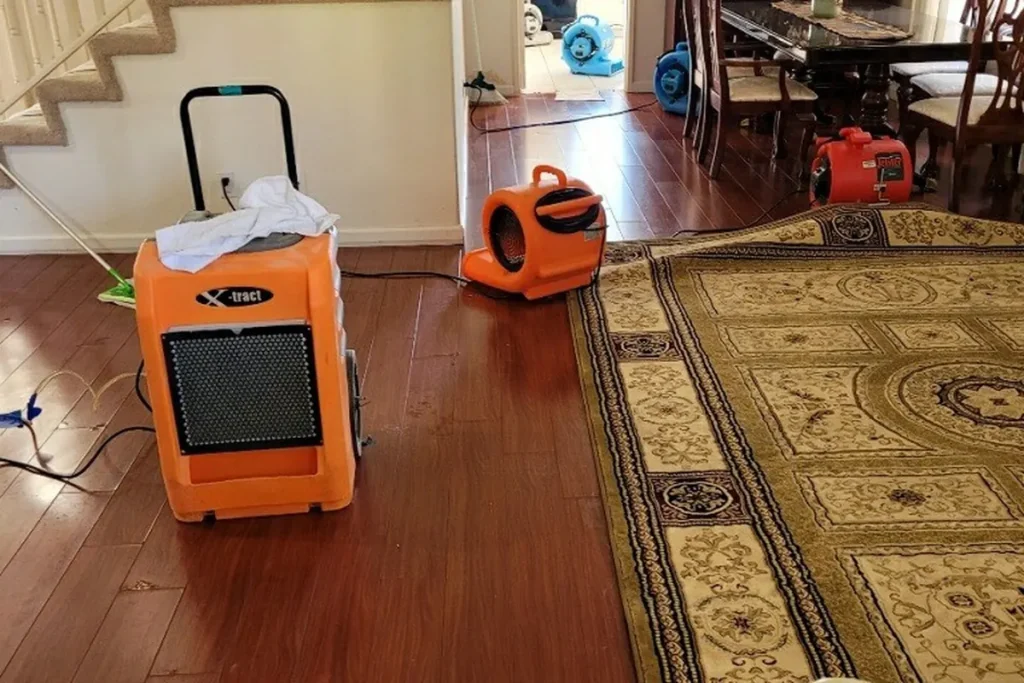
A professional water damage restoration service will use industrial drying equipment and moisture mapping to restore your home to IICRC standards – ensuring no hidden moisture remains to cause structural or mold damage later.
Need Help With Water Damage in Oak Park?
If a water leak has already caused damage to your home, don’t wait. Green Planet Restoration provides 24/7 emergency Water Damage Restoration Oak Park and throughout the Conejo Valley. Our IICRC-certified technicians use advanced drying technology and moisture mapping to restore your home completely – from extraction to final repairs. Call us any time at or contact us online for a free assessment.
__________________________
Frequently Asked Questions
How can I tell if I have a water leak without any visible damage?
Use the water meter test: turn off all water in your home, record the meter reading, wait two hours without using any water, then check again. If the reading changed, you have a hidden leak. Other silent signs include unexplained rises in your water bill, the sound of running water when taps are off, and musty odors inside walls or under flooring.
What are the most common places where water leaks occur in a home?
The most frequent leak locations are under bathroom and kitchen sinks, around the toilet flapper valve, behind washing machines, at water heater connection fittings, and along refrigerator ice maker lines. In older Oak Park homes, slab leaks and corroded galvanized pipes beneath the foundation are also common culprits.
How quickly does water damage from a leak become serious?
Within 24 to 48 hours, saturated building materials can begin to support mold growth. Structural damage to drywall, insulation, and subfloor framing can occur within days of an undetected leak. The earlier you catch and address a leak, the lower the repair cost will be.
Should I file an insurance claim for water damage caused by a leak?
Most standard homeowner policies cover sudden and accidental water damage, but exclude damage from a long-term, unaddressed leak. Document all damage thoroughly and contact your insurer before starting any repairs. Our guide on handling damage restoration insurance claims walks through exactly what to do.
We find the damage, dry or clean the structure and repair it. On site in about 45 minutes, 24/7.

Our articles are written and reviewed by the crews who handle water, fire and mold damage every day across Southern California, Seattle, Miami-Dade and Las Vegas. About us