
Are you tired of your water bill going up every month? If so, it might be time to take a look at your house for leaks. Home water leaks can add up and result in high bills that are completely avoidable. This article will go over some of the most common home water leaks and how to fix them.
In California, where water bills are among the highest in the nation and conservation is a statewide priority, undetected home water leaks pose serious financial and environmental risks. According to the EPA, the average household’s leaks can account for nearly 10,000 gallons of wasted water per year.
Beyond the water bill, leaks that go undetected inside walls, under floors, or behind appliances can lead to structural damage, mold growth, and costly restoration work.
How to Detect a Home Water Leak: First Steps
You can detect a home water leak by looking for signs such as leaking fixtures, running toilets, dripping faucets, and sluggish drains.
You can also go to the meter in your house and see if it is still spinning. If so, this means that there might be a leak in your pipes somewhere inside the walls of your home.
If you have a meter that is not spinning, you can check for a leak by using food coloring or soap on the waterline. In order to do this, turn off your water main and open up one of your valves so that it is easier to see if there are any leaks in the lines. Both colorless and colored liquids will work as they both react to the presence of dirt or other debris.
You can also call a plumber to come and do an inspection for leaks in your home. They will be able to inspect for any signs of leakage, as well as fix them if they find one.
Finally, you could try using a water detector on your pipes at least once every few months.
One of the easiest early detection methods is to monitor your monthly water bill. In California, a sudden increase of 20 percent or more with no change in household usage almost always points to an active leak somewhere in your system.
Additional signs of a hidden home water leak include musty odors in rooms with no visible moisture, discoloration or bubbling paint on walls and ceilings, soft spots on flooring near plumbing fixtures, and unexplained mold growth along baseboards.
How to Fix a Dripping Tap Before It Wastes Water
Turn off the water supply and cover it to avoid any mess. Locate the valve where the tap connects and turn it clockwise to close, then tighten it gently with your fingers until the drip stops. If there is nothing happening when you turn the tap on, you’ve fixed it.
A dripping tap that is not addressed promptly can waste more than 3,000 gallons of water per year – a significant concern in California, where water use is closely monitored. If tightening the valve does not stop the drip, the most likely cause is a worn internal washer.
Replacement washers are inexpensive and available at any hardware store. If the drip continues after replacing the washer, the tap seat may be damaged and will require a plumber to repair or replace the faucet.
How to Identify and Fix a Leaking Radiator
If you have a radiator that’s leaking, you can first try to tighten the screws on it. If this doesn’t fix the leak, then there could be something wrong with your pipes, and they’ll need to be repaired by a professional plumber or HVAC technician.
A good way of checking for leaks in radiators is to hold a piece of newspaper up to the vent at one end. If you see wet spots on your paper, then it is leaking and needs to be fixed.
Radiator leaks most commonly occur at the valve connections, bleed valves, or where sections of the radiator are joined. A slow radiator leak is particularly damaging in California homes because it often drips onto hardwood floors or carpeting for weeks before being noticed, causing warping, staining, and mold growth in the flooring beneath.
If tightening screws and valves does not resolve the leak, do not delay calling a professional – a persistent radiator leak that soaks into flooring or baseboards will require water damage restoration in addition to the plumbing repair.
How to Fix a Leaking Plastic Pipe Joint
If you have a pipe joint made of plastic, then the leak is typically caused by there being too much pressure in your pipes. To stop it from leaking, make sure that all faucets are turned off and then get to work on fixing the problem right away so that no water will be wasted.
If that doesn’t work, there are many different ways to fix a leaking plastic water pipe joint.
You can usually identify a leak by looking for wet spots on the floor where water is being wasted, but if you’re not sure or aren’t getting enough results, then it’s time to call in an expert who will diagnose your problem and fix it right away so that no more of your precious resources are lost.
Plastic pipe joints – commonly used in PVC and CPVC plumbing systems – can fail when water pressure exceeds the fitting’s rated capacity or when the joint was not properly solvent-welded during installation.
In Southern California, seasonal temperature changes can cause thermal expansion and contraction, gradually stressing plastic fittings and leading to leaks around connection points. If the same joint continues leaking even after tightening, the fitting likely needs replacement rather than another temporary repair.
How to Handle a Leaking Underground Water Pipe
An underground leaking water pipe is not as easy to fix as one above ground. The first step would be to call a plumber and find out the location of your leak, where it is coming from, or if there are any other leaks in the system. Once you have this information, they will send someone out who can assess the damage and provide an estimate for the work needed on the leak.
To fix a leaking pipe, you will have to dig up the ground around it and then replace it with a new pipe that is of equal diameter. Make sure there are no obstructions, such as tree roots, in order for the work to go smoothly. Once this has been done, seal off any openings in your house or yard where water has been leaking.
Underground water pipe leaks are particularly common in California due to seismic activity – even minor tremors can shift soil and stress pipe joints over time. Signs of an underground leak include unexplained wet or soggy patches in your yard during dry weather, sinkholes or depressions forming near your water main, and a sudden drop in water pressure throughout your home.
Professional plumbers can use acoustic leak detection equipment to pinpoint the exact location of an underground leak without unnecessary excavation, saving significant time and landscaping costs.
How to Fix a Leaking Toilet at Home
This is a simple fix. You will have to remove the tank cover and then find your valve stem, which should be located near the back of the toilet bowl. Once you locate it, turn off the water supply to that valve by turning on its outside knob or handle. Next, unscrew the nut with an adjustable wrench in order for the pipe parts to be loosened.
Remove the riser pipe connected to your toilet and replace it with a new one of equal size. Once this has been done, check all connections for tightness and turn the water supply back on to confirm the leak is resolved.
A running or leaking toilet is one of the most wasteful home water leaks – it can waste up to 200 gallons per day without making any obvious sound. To test for a silent toilet leak, add a few drops of food coloring to the tank and wait 15 minutes without flushing.
If color appears in the bowl, your flapper or flush valve is leaking and needs to be replaced. A leaking wax seal at the base of the toilet can also allow water to slowly seep under the flooring, causing subfloor damage and mold growth that requires professional water damage restoration to address.
How to Fix a Leaking Shower Step by Step
Remove the drain cover and take down the shower head. Take out any hair clogs from the pipe. Clean off any debris that may have collected around your pipes since water will not be running through them while you repair or restore them if they are a bit dirty.
Fixing a leaky shower is more difficult than repairing leaking pipes in the bathroom or kitchen and may require an expert plumber, but here are some steps to help you get started:
Check for any signs that water is draining from your bathtub, like puddles on the floor below it. Repair any loose parts, such as the pipe fitting or the overflow tube. Check for and remove any hair clogs from your pipes, then replace them with a new sealant every three years to avoid leaks in the future.
Shower leaks are not always visible at the drain or showerhead. In many California homes, cracked grout lines and failed tile sealant allow water to penetrate the wall cavity behind the shower – causing ongoing moisture buildup that leads to mold growth inside the wall.
Signs of a hidden shower wall leak include loose or discolored tiles, a musty smell in or near the bathroom, or soft spots on the wall or ceiling of an adjacent room. If you suspect a hidden shower leak, contact a water damage restoration professional for a moisture inspection before the damage spreads further.
When to Call a Professional for Home Water Leak Repair
Some of the leaks covered in this guide can be addressed with basic tools and DIY effort. But if you encounter any of the following situations, stop and call a professional immediately:
- You cannot locate the source of an active leak after checking all fixtures
- Water is near electrical outlets, panels, or wiring
- Water stains, soft spots, or mold appear on walls, ceilings, or floors
- A musty smell persists even after visible water is cleaned up
- Your water bill has increased significantly without explanation
- The leak has caused visible water damage to the flooring, drywall, or cabinetry
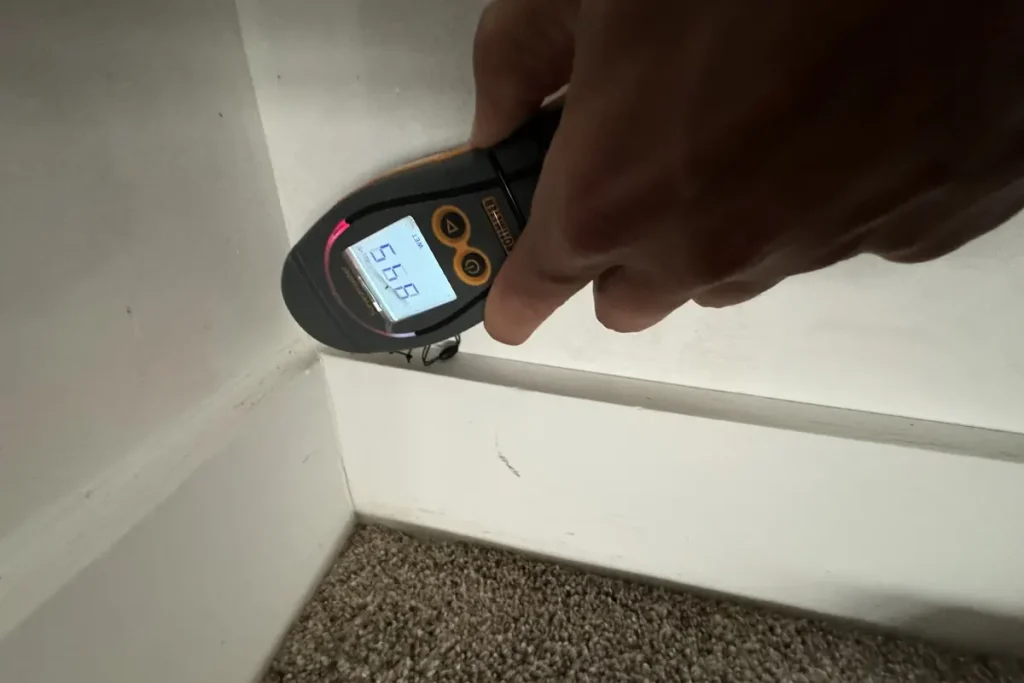
If any of these apply, do not wait. Call Green Planet Restoration, our certified team is available 24/7 and responds to water leaks and water damage emergencies across California. We use professional moisture detection equipment to find and address hidden leaks inside walls, floors, and ceilings before mold has a chance to develop.
Conclusion
Home water leaks are rarely dramatic at first – they start small, stay hidden, and grow quietly until the damage becomes impossible to ignore. Knowing the most common sources, how to detect them early, and when to call a professional is the difference between a minor repair and a major restoration project.
For California homeowners dealing with water damage from an undetected leak, the longer you wait, the more it costs. Contact Green Planet Restoration for emergency water damage restoration across California.
_______________________
Frequently Asked Questions
How do I know if I have a water leak in my house?
Check your water meter first. Turn off all fixtures and appliances, then watch the leak indicator on the meter face for movement. If it moves while everything is off, you have an active leak. Other signs include an unexplained rise in your water bill, musty odors with no visible source, soft or discolored spots on walls and ceilings, and mold growth near baseboards or plumbing fixtures.
What is the most common cause of home water leaks?
The most common causes of home water leaks are worn internal washers in faucets, deteriorated toilet flappers or flush valves, faulty supply line connections under sinks and behind appliances, and corroded pipe joints. In California, aging pipes in homes built before 1980 are a particularly common source – galvanized steel pipes corrode from the inside out and can develop pinhole leaks that go undetected for months.
Does homeowners’ insurance cover home water leak damage in California?
Standard California homeowners’ insurance typically covers sudden and accidental water damage from plumbing failures such as burst pipes or failed appliance hoses. Gradual leaks caused by deferred maintenance are usually not covered. If your home has experienced water damage from a leak, document everything with photos immediately, notify your insurer before any cleanup begins, and hire a licensed water damage restoration company that can provide written documentation to support your claim.
We find the damage, dry or clean the structure and repair it. On site in about 45 minutes, 24/7.

Our articles are written and reviewed by the crews who handle water, fire and mold damage every day across Southern California, Seattle, Miami-Dade and Las Vegas. About us