
Los Angeles isn’t known for rain, which is exactly why heavy storms do so much damage when they arrive. Long dry spells bake the soil hard, gutters fill with leaves, and many homes were never set up for a sudden downpour. When intense rain hits, water has nowhere to go but inside.
The good news is that most rain damage starts at a handful of predictable weak points. Here’s how to prepare your home for heavy rain before the season starts.
Why Heavy Rain Hits Los Angeles Homes So Hard
Rain adds up faster than most people think. The U.S. Geological Survey calculates that a 1-inch rainstorm deposits 27,154 gallons of water on a single acre. In a city covered in rooftops, driveways and streets, much of that water runs off instead of soaking in, and it heads for the lowest point it can find.
In hillside neighborhoods, fast runoff can erode soil and push mud toward foundations. In flatter areas, water pools against walls and slabs. Either way, the fix is the same: manage the water before it reaches the house.
Checklist to Prepare Your Home for Heavy Rain
-
Clean gutters and downspouts, and check for sagging or separated joints.
-
Extend downspouts so water discharges well away from the foundation.
-
Check that the soil slopes away from the house on every side.
-
Inspect the roof for cracked flashing, lifted shingles and broken tiles.
-
Reseal gaps in stucco, around windows and doors, and at pipe and wire openings.
-
Clear yard drains, flat-roof drains and scuppers.
-
Seal the base of the garage door and raise stored items off the floor.
-
Put water sensors near water heaters, laundry areas and low spots.
Drainage: Move Water Away From the Foundation
Exterior drainage is the most commonly missed step. Guidance from Iowa State University Extension, published by the North Dakota Department of Emergency Services, says the soil should drop at least 6 inches in the first 10 feet away from the house. If your yard is flat or slopes toward the walls, water will collect there in every heavy storm.
The same guidance recommends discharging downspout water at least 5 to 10 feet from the house when a home already has water problems. Downspout extensions, splash blocks or buried drain lines all work. For yards that don’t absorb water well, a French drain or channel drain can collect runoff and carry it off the property.
Infographic
Heavy Rain Prep by the Numbers
- 127,154 gallonsWhat a 1-inch storm drops on a single acre (USGS).
- 26 inchesMinimum drop in the soil over the first 10 feet away from the house.
- 35 to 10 feetHow far downspouts should discharge on homes with past water problems.
- 424 to 48 hoursThe window to dry water-damaged materials and prevent mold growth (EPA).
Gutter Cleaning
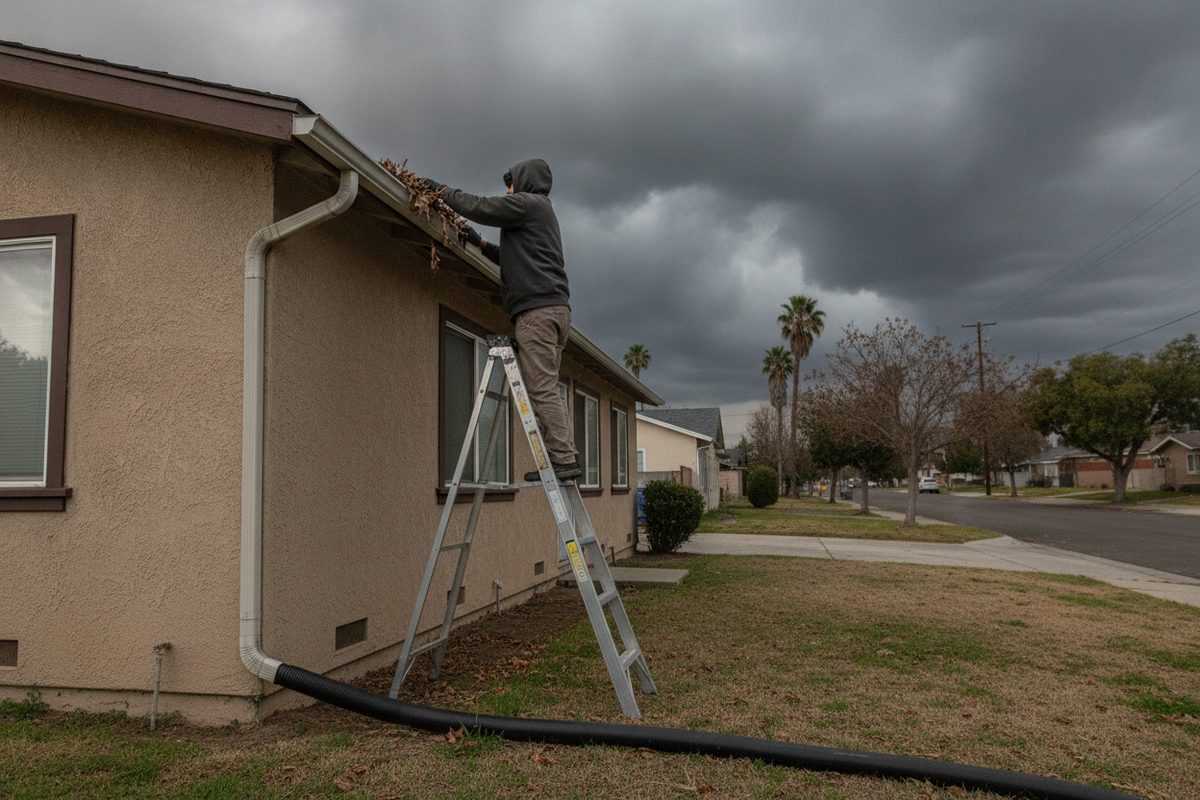
Clogged gutters overflow onto fascia boards, walls and foundations. That overflow rots roof edges and lets water into wall cavities. The EPA’s mold and moisture guide recommends cleaning and repairing roof gutters regularly as a basic step in keeping moisture out of the home.
In Los Angeles, plan to clean gutters before the rainy season and again after it, more often if trees hang over the roof. Look for loose fasteners, sagging runs and separated seams while you’re up there. Gutter guards cut down on debris but still need periodic checks.
Roof Checks Before the Rainy Season
Your roof is the first barrier against heavy rain, yet it’s usually ignored until a leak appears. Many Los Angeles homes have low-slope or flat roofs, which are more prone to ponding during intense storms.
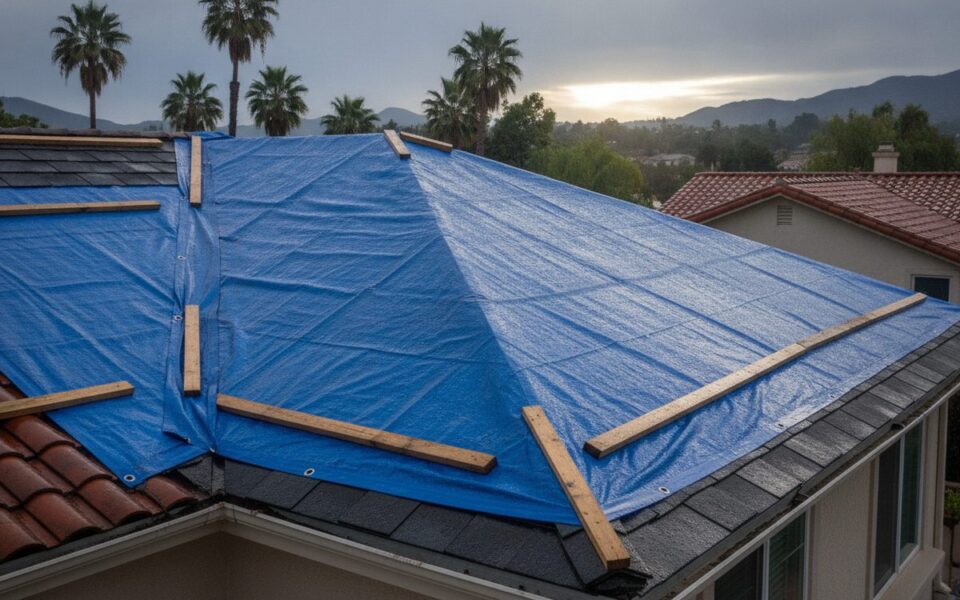
Have the roof checked for cracked flashing, dried-out sealant, lifted shingles and slipped tiles, and make sure flat-roof drains are clear. Small repairs now cost far less than water damage later. FEMA notes that federally funded mitigation grants can save $6 in future disaster costs for every $1 spent, and while that figure comes from large-scale programs, the same logic applies to a home: preventing damage is cheaper than repairing it.
If a leak has already started, read how roof leaks after rainstorms cause secondary damage.
Seal the Walls, Windows and Doors
Most Los Angeles homes sit on slab foundations, so water usually gets in through walls, door thresholds, flooring seams and garages rather than basements. Check for:
-
Cracks in stucco, especially near corners and window frames
-
Aging sealant around hose bibs, pipes and utility lines
-
Worn caulking and brittle weather stripping at windows and doors
-
Door thresholds that let wind-driven rain under the door
Use flexible, exterior-grade sealants that move with temperature changes. Wind-driven rain finds the smallest gap, so pay close attention to the side of the house that faces incoming storms.
Water that seeps through slabs and lower walls causes slow, hidden damage. Learn more about foundation seepage and secondary water damage and about common types of water leakage.
Protect the Garage and Interior
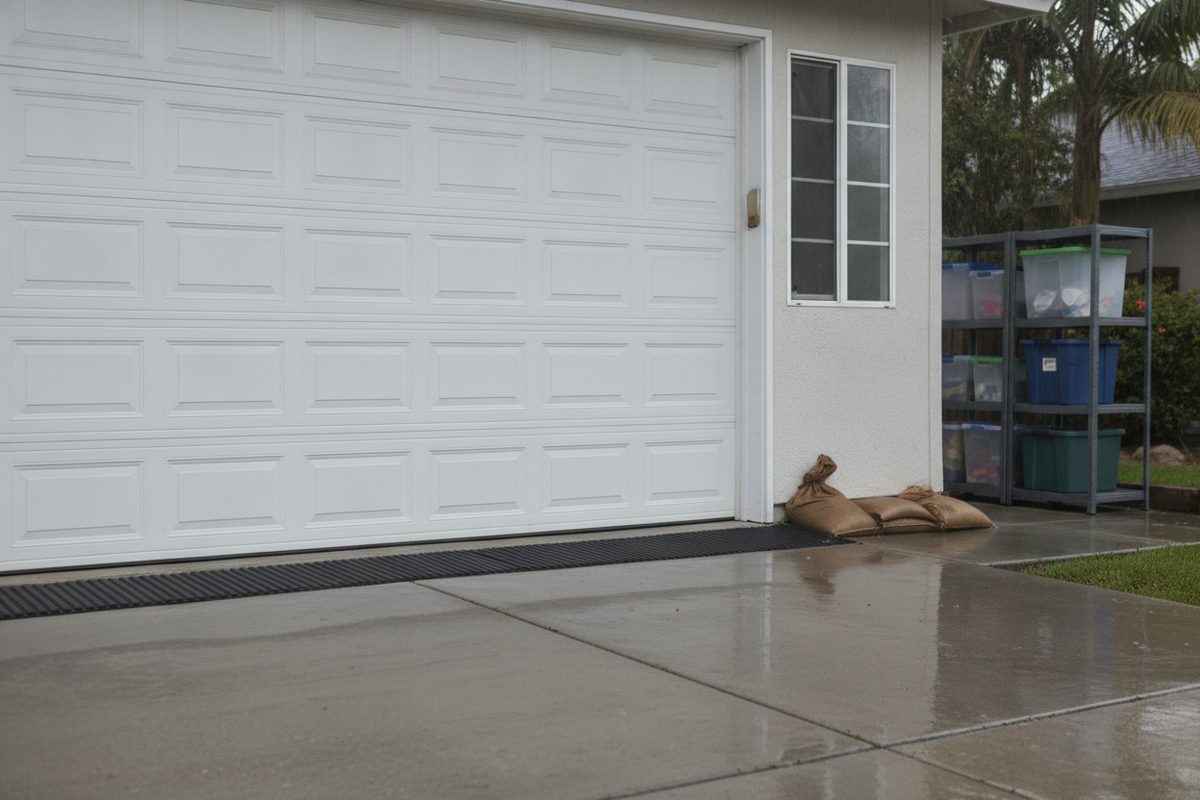
Garages that sit slightly below street level are a frequent entry point for storm water. Seal the base of the garage door, clear any floor drains, and keep temporary flood barriers or sandbags on hand if water has come in before. Store boxes and valuables on shelves rather than the floor.
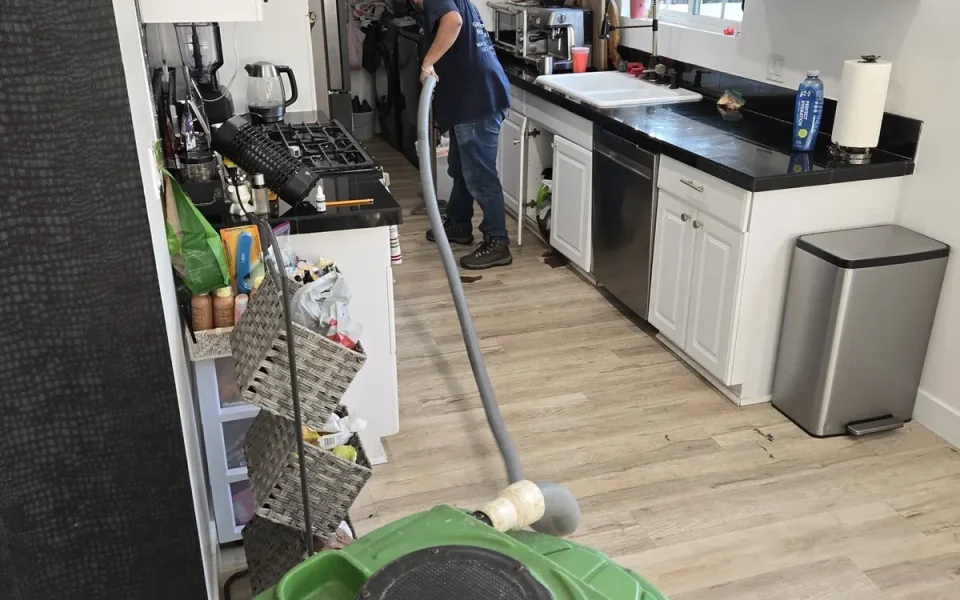
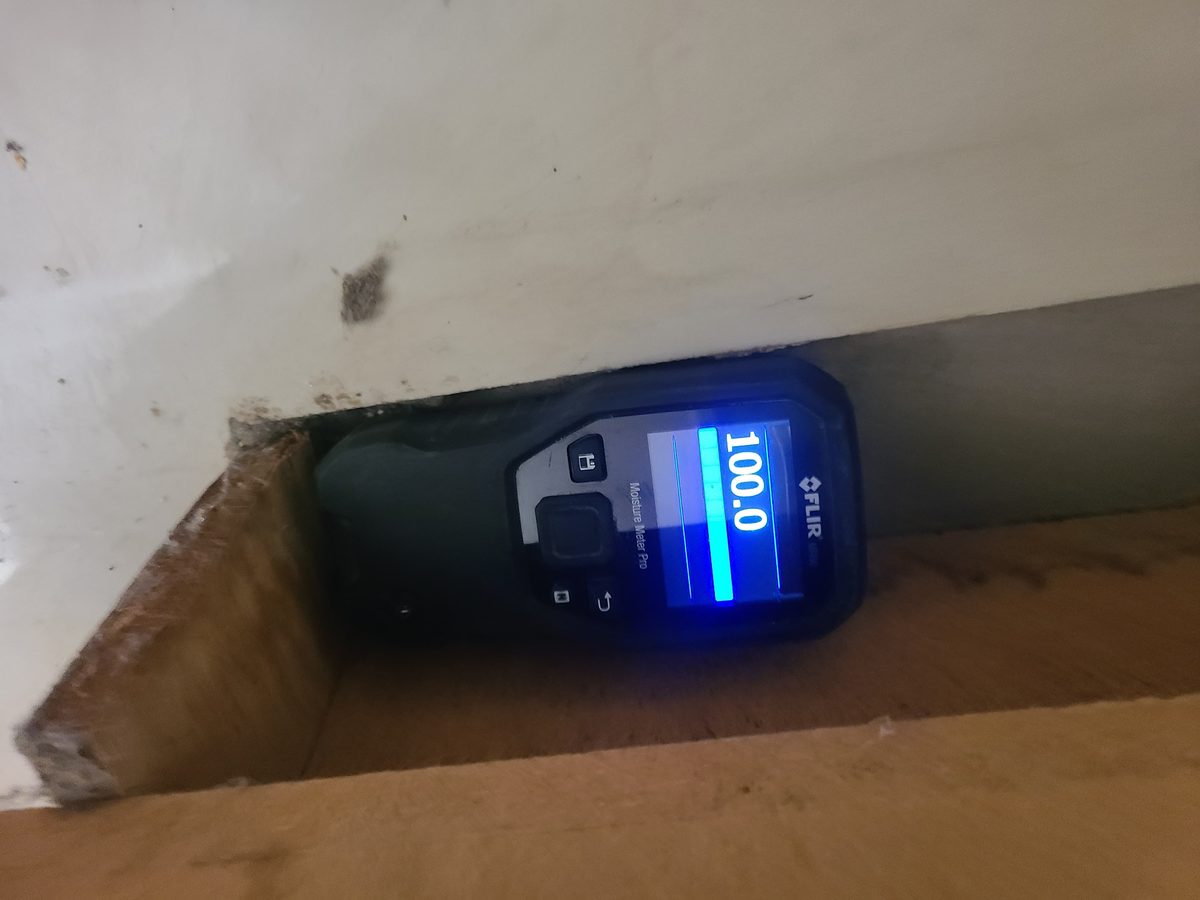
Inside, water sensors near water heaters, laundry rooms and low spots give early warning. If anything does get wet, dry it fast: the EPA advises drying water-damaged areas within 24 to 48 hours to prevent mold growth. A wet-dry vacuum, fans and a dehumidifier can handle a small spill, but soaked drywall, insulation or carpet pad usually needs professional drying equipment. Efraim Haim, CEO of Green Planet Restoration, advises calling a professional once water has wicked into drywall or carpet pad, because those materials hold moisture that household fans won’t pull out in time.
Keep Records of Your Maintenance
Save dated photos, receipts and notes for gutter cleaning, roof work and sealing. GPR’s team, led by Haim, recommends taking those photos before the first storm of the season so you have a clear baseline to compare against later. Those records help show your home was maintained if you ever need to file a claim, and they make it easier to tell rain damage from storm damage when a leak appears.
When heavy rain does cause damage, Green Planet Restoration of LA provides storm damage restoration and water damage restoration in Los Angeles to stop the water and dry the home quickly.
Water already getting in? Call Green Planet Restoration of LA now for emergency response within 45 minutes. We’ll stop the water, dry your home and document the damage for your insurer.
Heavy Rain Prep for San Fernando Valley Homes
Across the San Fernando Valley, housing runs from 1950s ranch houses in Reseda, Van Nuys and Canoga Park to large apartment buildings, and many of those older homes still have original gutters, aging stucco and flat or low-slope roof sections. After months of dry Santa Ana weather, the first heavy storms of the rainy season tend to find every clogged downspout and cracked seal at once. Homes near the hills around Chatsworth, Porter Ranch and West Hills also deal with fast runoff and mud pushing toward foundations.
If water gets inside anyway, Green Planet Restoration of LA’s Chatsworth crew handles flood damage restoration in Los Angeles and across the Valley. Call (818) 717-0203 any time, day or night.
Frequently Asked Questions
How do I protect my house from heavy rain?
Start with water flow. Clean gutters, extend downspouts away from the foundation, and make sure the soil slopes away from the house. Then check the roof for cracked flashing and lifted shingles, reseal gaps in walls, windows and doors, clear yard and roof drains, and protect the garage with a door seal or barriers.
How far should downspouts drain from the house?
Water should discharge well away from the foundation. Guidance from Iowa State University Extension recommends at least 5 to 10 feet for homes that already have water problems. Downspout extensions, splash blocks or buried drain lines can carry water far enough to keep it from pooling against the walls.
When should I clean my gutters in Los Angeles?
Clean them before the rainy season starts and again after it ends. Homes with trees overhanging the roof may need more frequent cleaning. While you’re at it, check for loose hangers, sagging sections and separated seams, since even a small gap can send water behind the gutter and into the wall.
What should I do if water gets inside during a storm?
Stay safe first, and shut off power to wet areas if you can do it safely. Move belongings out of the water, photograph the damage, and call a restoration company. The EPA advises drying water-damaged materials within 24 to 48 hours to prevent mold, so fast extraction and drying matter.
References
- Federal Emergency Management Agency. (n.d.). Investing in mitigation to build a more resilient nation. FEMA. https://fema.gov/blog/investing-mitigation-build-more-resilient-nation
- North Dakota Department of Emergency Services. (n.d.). Basements may flood if drainage is poor [Fact sheet adapted from Iowa State University Extension]. NDResponse.gov. https://ndresponse.gov/sites/www/files/documents/docs/basements-may-flood-if-drainage-is-poor.pdf
- U.S. Environmental Protection Agency. (2026, February 18). A brief guide to mold, moisture and your home. EPA. https://www.epa.gov/mold/brief-guide-mold-moisture-and-your-home
- U.S. Geological Survey. (2019, June 20). Water Q&A: How much water falls during a storm? USGS Water Science School. https://www.usgs.gov/water-science-school/science/water-qa-how-much-water-falls-during-a-storm
Featured image: AI-generated illustration.
We find the damage, dry or clean the structure and repair it. On site in about 45 minutes, 24/7.

Our articles are written and reviewed by the crews who handle water, fire and mold damage every day across Southern California, Seattle, Miami-Dade and Las Vegas. About us