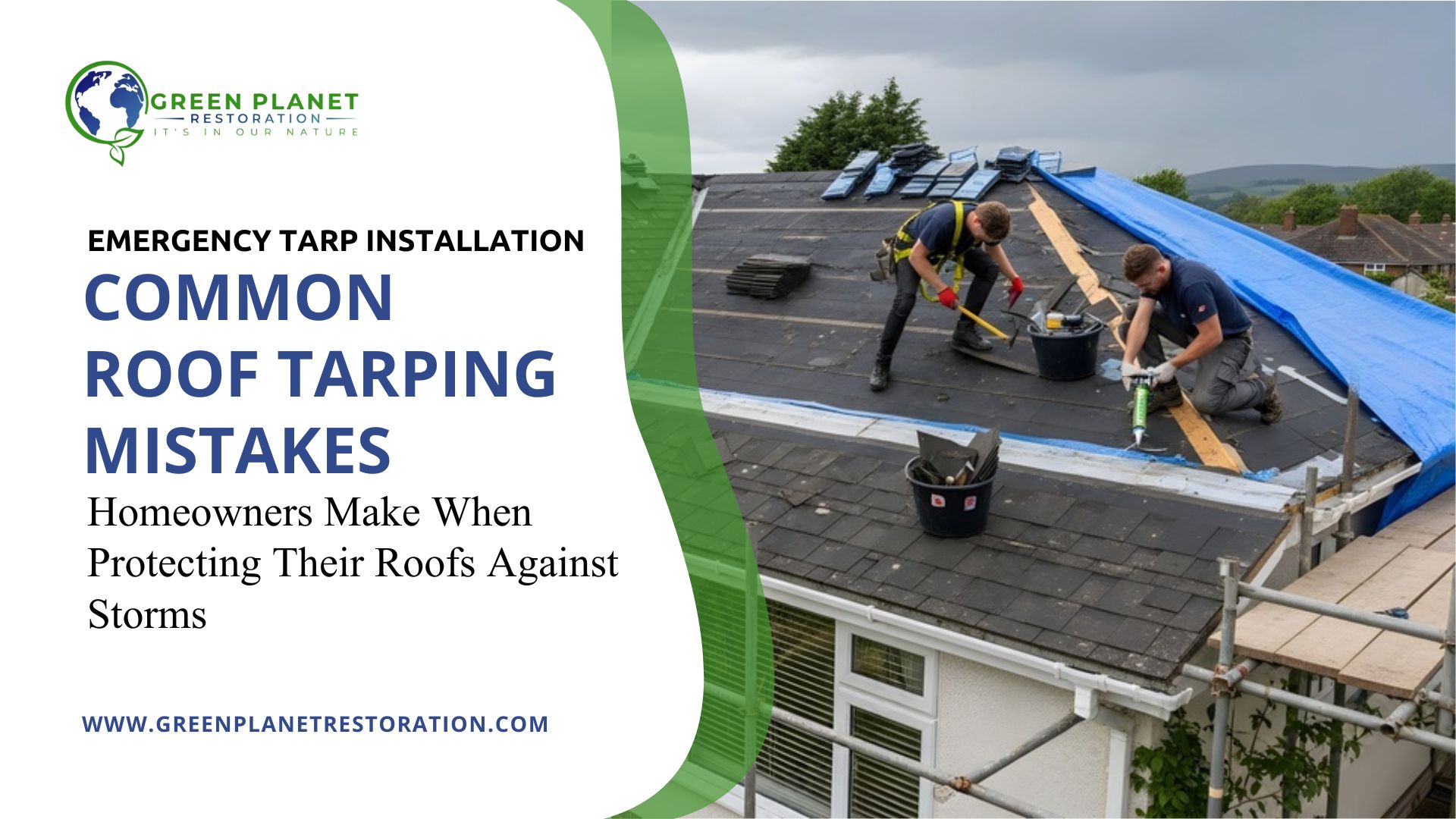
When a storm hits, and your roof starts leaking, panic usually kicks in before logic does. Water dripping into your living room isn’t exactly something you can ignore, so many homeowners rush to grab a tarp and “handle it themselves.” And honestly, that reaction makes sense. emergency roof tarp installation can feel like the fastest way to protect your home.
The problem is that roof tarping looks easier than it actually is. Small errors can lead to bigger leaks, more damage, and even serious safety risks. In fact, many of the problems restoration professionals fix later are caused by roof tarping mistakes made in a hurry.
Let’s talk about the most common mistakes homeowners make when tarping roofs, and why doing it the wrong way can cost you more than you expect.
Why Proper Roof Tarping Matters So Much
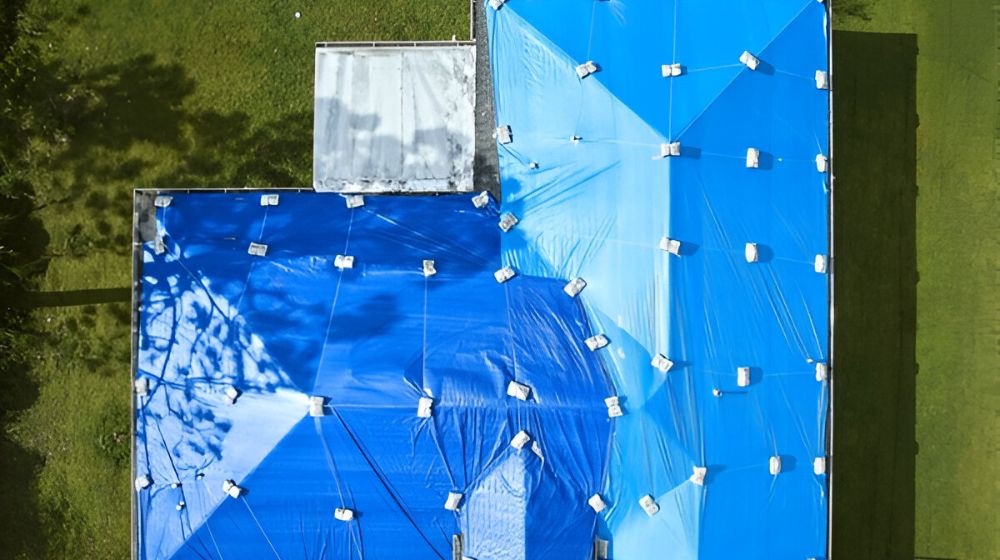
Roof tarping is meant to be a temporary shield, not a full repair. Its main job is to stop rain from entering your home until complete repairs can be made. When done correctly, it can prevent water from soaking your ceilings, walls, insulation, and even your electrical systems.
If you tarp the roof the wrong way, water can still get in and cause damage. A loose tarp, poor placement, or bad anchoring can redirect water into new areas of your roof, causing hidden damage you won’t notice until weeks later.
That’s why understanding these mistakes matters, mostly during emergencies.
Mistake #1: Ladder Misuse and Unsafe Setup
The most dangerous roof tarping mistakes have nothing to do with the tarp itself. It begins with the mistakes people make with their ladder.
Many homeowners use whatever ladder they have in the garage, even if it is very short, unstable, or meant for indoor use. Others place ladders on uneven ground or fail to secure them properly. Add damp surfaces, strong winds, and stress to the situation, and you’ve got a serious fall risk.
Roof work is one of the leading causes of home-related injuries. Professionals use stabilizers, safety harnesses, and proper ladder placement for a reason. If climbing up already feels uncomfortable or unsafe, that is your sign to stop.
Mistake #2: Using the Wrong Type of Tarp
Not all tarps are created equal, and this is where many attempts fall apart – literally.
Thin plastic tarps or low-quality materials might look fine at first, but they don’t stand up well to wind, rain, or sharp roofing edges. As soon as the weather changes, those tarps rip, flap, or tear loose. Tarp tears are common when homeowners use lightweight tarps.
Another issue is size. A tarp that barely covers the damaged area won’t protect much. You need extra coverage so water runs over the tarp, not under it.
Mistake #3: Improper Anchoring of the Tarp
Improper anchoring is one of the most common roof tarping mistakes homeowners make during emergency roof tarp installation.
Some people nail the tarp directly into damaged shingles or weak spots, which can actually create new holes for water to enter. Others use too few fasteners, leaving edges loose and exposed to the wind. Once the tarp starts flapping, it doesn’t take long before it rips or blows off completely.
Correct anchoring refers to fixing the tarp correctly (tightly, evenly, and in such a manner that would not cause further damage to the roof). This is where professional experience really makes a difference.
Mistake #4: Ignoring Water Flow and Roof Design
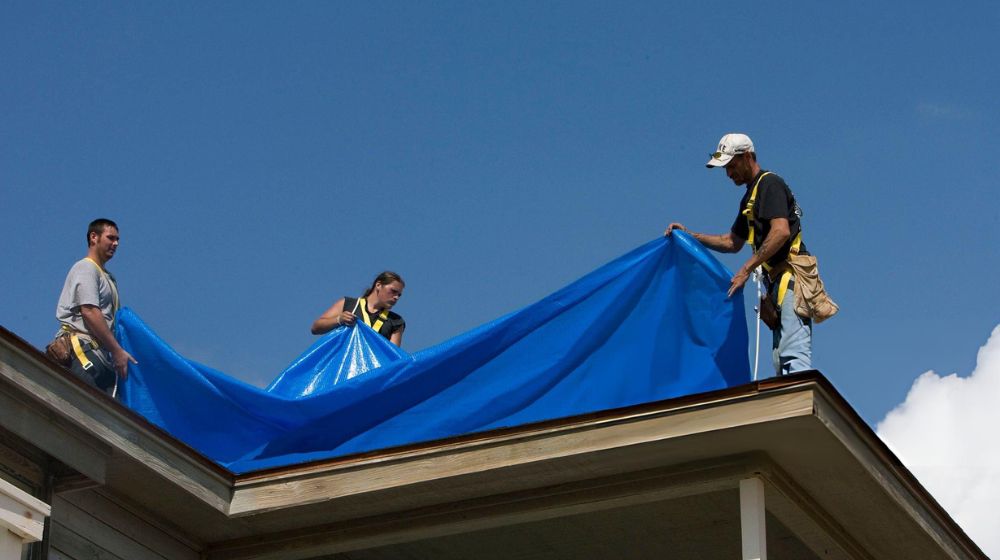
Water always follows gravity, but many homeowners don’t think about that when placing a tarp.
If the tarp is installed against the natural flow of rainwater, water can pool underneath instead of draining off. This trapped moisture slowly seeps into the roof structure, causing hidden water damage that lasts for a long time.
A properly placed tarp works with the roof’s slope. Professionals know how to position tarps so water sheds away from vulnerable areas rather than collecting where you can’t see it.
Mistake #5: Underestimating Risks
It is easy to think, “This is just temporary. I will fix it properly later.” Unfortunately, risks are underestimated during roof emergencies.
Aside from the obvious safety dangers, there are structural risks homeowners may not notice. Storms can weaken the decking, loosen shingles, or make the framing unstable. Stepping in the wrong spot could make the damage worse or even cause part of the roof to give way.
On top of that, incorrect tarping can void coverage insurance claims if it leads to additional damage. A simple fix can easily turn into a bigger issue.
Mistake #6: Leaving the Tarp on for Too Long
Roof tarping is not a fixed solution. Some homeowners leave tarps in place for weeks or even months.
Over time, tarps trap moisture, block proper ventilation, and create a good environment for mold growth. Sun exposure also weakens tarp material, making it more likely to fail when the next storm damages it.
Roof tarping should always be followed by professional repairs as soon as possible. The longer you wait, the more expensive the final fix usually becomes.
How Professional Roof Tarping Makes a Difference
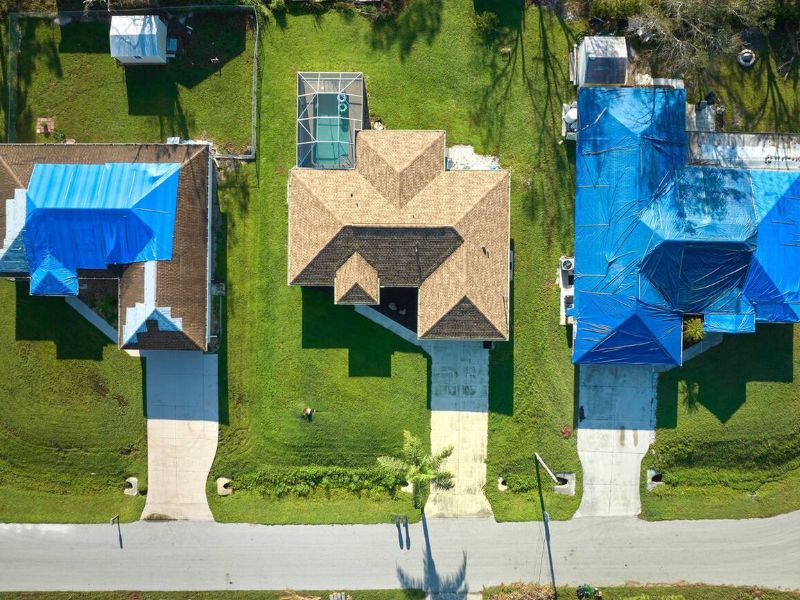
Hiring professionals for emergency roof tarping installation isn’t just about convenience. It is about stopping other damage. Professional tarping also gives homeowners safety. Instead of worrying about the next rainfall or if the tarp will hold, you can focus on scheduling proper repairs and getting life back to normal.
If your roof is damaged, it’s okay to act fast. But it’s just as important to act smart. When safety, protection, and long-term savings matter, professional emergency roof tarp installation is often the safest and most effective choice.
Final Assessment
Roof tarping is the best and an instant solution during emergencies, but common roof tarping mistakes can quickly make things worse. From ladder misuse and tarp tears to improper anchoring and risks, small mistakes can lead to damage. Water intrusion doesn’t always show up right away, which makes these errors even more dangerous.
Green Planet Restoration brings the right equipment, heavy-duty tarps, and proven anchoring methods. We know roof structures, water flow, and safety protocols. Most importantly, we know how to secure your home quickly without creating new problems. Contact Green Planet Restoration whenever you need help to handle emergency roof tarp installation.
______________________
Related Articles
Complete Guide to Crawl Space Maintenance and Cleanup
24 Hour Plumbing Emergency Guide
How LGR Dehumidifiers Prevent Secondary Damage
How Moisture Meters Prevent Mold Growth
Leaking Ice Makers: Why They Happen and How to Prevent Them
How To Handle Flood Damage in Southern California
Should I File an Insurance Claim for Water Damage?