
Why Understanding Air and Moisture Matters
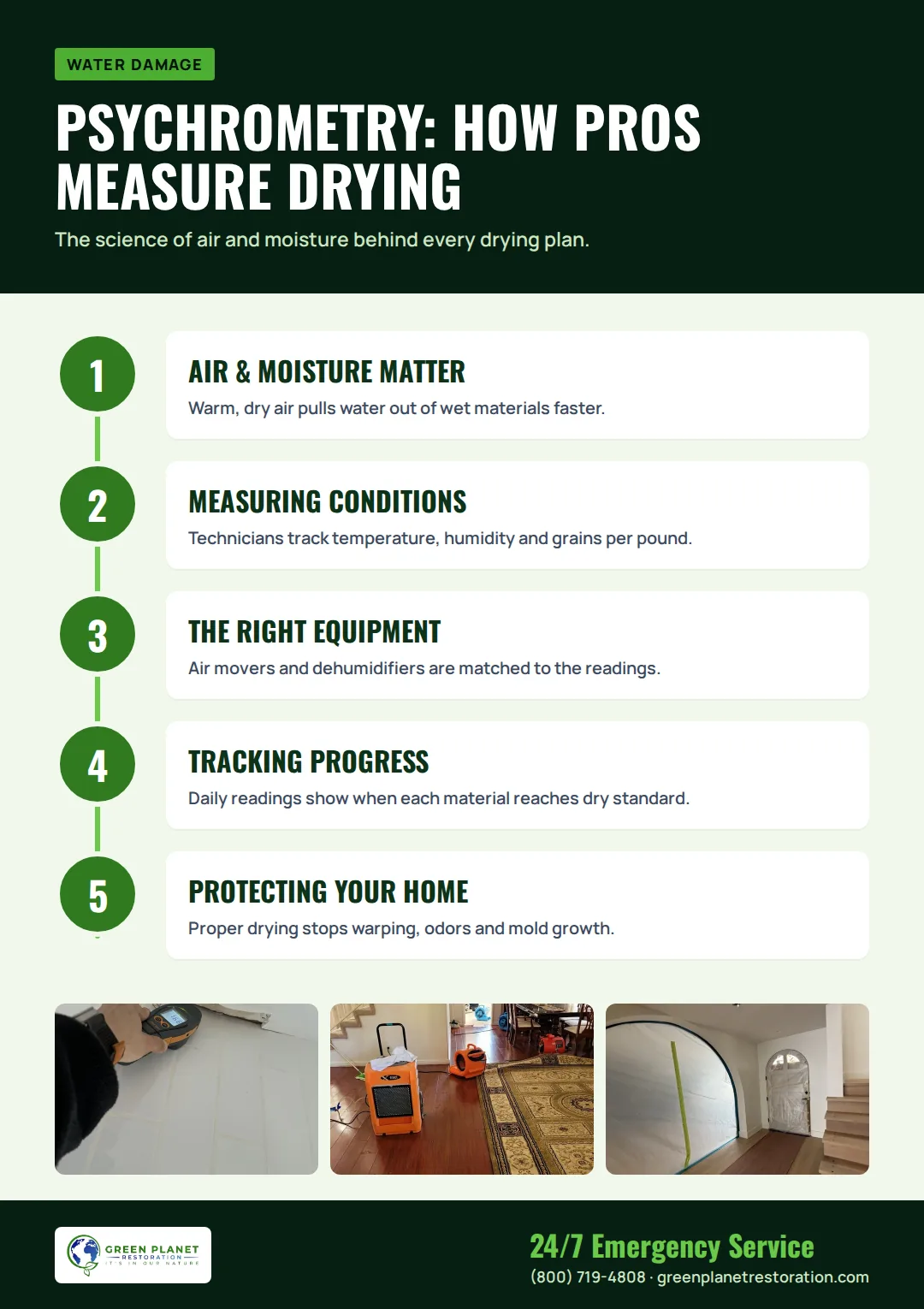
When water enters your home, it doesn’t just sit on the floors or walls. It spreads through the air and gets absorbed by nearby materials. Wood, drywall, carpets, and insulation can all get wet, leading to mold growth and structural weakening. Even small amounts of trapped water can cause costly damage in the long run if not treated quickly. Psychrometry in water damage restoration is applied by technicians to determine the temperature of air, moisture levels, and humidity in substances. This in turn guides the restoration crew on how and where to place the drying equipment in order to get the best results. Regular monitoring of the readings also informs the crew on whether the moisture is being extracted from the surfaces by the airflow or adjustment to the equipment placement is needed. According to the IICRC (2021), regular monitoring of the conditions ensures the property dries evenly and safely and does not have hidden water damage. This in turn reduces the chance of mold growth, lingering odors, and expensive repairs in the future.How Technicians Measure Drying Conditions
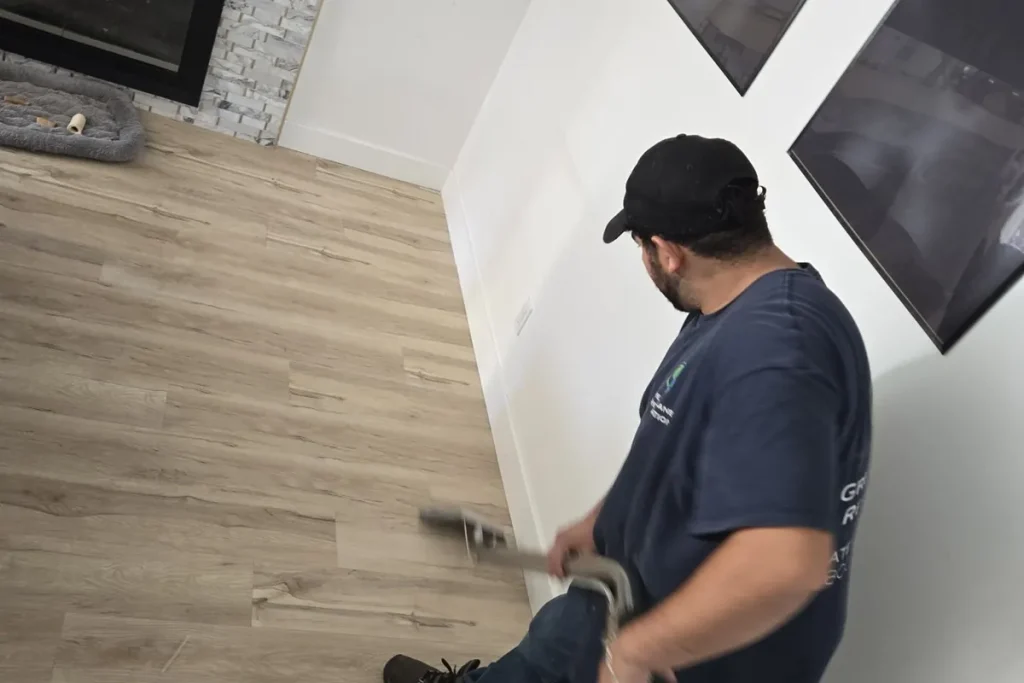
- Air temperature (dry bulb): Room standard temperature. Helps decide on the necessity of heat.
- Evaporation rate (wet bulb): It is a composite of temperature and humidity that illustrates the rate of water evaporation. Increased humidity retards drying.
- Relative humidity (RH): The quantity of moisture in the air. Reduced RH facilitates the departure of water from wet materials.
- Dew point: The temperature at which water is condensed. When surfaces become too cold, new water may develop, and this increases the likelihood of mold.
- Moisture in the air (Grains Per Pound, GPP): Tracks how much water is in the air and how much has been removed from your home.
- Vapor pressure: Shows how strongly water moves from wet surfaces into the air. Higher pressure speeds up drying.
Equipment That Gets Your Home Dry Faster
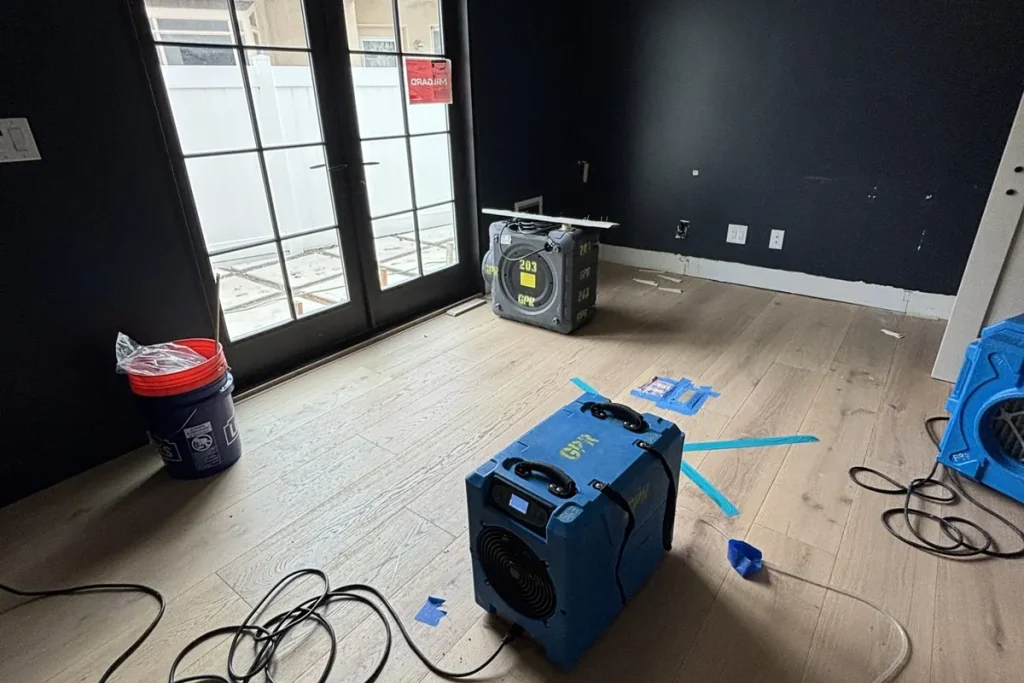
- LGR dehumidifiers: LGR dehumidifiers are best for warm, humid spaces. Remove moisture from the air quickly and effectively.
- Desiccant dehumidifiers: Desiccant dehumidifiers are best for cold areas or when the air needs to be totally dry.
- Air movers: Air movers help water evaporate from floors, walls, and furniture, but they need dehumidifiers to keep humidity under control.
Tracking Drying Progress Accurately
How This Protects Your Home
Drying your home is important with psychometrics. Incomplete drying can leave damp walls and floors, mold growth, lingering odors, or problems in the long-run structure. Psychometrics guides each process with accurate data. Technicians are able to regulate heat, airflow, and dehumidifiers using actual measurements being captured live in most cases. This helps your home dry completely and prevents issues in the future. The restoration crew at Green Planet Restoration of LA is trained to read these conditions accurately. We are aware of when your house is drying properly and when you need to make some adjustments in order to give you peace of mind and faster results.Get Professional Help Now
Psychrometry in water damage restoration may sound technical, but it’s all about making sure your home dries properly after water damage. By knowing about air and moisture, restoration workers avoid the development of mold, preserve your building, and restore your house effectively. If your home has water damage, don’t leave it to guesswork. Contact Green Planet Restoration of LA today to dry your home completely, safely, and quickly with the latest psychrometry-based methods. ________________________References
ASHRAE. (2021). ASHRAE handbook – Fundamentals. American Society of Heating, Refrigerating and Air-Conditioning Engineers. IICRC. (2021). ANSI/IICRC S500 standard for professional water damage restoration (4th ed.). Institute of Inspection, Cleaning and Restoration Certification. https://www.iicrc.org Restoration Industry Association. (2020). Best practices for restorers in structural drying. U.S. Environmental Protection Agency. (2023). Mold remediation in schools and commercial buildings. https://www.epa.gov/mold/mold-remediation-schools-and-commercial-buildings-guide ______________________Related Articles
Complete Guide to Crawl Space Maintenance and Cleanup 24 Hour Plumbing Emergency Guide How LGR Dehumidifiers Prevent Secondary Damage How Moisture Meters Prevent Mold Growth Leaking Ice Makers: Why They Happen and How to Prevent Them How To Handle Flood Damage in Southern California Should I File an Insurance Claim for Water Damage? 8 Common Causes of Household Water Leaks and Water Damage News: It’s Raining in Los Angeles! Protect Your Roof with Emergency Roof Tarping Help from Green Planet Restoration of LA! Pin vs Pinless Moisture Meters: What’s the Most Accurate Moisture Meter for Walls?Property damage right now?
We find the damage, dry or clean the structure and repair it. On site in about 45 minutes, 24/7.

Written by the Green Planet Restoration team
Our articles are written and reviewed by the crews who handle water, fire and mold damage every day across Southern California, Seattle, Miami-Dade and Las Vegas. About us