

In this topic
- Five appliances cause most appliance-related water damage: dishwashers, fridges, washers, water heaters and AC units.
- Supply lines and hoses fail far more often than the appliances themselves.
- Slow leaks are the expensive ones, because the water spreads under flooring and into walls before it shows.
Most appliance leaks are not dramatic. A hose weeps, a drain pan cracks, a gasket stops sealing. The water goes where you can't see it: under the dishwasher, behind the fridge, into the subfloor below the laundry room. By the time the floor cups or a ceiling stains, it has usually been leaking for a while.
This topic is part of our complete guide to water damage restoration. Each appliance below has its own short article, listed at the end of this page.
Which appliances leak, and where
| Appliance | What usually fails | Early warning sign | Worth knowing |
|---|---|---|---|
| Dishwasher | Door gasket, supply line, drain hose | Warped flooring or soft spots in front of the unit | Leak often runs under cabinets and flooring for weeks. |
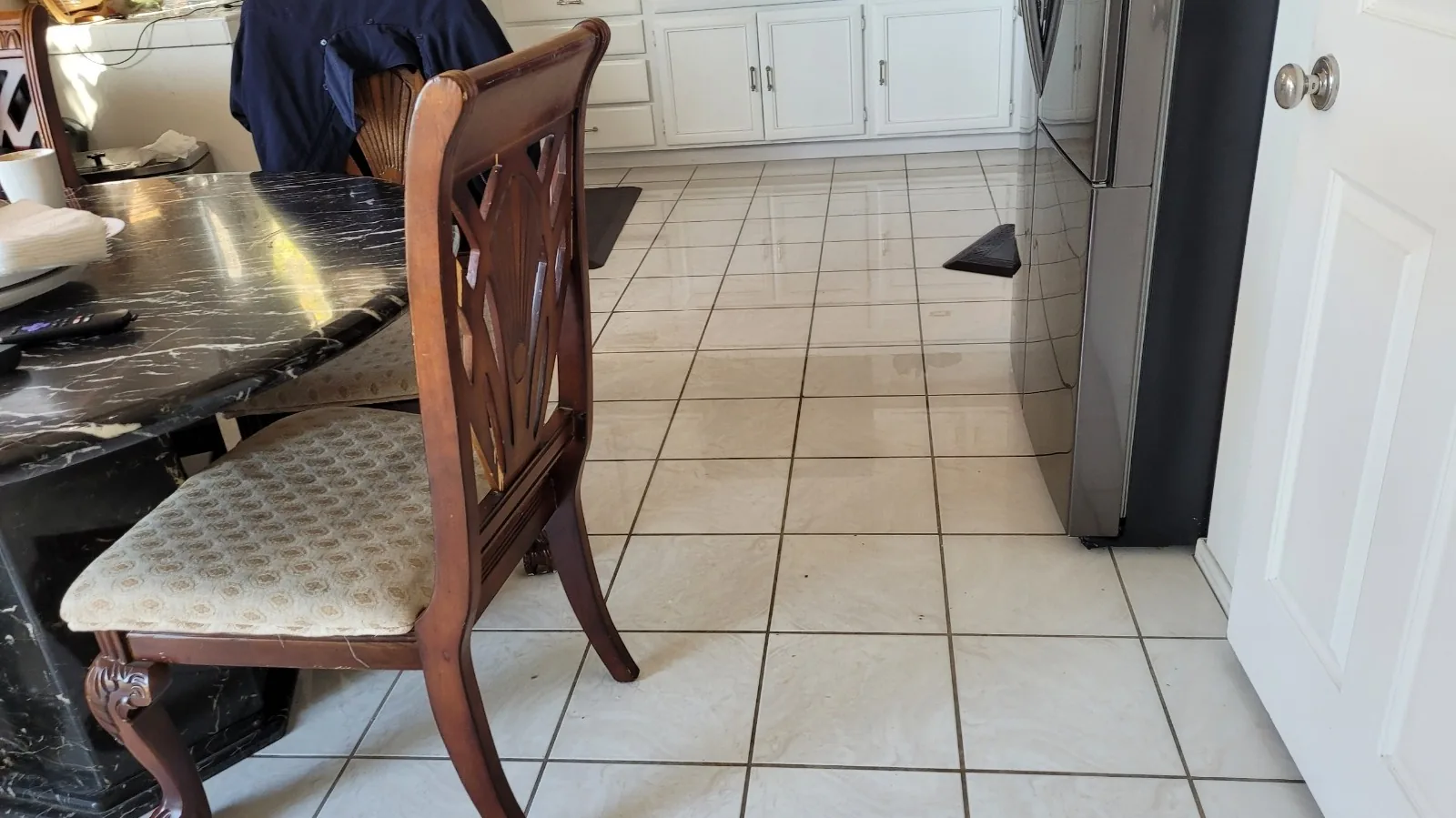
| Refrigerator / ice maker | Plastic or copper water line behind the fridge | Water at the base, cupping hardwood near the fridge | Plastic lines crack with age; braided steel lasts longer. |
| Washing machine | Rubber fill hoses, drain hose, overflowing tub | Damp laundry-room floor, stains on the ceiling below | A burst hose can release several gallons a minute. |
| Water heater | Corroded tank, relief valve, supply fittings | Rust at the base, water in the drain pan, damp garage floor | Tanks usually fail after 8 to 12 years. |
| AC / HVAC unit | Clogged condensate line, cracked drain pan, frozen coil | Ceiling stain under the air handler, water near the furnace | Attic units can soak ceilings before anyone notices. |
Less common sources include water softeners, filtration systems, garbage disposals, furnace humidifiers, sump pump discharge lines and even aquariums. They're covered in the articles below.
Warning signs to check for
- Flooring that is cupped, soft or lifting near an appliance.
- A musty smell in the kitchen, laundry room or garage.
- Stains or bubbling paint on the ceiling under an upstairs laundry room or bathroom.
- A water bill that jumps with no change in use.
- Rust, mineral crust or drips on fittings and valves.
If you find water
- Shut off the water at the appliance valve, or at the main if you can't find it.
- Unplug the appliance or switch off its breaker before touching anything wet.
- Pull it out and look at the floor and wall behind it. Take photos.
- Dry what you can with towels and a wet/dry vacuum.
- Call for moisture readings if water reached flooring, cabinets or drywall.
When it needs a restoration crew
A small puddle you catch the same day usually just needs drying and a repair. Call a crew if the flooring is wet underneath, cabinets or baseboards are swelling, a ceiling below is stained, or you can't tell how long it has been leaking. We measure moisture inside the walls and under the floor, dry the structure with commercial equipment and document everything for your insurer. See water extraction and drying for how that works.
All 15 articles in this topic
2 published · 13 coming soon- What Causes a Dishwasher to Leak and Flood a Kitchen?Coming soon
- Why Do Refrigerator Water Lines Leak?Coming soon
- What Causes a Washing Machine to Overflow?Coming soon
- How Does an HVAC Unit Cause Water Damage?Coming soon
- Why Does an AC Drain Line Clog and Overflow?Read
- What Causes a Water Softener to Leak?Coming soon
- How Does a Failed Ice Maker Line Cause Flooding?Read
- What Causes a Dryer Vent to Leak Moisture?Coming soon
- Why Do Garbage Disposals Leak Under the Sink?Coming soon
- What Causes a Water Filtration System to Leak?Coming soon
- How Does a Failed Pool Pump Cause Water Damage?Coming soon
- What Causes an Aquarium Leak to Damage Flooring?Coming soon
- Why Does a Furnace Humidifier Leak?Coming soon
- What Causes Sump Pump Discharge Line Failure?Coming soon
- How Does a Water Cooler or Dispenser Leak Cause Damage?Coming soon
We find the water, dry the structure and repair it. On site in about 45 minutes, 24/7.