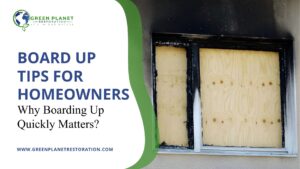
When a disaster hits a property in California, one of the very first steps is making the building safe and secure. Broken windows, open doors, and damaged walls don’t just look bad. They leave the property open to theft, vandalism, rain, wind, and even more damage. This is why boarding up the property is very important.
In many cases, the first few hours after damage determine how much the final repair will cost.
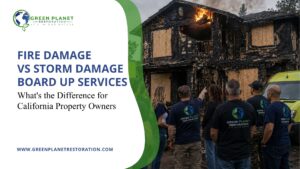
Even though the goal is always the same – temporary protection and stabilization – the way board up is done can change a lot depending on whether the damage comes from a fire or a storm. Knowing the difference between Fire Damage vs Storm Damage Board Up can help property owners make better choices during a stressful time.
What Emergency Board Up Services Are Meant to Do
Emergency board up is a temporary service used after a disaster to secure broken or exposed areas of a building. Crews use exterior-grade plywood, strong fasteners, and proper installation methods to close off damaged openings until repairs can be made.
In California, board up is commonly needed after:
- House or commercial fires
- Wildfires and smoke damage
- Strong windstorms
- Heavy rain and atmospheric river events (like the “Pineapple Express”)
- Trees or debris crashing into buildings
FEMA notes that securing a damaged property quickly can greatly reduce additional losses caused by weather exposure and unauthorized entry. In other words, board up helps stop a bad situation from getting worse.
Do read “Protect Your Property from SEVERE WINDS” a guide from FEMA.
What Makes Fire Damage Board Up Different
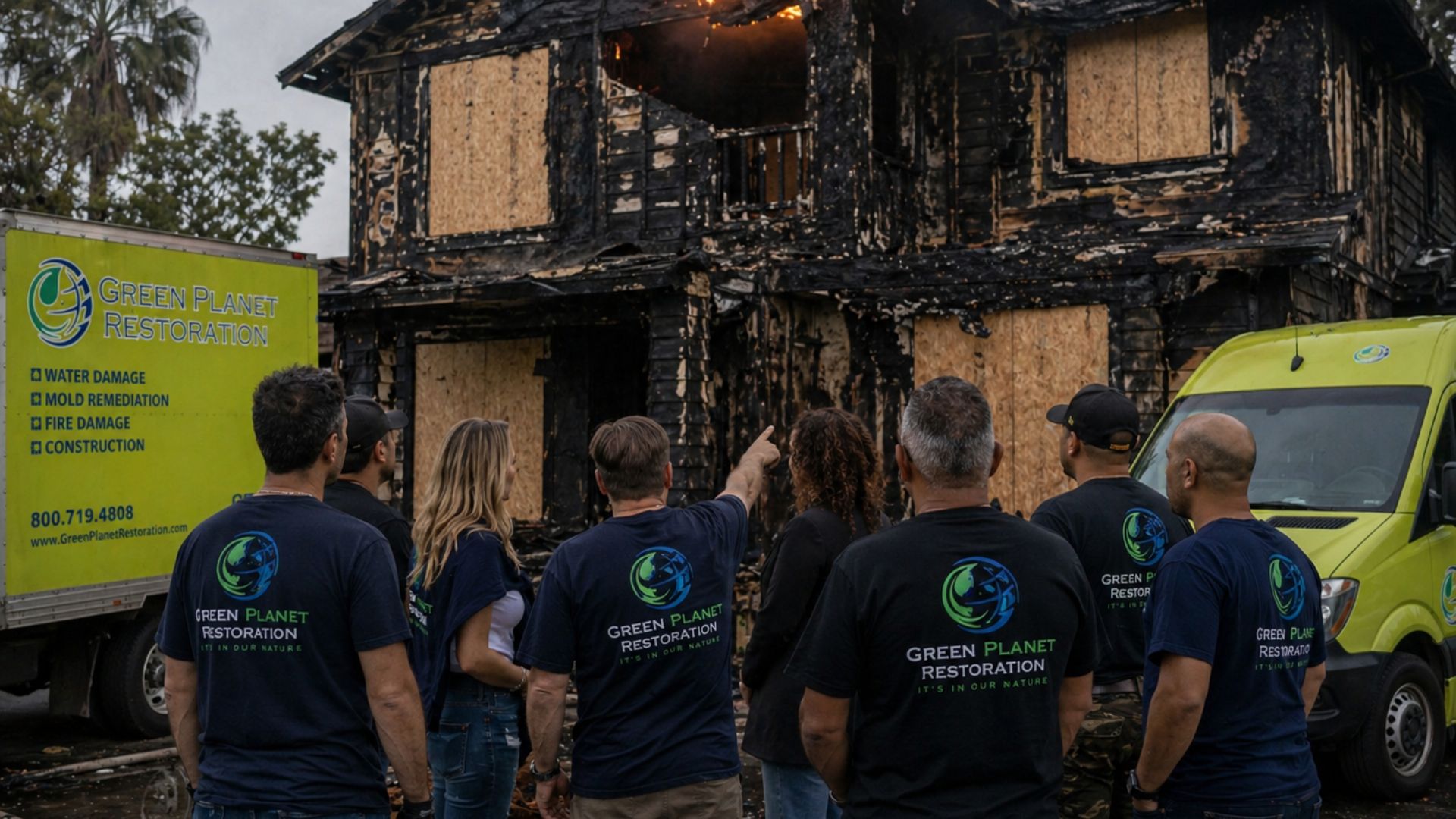
Fire-damaged buildings come with serious safety concerns. Even after the fire is out, parts of the structure may be weak or unstable.
Here are some fire damage board up challenges:
Structural Weakness
Framing, roof decking, and window supports can be weakened by fire. Professional fire damage cleanup and restoration process they do not overstress damaged areas during boarding.
Uneven and Damaged Openings
Fire breaks windows unevenly and warps frames. These openings are rarely straight or clean, so boards usually need to be custom-cut and reinforced.
Soot and Smoke Residue
Smoke and soot can cover surfaces and affect how fasteners hold. Proper techniques are needed to make sure boards stay secure.
Higher Security Risks
After a fire, properties are more likely to be broken into. Fire damage board up focuses heavily on security measures, using thicker plywood and tamper-resistant fasteners.
In wildfire-prone parts of California, such as Los Angeles County, Ventura County, and Northern California foothill areas, post-fire board up is very important because of ongoing wind, ash, and debris risks – while storm damage presents a different set of challenges compared to fire-related damage.
Storm Damage Board Up
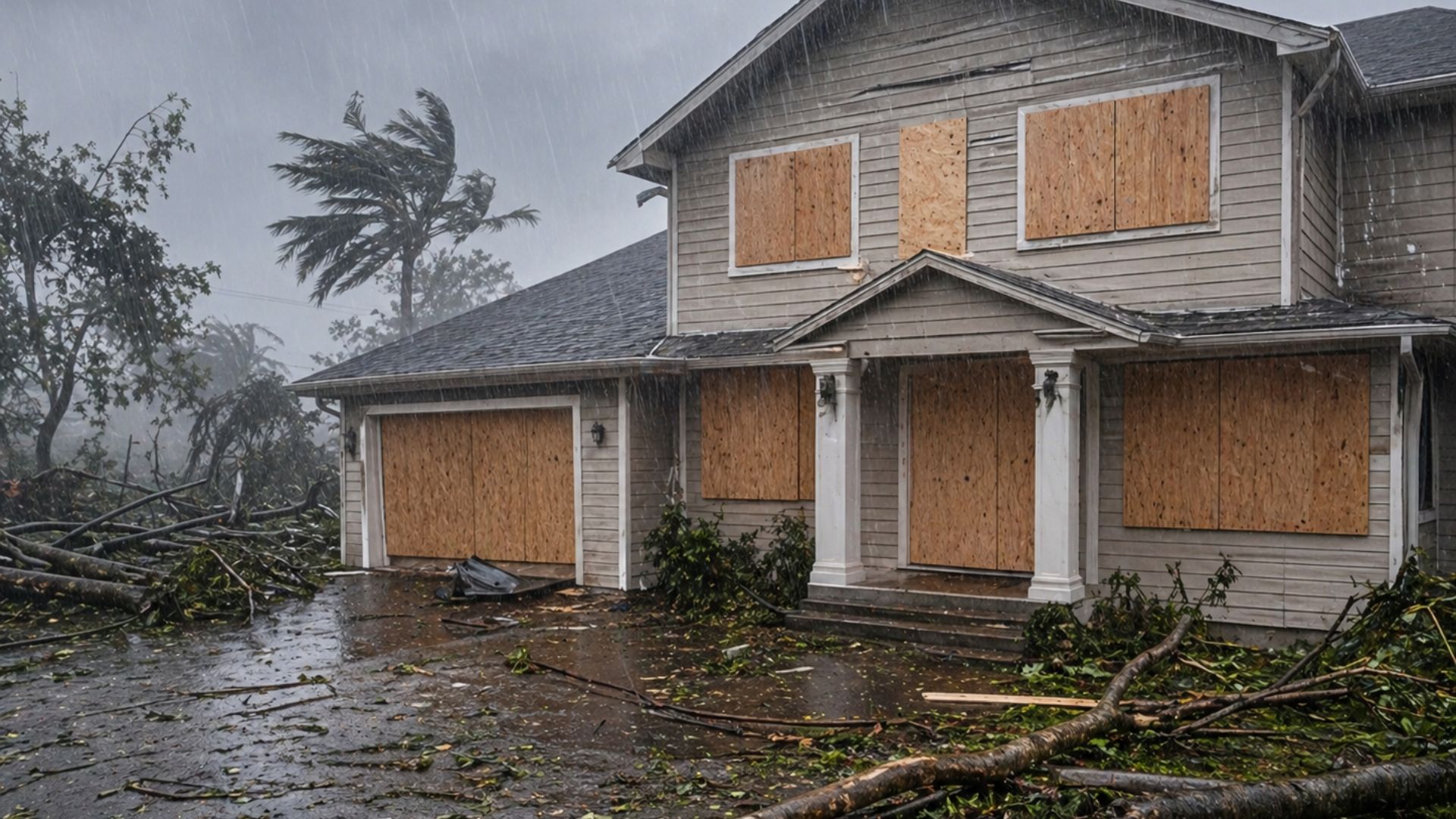
Storm damage is one of the most common reasons property owners need emergency board up services in California. High winds, flying debris, and heavy rain can break windows and doors very quickly.
Cleaner Breaks
Storm damage usually causes more predictable damage, such as shattered windows or holes from debris. This allows storm damage restoration crews to work faster using standard board sizes.
Keeping Water Out
The main goal after a storm is to stop rain from getting inside. Board up is combined with temporary sealing to help reduce water intrusion. In cases where the roof is compromised, tarp installation is often used alongside board up to prevent water from entering through the top of the structure.
Fast Response Matters
During California winter storms and atmospheric rivers, rain can last for days. Quickly boarding up helps prevent interior damage and mold growth.
Temporary Enclosure
Unlike fire damage, storm damage usually does not weaken the main structure. The focus is on closing openings, not reinforcing framing.
Reports from California emergency management agencies indicate that wind-driven rain is a major cause of added damage when broken openings are left unsecured.
Security Methods Used During Emergency Board Up
Blocking the elements is only part of the job. Keeping people out of damaged buildings is just as important.
For fire damage board up, crews use thicker plywood – usually 5/8-inch or more – and anti-pry fastening methods. Fire-damaged properties are targets for theft, including copper wiring and appliances. Doors may also be reinforced with cross-bracing.
For storm damage board up, the focus is on wind resistance. Boards are installed to handle strong gusts and pressure changes. In coastal and high-wind areas of California, fastening patterns are adjusted to match local conditions.
According to the Insurance Institute for Business & Home Safety (IBHS), unsecured openings can increase total property losses due to secondary damage.
Materials Used for Fire vs Storm Board Up
Plywood is the primary material used in both situations, but the grade, thickness, and supporting materials differ based on the type of damage.
Fire Damage Board Up Materials
- Thicker exterior-grade plywood for enhanced security against break-ins
- Heavy-duty fasteners capable of holding into weakened or charred framing
- Additional framing support for broken or warped window and door frames
Storm Damage Board Up Materials
- Standard exterior-grade plywood cut quickly to fit predictable openings
- Corrosion-resistant fasteners suitable for wet and high-moisture conditions
- Temporary weatherproof sealing to minimize water entry at edges and gaps
The right materials protect the building from further damage and make removal easier when permanent repairs begin.
How Board Up Helps Stabilize a Property
Board up does more than cover openings. It helps stabilize the building so restoration work can move forward safely.
- Reduces further weather damage
- Limits access to unsafe areas
- Protects remaining structural components
- Makes inspections and repairs safer
Whether the damage comes from fire or a storm, proper board up helps control repair costs and keeps the recovery process on track.
What to Do Immediately After Fire or Storm Damage in California
Whether the damage came from a fire or a storm, the first hour after it happens is the most important. Here is what to do before anything else:
- Do not re-enter the property until fire services or law enforcement confirm it is safe. Fire-damaged structures can collapse without warning.
- Document all visible damage with photos immediately. This will be the foundation for the insurance claim case.
- Contact your insurance provider right away and let them know whether the damage is fire or storm-related – the type of damage affects how your claim is processed.
- Call a licensed 24/7 board up company immediately. Every hour an opening is left exposed increases the risk of theft, water intrusion, and additional structural damage.
- Ask your board up company for written documentation and photos of their work – insurers require this as proof of loss mitigation.
Choosing the Right Emergency Board Up Service in California
Not all emergency board up services are the same. When your property is already under stress from fire or storm damage, the last thing you want is a temporary fix that doesn’t really protect it.
When choosing a board up company in California, look for a team that:
- Offers 24/7 emergency response, so help is available when damage happens
- Has real experience with both fire and storm-related damage
- Uses exterior-grade plywood and secure installation methods that can handle wind and rain
- Provides clear photo documentation to support insurance claims
- Understands California’s weather, fire risks, and building conditions
Green Planet Restoration knows that fire damage and storm damage require different board-up processes. We use the right method from the start and keep the property secure. Our team prevents additional issues while repairs are being planned.
Final Thoughts
Emergency board up is one of the most important steps after a disaster. Fire damage board up keeps your property secure and stabilizes fire-damaged areas. Storm damage board up is designed to quickly protect your home from rain, wind, and other adverse weather conditions.
When you need board up done the right way, call our damage restoration crew. We are well equipped to handle both fire and storm board up and uses the appropriate approach in each case. We offer 24/7 emergency board up services to secure your property before any more damage happens.
_______________________________
Frequently Asked Questions
Does insurance cover board up services after fire or storm damage?
Yes, in most cases. Both homeowner and commercial property insurance policies in California typically cover emergency board up as part of loss mitigation – it is considered a necessary step to prevent further damage. Your insurer will require written documentation and photos showing the work was completed by a professional crew. Always ask your board up company for a written report before they leave the site.
Is fire damage board up more expensive than storm damage board up?
Generally yes, for a few reasons. Fire-damaged openings are rarely clean or standard-sized, which means boards need to be custom-cut and extra framing support is often required. Security concerns also run higher after fire damage, so thicker materials and tamper-resistant fasteners add to the cost. Storm damage board up tends to move faster and use standard materials, which keeps costs lower – though large-scale storm events can still be significant depending on the number of openings affected.
How long does emergency board up last in California?
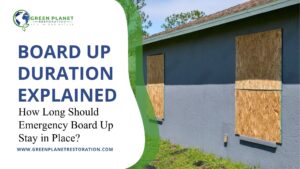
Emergency board up is a temporary measure designed to protect your property until permanent repairs begin. Properly installed exterior-grade plywood can hold up for several weeks to a few months depending on weather exposure and the severity of the original damage. Fire-damaged boards may need earlier inspection because the surrounding structure can shift during the drying and cooling process. Your restoration company will advise on when permanent repairs should begin.