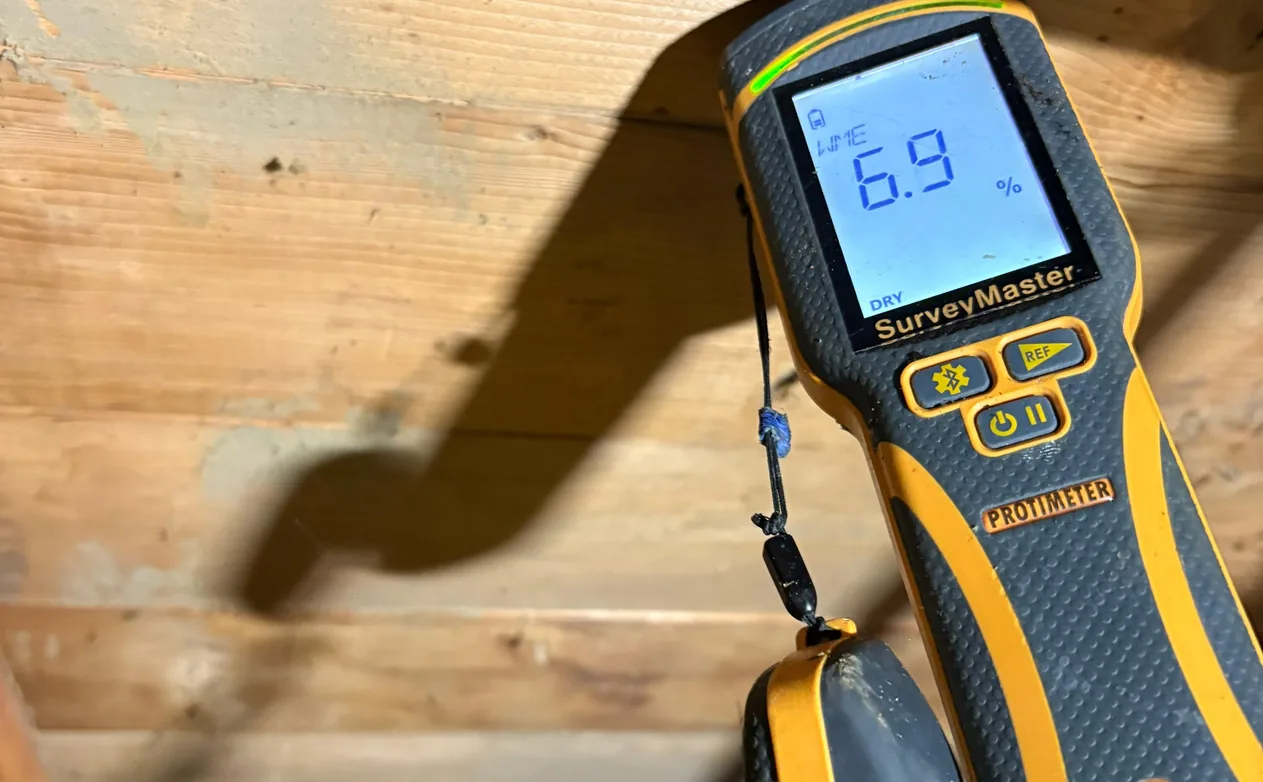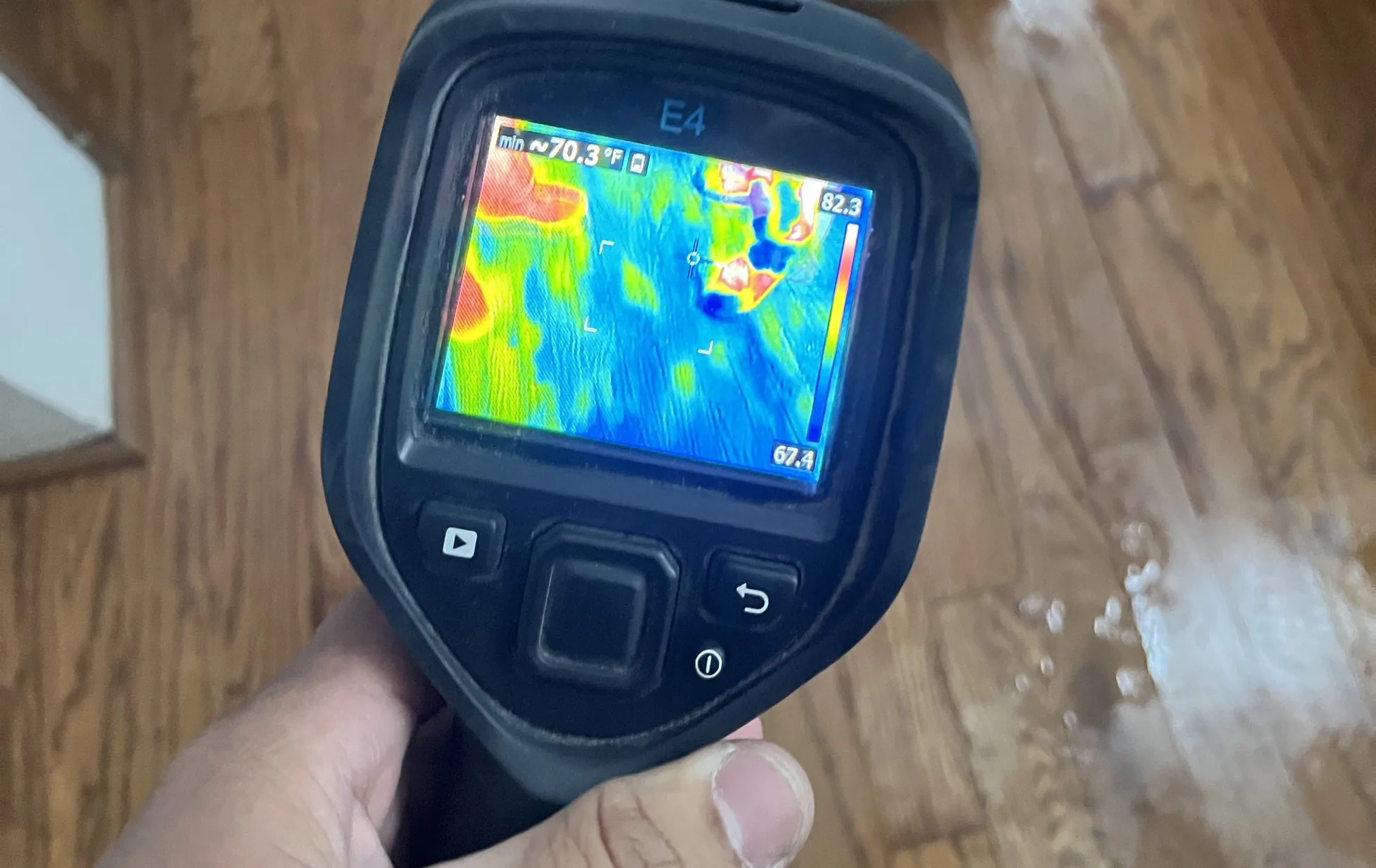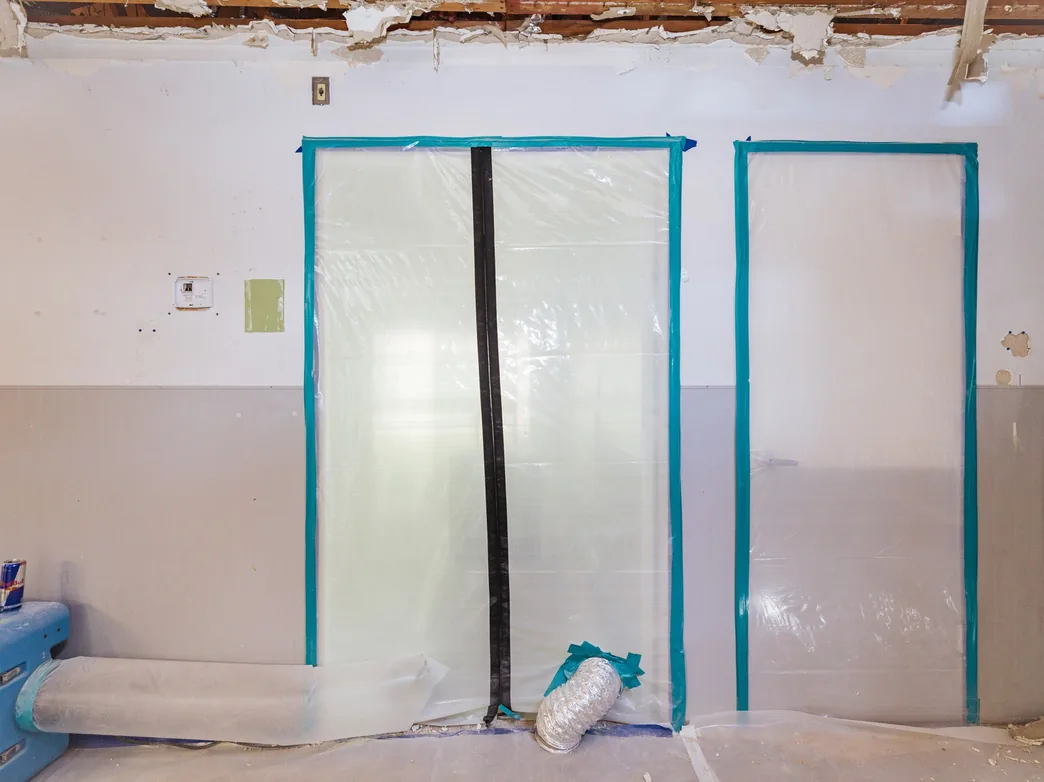
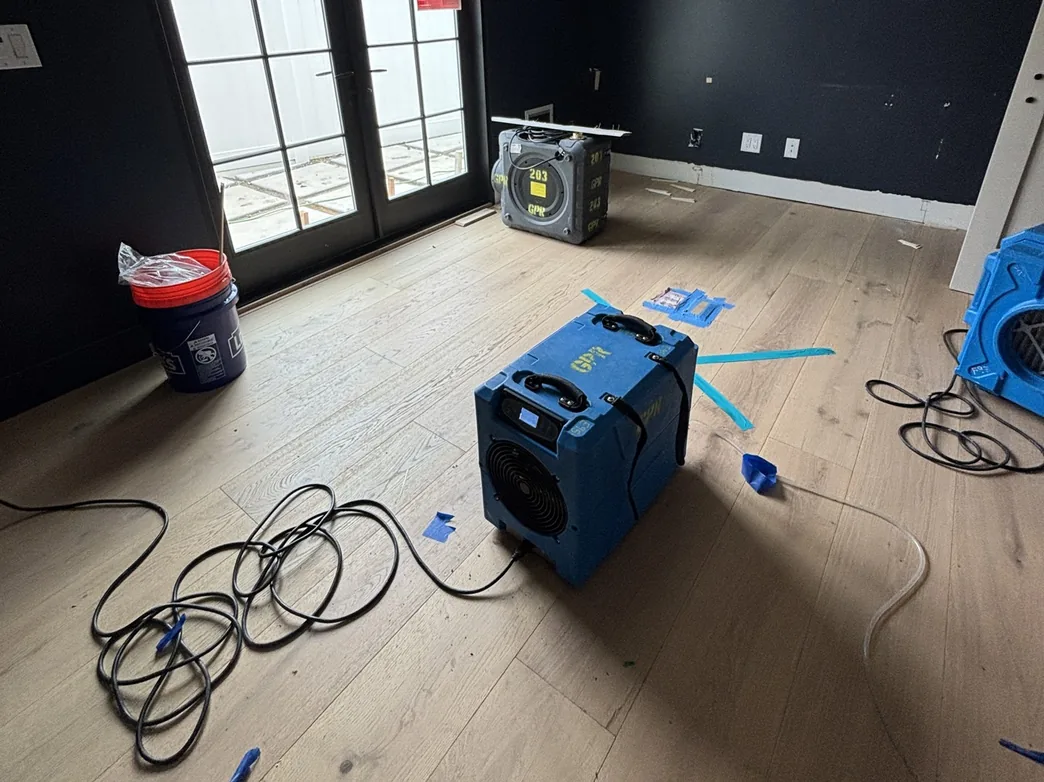
Drying equipment
Specialty drying equipment
Some materials don't dry well with air movers alone. Hardwood, concrete, wall cavities and cabinets get specialty equipment so they can dry in place instead of being torn out.
- Saves floors
and cabinets - Targets hard-to-
dry materials - Tracked with
daily readings
- IICRCCertified firm
- CSLBLicensed contractor
- Bonded& insured
- InsuranceDirect billing
- 24/7/365Emergency dispatch
- TrustpilotRead our reviews
What specialty drying equipment does on a job
Hardwood, concrete and plaster hold water deep inside, and cabinets and wall cavities trap it where moving air can't reach. Standard drying works on the surface. Specialty equipment gets airflow and heat to where the water is actually sitting.
The goal is to save materials that are expensive or hard to replace. When the readings show a material can't be saved, we tell you and explain why before anything comes out.
Types we use
| Equipment | Best for | How it works | Typical setting |
|---|---|---|---|
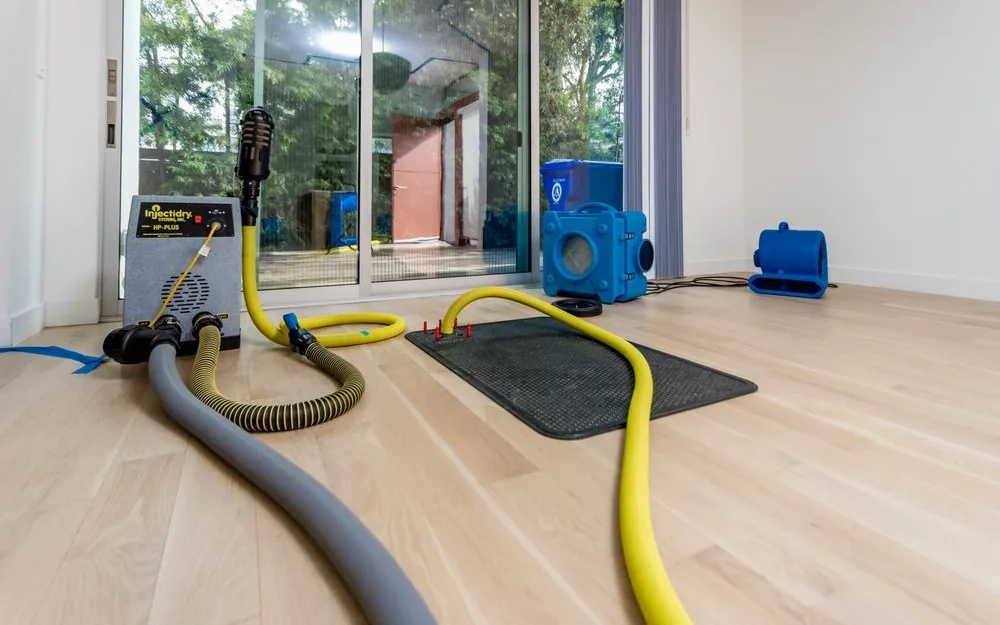
| Floor drying mats and panels | Hardwood floors | Mats sealed to the floor pull air and moisture up through the boards, drying them where they lie. | Hardwood, engineered wood |
| Wall cavity drying systems | Inside walls | Air is injected through small holes into wall cavities, drying the framing and back of the drywall. | Kitchens, bathrooms, closets |
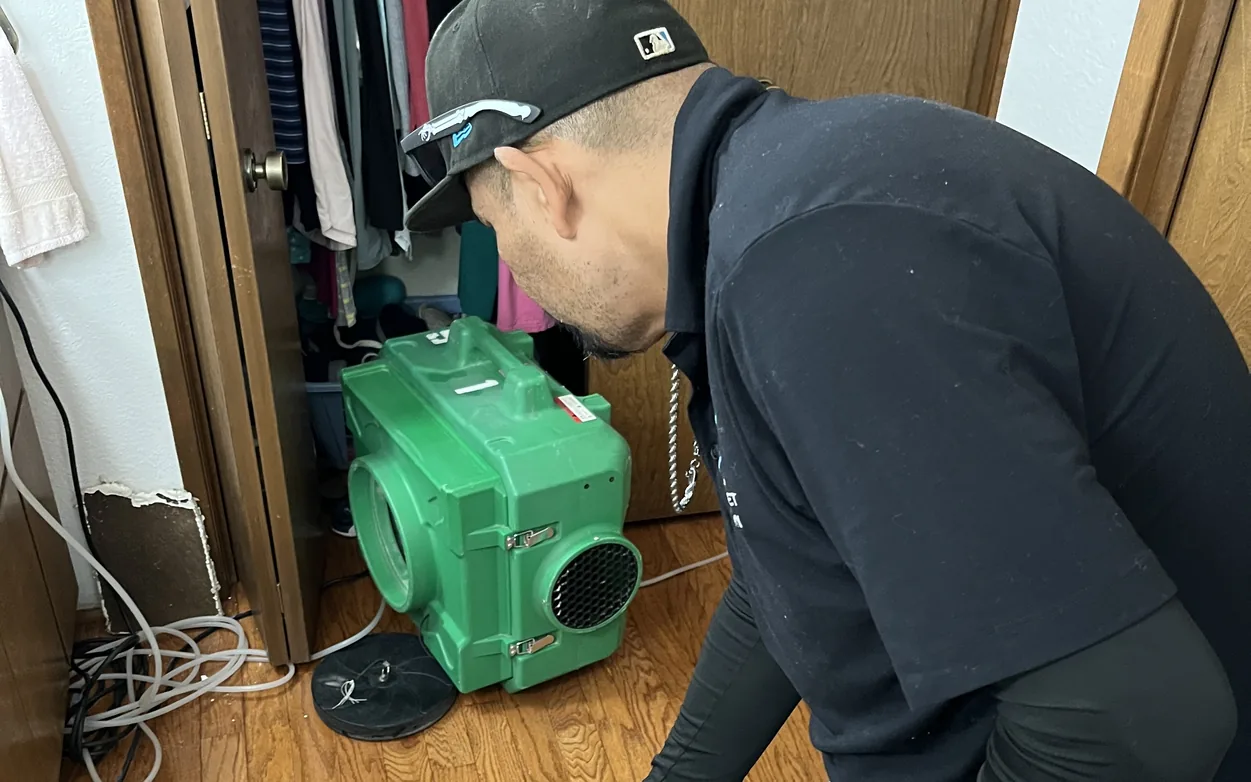
| Desiccant dehumidifiers | Very dry targets, cold spaces | Uses a moisture-absorbing wheel to dry the air further than refrigerant units can. | Hardwood, crawl spaces |
| Heat drying systems | Dense materials | Raises material temperature so water moves out faster, paired with airflow and dehumidification. | Concrete, plaster, large losses |
How we use them on your job
Test the materials
Readings show which materials are wet and how deeply.
Decide save or replace
We explain what can be dried in place and what can't, before work starts.
Set up the system
Mats, injection hoses or heat units go in alongside air movers and dehumidifiers.
Monitor daily
Readings are logged every day, since dense materials dry slowly.
Confirm dry
Equipment comes out when readings meet the dry standard for that material.
Common questions
Can water-damaged hardwood really be saved?
Often, if drying starts quickly and the water was clean. Boards soaked for days or by contaminated water are harder to save.
How long does specialty drying take?
Longer than standard drying. Hardwood and concrete can take a week or more. Daily readings decide.
Why drill holes in my walls?
Small holes, usually hidden behind baseboards, let us dry the inside of the wall without removing the drywall.
Is specialty drying covered by insurance?
When the water damage is covered, drying in place is usually part of the mitigation and often costs less than tearing out and replacing.
The rest of the kit