
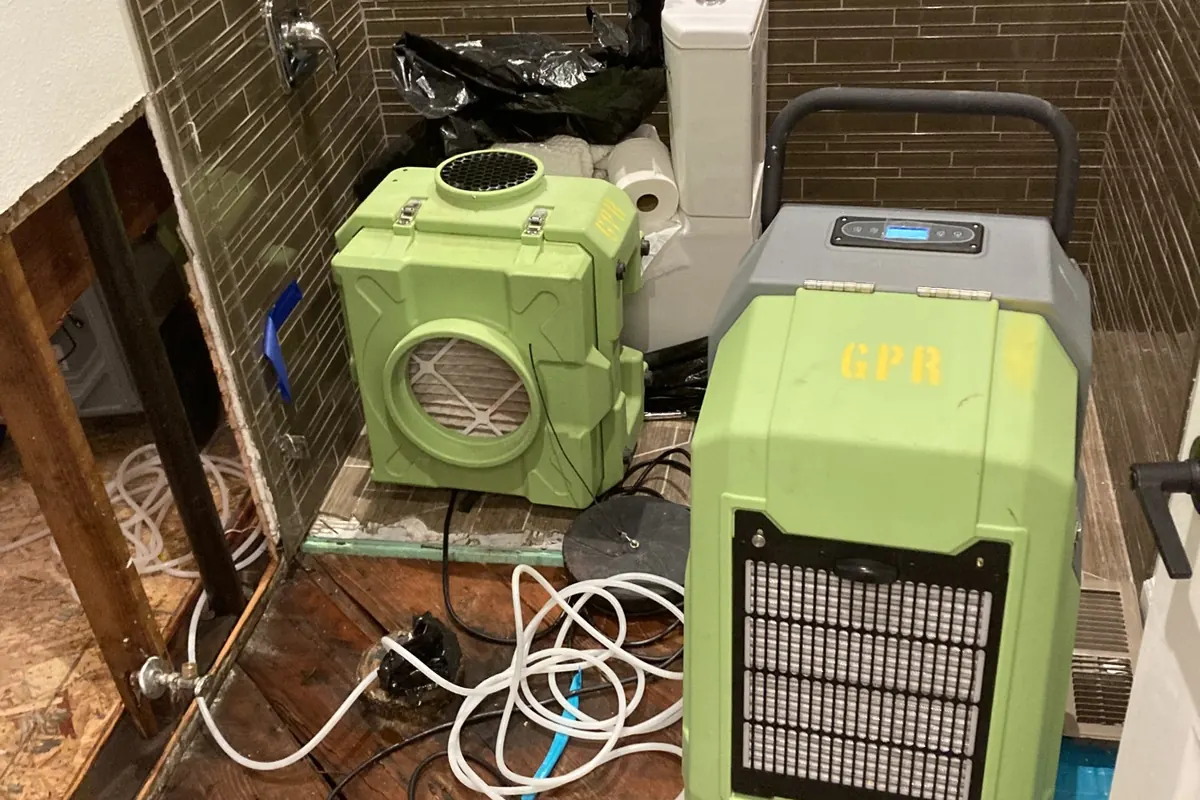
Commercial mold remediation follows the same basic science as a home job: fix the water, contain the area, remove what can’t be cleaned, and dry everything out. What changes is the scale, the number of people involved, and the paperwork, because an office, store or apartment building has employees, tenants and customers breathing the same air while the work happens.
A homeowner deciding on a moldy bathroom wall answers mostly to their own family. A property manager has to think about shared HVAC systems, business hours, employer safety rules and an insurance policy written for a business. Those differences shape how a crew plans the job, how long it takes and who needs to sign off.
If you manage a building, our guide to commercial and multi-family mold covers the bigger picture. This article sticks to the practical side: what a commercial job looks like next to a residential one, and when it’s time to bring in a crew.
The same playbook, used at a different scale
The EPA wrote a separate guide for mold remediation in schools and commercial buildings, and the core steps will look familiar to anyone who has dealt with mold at home. Find the moisture source, fix it, clean or remove the moldy material, and dry wet materials quickly. The agency’s own home guide says a homeowner can usually handle a patch under about 10 square feet.
Commercial buildings rarely give you a tidy 10-square-foot problem. A slow roof leak over a drop ceiling can soak dozens of tiles before anyone sees a stain. A failed condensate line in a rooftop unit can wet the back of a long run of drywall. By the time mold shows up, the affected area is often in the medium or large range, and that’s where the planning gets heavier.
Size decides the containment
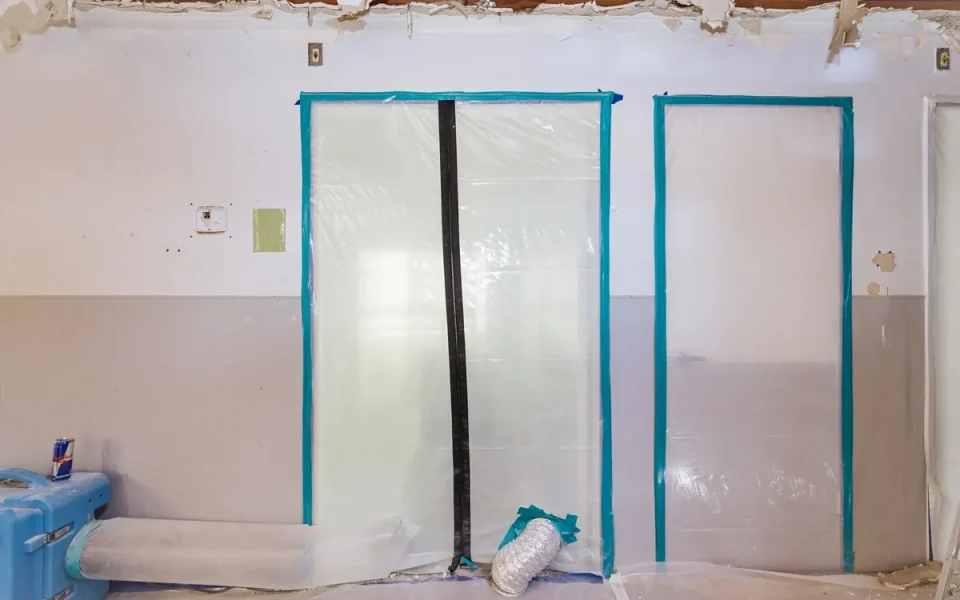
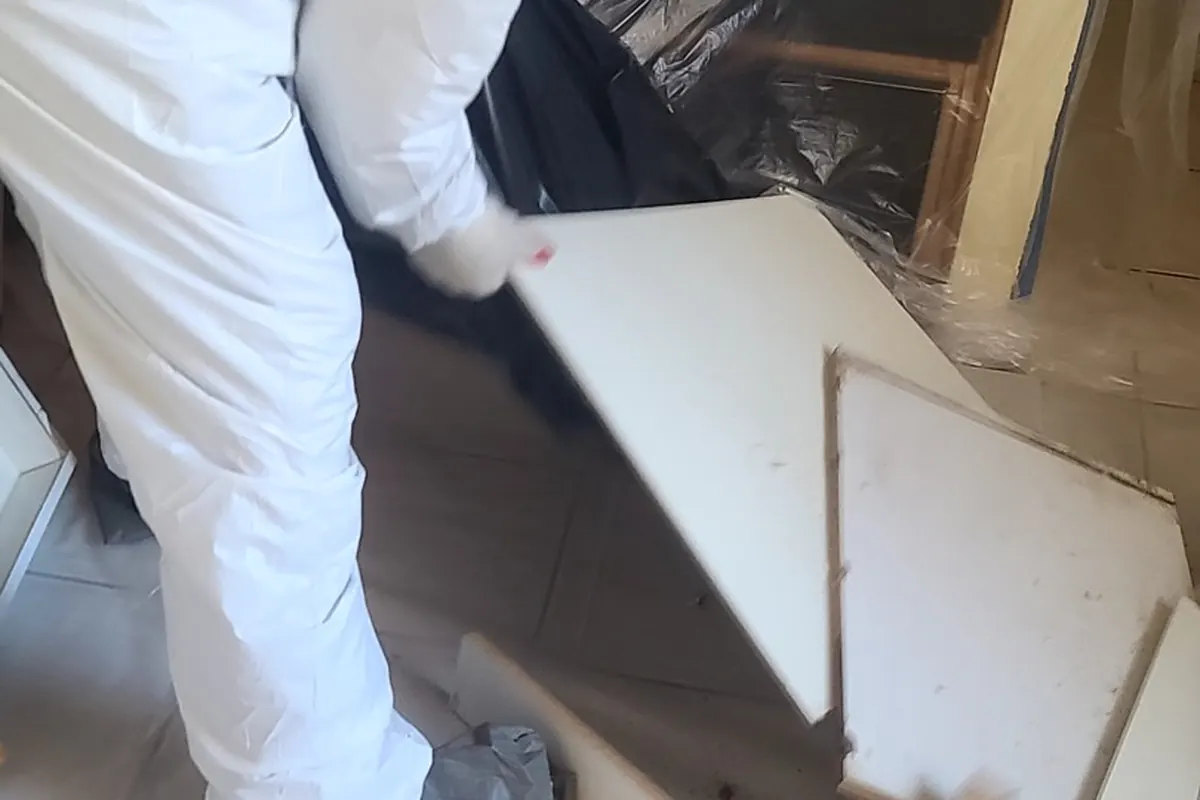
The EPA’s remediation guidelines table sorts jobs by total moldy surface area. Under 10 square feet needs no containment and a minimum of an N-95 respirator, gloves and goggles. From 10 to 100 square feet calls for limited containment. Over 100 square feet, or any job with a real risk of exposing occupants, calls for full containment and full protective gear.
Homes hit the large tier too, usually after a hidden plumbing leak. The difference is that commercial jobs hit it more often, and the containment has to work around hallways, shared walls and people who still need to get to their desks.
Who’s in the building changes everything
In a house, the family can stay with relatives for a few days. In a commercial property, you might have a full office staff, a dentist’s patients next door, or several apartment units above the damage. The EPA’s remediation planning chapter tells building owners to communicate with occupants when mold problems are found, and that large jobs may need temporary relocation of some or all occupants.
That communication piece is one of the biggest practical differences. Tenants want to know what’s happening, how long it’ll take and whether the air is safe. A good plan answers those questions in writing before the first wall comes down.
Employer safety rules apply
When people are working in the building, workplace safety rules come into play. OSHA’s brief guide to mold in the workplace says a remediation plan should cover personal protective equipment, and that anyone wearing a respirator needs to be part of a respiratory protection program. It also points out that there are no federal standards for airborne mold or spore levels, so nobody can hand you a single “safe number” to hit.
The CDC’s National Institute for Occupational Safety and Health links damp buildings to new or worsening asthma, hypersensitivity pneumonitis, hay fever and eczema in workers. That’s the reason a manager can’t treat workplace mold as a cosmetic problem to fix next quarter.
Infographic
How the EPA sizes a commercial mold job
- 1Small: under 10 sq ftNo containment required. Minimum N-95 respirator, gloves and goggles.
- 2Medium: 10 to 100 sq ftLimited containment. Limited or full protective gear, based on professional judgment.
- 3Large: over 100 sq ftFull containment and full protective gear. A remediation manager runs the job.
- 4Mold in the HVACDon’t run the system if you know or suspect it’s contaminated.
Shared air: the HVAC problem homes rarely have
Most homes have one furnace or a split system serving a few rooms. Commercial buildings often have rooftop units, long duct runs and return plenums above the ceiling that serve a whole floor. If mold gets into that system, spores can travel well beyond the original leak.
Both the EPA and OSHA give the same plain instruction: don’t run the HVAC system if you know or suspect it’s contaminated with mold. In an occupied office, that can mean shutting down air conditioning for part of the building, which is why the timing and the containment layout get worked out with the property manager before anything starts.
Scheduling, documentation and testing
Working around business hours
The EPA suggests scheduling remediation during off-hours when the building is occupied, where that’s possible. For a restaurant or medical office, that can mean night work, weekend work or doing the job in phases so one section stays open. A homeowner rarely needs that kind of sequencing.
The paper trail is longer
Commercial jobs usually involve more people who want records: the owner, the property manager, tenants, a commercial insurance carrier and sometimes lenders or attorneys. Moisture readings, photos, the scope of work and disposal records all matter. GPR’s team, led by Efraim Haim, CEO of Green Planet Restoration, documents moisture readings and photos from the first visit so the insurance file and the tenant notices tell the same story.
Testing isn’t always required
People often assume a commercial job starts with air sampling. The EPA says that if mold is visible, sampling is usually unnecessary. It can make sense when the source is unclear, when health complaints don’t match what you can see, or when legal questions are likely. NIOSH makes a related point: finding and fixing dampness does more to prevent health problems than air samples do.
When it stops being a maintenance-crew job
A building’s maintenance staff can often handle a small, dry, surface-only spot under 10 square feet. Call in a remediation crew when any of these are true:
- The moldy area is bigger than about 10 square feet, or you can’t see how far it goes.
- The water came from sewage or flooding.
- Mold is in or near the HVAC system or ductwork.
- Occupants are reporting symptoms, or you have tenants with asthma.
- Insurance is involved and you need clean documentation.
Efraim Haim’s team recommends that managers fix the water source first and keep the affected area closed off until it’s assessed, rather than letting staff scrub or bleach it. The EPA warns never to mix bleach with ammonia-based cleaners, since that can create toxic fumes.
Commercial mold remediation in Santa Clarita
Santa Clarita’s business parks in Valencia, the older storefronts around Old Town Newhall and the newer offices along the valley floor all deal with the same climate. Summer heat keeps rooftop air conditioning running hard, and a clogged condensate line can leak into ceiling cavities for weeks before anyone notices. Winter storms send runoff off the hillsides toward slab foundations and loading areas. Older Newhall buildings add aging plumbing to the mix. If you manage property in Valencia, Canyon Country or Castaic and spot staining or a musty smell, our crew handles mold removal in Santa Clarita for offices, retail and multi-family buildings. Call (661) 464-1251 for a free inspection.
Common questions
Do tenants have to leave during commercial mold remediation?
Not always. Small and medium jobs can often be contained and done after hours. The EPA says large jobs may call for temporary relocation of some or all occupants, depending on where the mold is and how the air moves.
Is there a legal limit for mold in workplace air?
No. OSHA notes that there are no federal standards for airborne mold or spore levels. The focus is on fixing moisture, removing growth and protecting workers during the cleanup.
Will commercial insurance cover mold remediation?
It depends on the policy and on what caused the mold. Sudden water damage is treated differently from long-term leaks. We can help with documentation and insurance billing, but your carrier makes the coverage decision.
Related reading
- Commercial and Multi-Family Mold
- How Is Commercial Water Damage Restoration Different From Residential?
- What Questions Should You Ask Before Hiring a Mold Removal Company?
Ready for a plan? See how our mold removal and testing service works for homes and businesses, then call your nearest branch for a free inspection.
References
- Centers for Disease Control and Prevention. (2026, October 8). Mold in the workplace. National Institute for Occupational Safety and Health. https://www.cdc.gov/niosh/mold/about/index.html
- Occupational Safety and Health Administration. (2013, November 8). A brief guide to mold in the workplace (SHIB 03-10-10). U.S. Department of Labor. https://www.osha.gov/publications/shib101003
- U.S. Environmental Protection Agency. (n.d.). A brief guide to mold, moisture and your home. https://www.epa.gov/mold/brief-guide-mold-moisture-and-your-home
- U.S. Environmental Protection Agency. (2026, February 18). Mold remediation in schools and commercial buildings guide: Chapter 1. https://www.epa.gov/mold/mold-remediation-schools-and-commercial-buildings-guide-chapter-1
- U.S. Environmental Protection Agency. (2026, April 14). Mold remediation in schools and commercial buildings guide: Chapter 5. https://www.epa.gov/mold/mold-remediation-schools-and-commercial-buildings-guide-chapter-5
- U.S. Environmental Protection Agency. (2026, April 29). Mold remediation in schools and commercial buildings guide: Chapter 3. https://www.epa.gov/mold/mold-remediation-schools-and-commercial-buildings-guide-chapter-3
Featured image: Green Planet Restoration photo.
We find the damage, dry or clean the structure and repair it. On site in about 45 minutes, 24/7.

Our articles are written and reviewed by the crews who handle water, fire and mold damage every day across Southern California, Seattle, Miami-Dade and Las Vegas. About us