Are you noticing musty odors, damp walls, or mold that keeps coming back, no matter how you clean? In Seattle’s cool, wet climate, recurring mold is a common and frustrating problem for homeowners. The surface cleaning may remove visible mold, but it does nothing to stop hidden moisture behind walls, under floors, or in crawl spaces.
One solution recommended in Seattle homes is installing a vapor barrier. do vapor barriers actually prevent mold growth, or are they often misunderstood and misused? Let’s break it down.
How Moisture Actually Causes Mold Growth
To understand whether a vapor barrier can be used to prevent mold, it is best to know how moisture gets into a house. There are mainly three types of moisture, and they have varying effects on buildings:
1. Bulk Water
This includes visible water from plumbing leaks, roof damage, flooding, or rain intrusion. Bulk water issues are normally simple to identify and they need to be fixed as soon as possible.
Dealing with leaks or flooding? Read about our water damage restoration process
2. Capillary Water
Capillary moisture moves upwards through porous materials such as concrete, brick, and masonry. It can happen in basements and crawl spaces that lack ground protection.
3. Water Vapor (Most Overlooked)
Water vapor is invisible moisture carried through the air. It can pass through drywall, insulation, and framing materials. Because it is harder to see, vapor moisture is underestimated. But it is one of the most common causes of hidden mold growth.
While bulk and capillary water are noticeable, uncontrolled water vapor can quietly condense inside walls and ceilings. This creates the perfect conditions for mold.
If you suspect hidden moisture, then read our detection methods like those discussed here.
What Is a Vapor Barrier (Technically)?
A vapor barrier, also known as a vapor retarder, is a material designed to significantly slow the movement of water vapor through building assemblies.
Vapor barriers are different from housewraps like Tyvek. Housewraps are breathable, allowing moisture to escape while blocking wind and rain. Vapor barriers, on the other hand, are intended to restrict vapor movement, not allow drying.
Common vapor barrier materials are:
- 6-mil polyethylene sheeting
- Reinforced plastic membranes
- Spray-applied vapor barrier coatings
A vapor barrier is classified by its permeability. Below are the classes it falls in:
- Class I (≤ 0.1 perms): True vapor barriers (e.g., polyethylene plastic)
- Class II (0.1–1.0 perms): Semi-impermeable materials
- Class III (1–10 perms): Vapor-permeable materials (e.g., latex paint)
Most crawl space barriers (like 6-mil polyethylene) fall under Class I, meaning they significantly restrict vapor diffusion.
When used correctly, vapor barriers help protect insulation, framing, and indoor air quality. When used incorrectly, they can trap moisture and make mold problems worse.
How Vapor Barriers Help Prevent Mold
The movement of moisture is a natural process from warm to cold and humid to dry. Vapor barriers are effective in blocking that route of moisture prior to condensation.
Example 1: Interior Walls in Seattle’s Cool Climate
During Seattle’s cool, wet winters (Marine Zone 4), indoor air is typically warmer and more humid than outdoor air.
Without a vapor barrier:
- moisture can move through drywall
- condense on cold exterior sheathing.
- Leads to mold inside walls
Over time, this moisture can soak into insulation and wood framing.
Installing a vapor barrier on the warm side of the wall assembly helps reduce condensation and lowers the risk of mold growth inside the wall cavity.
Example 2: Crawl Spaces and Basements
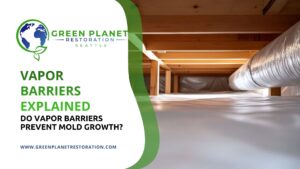
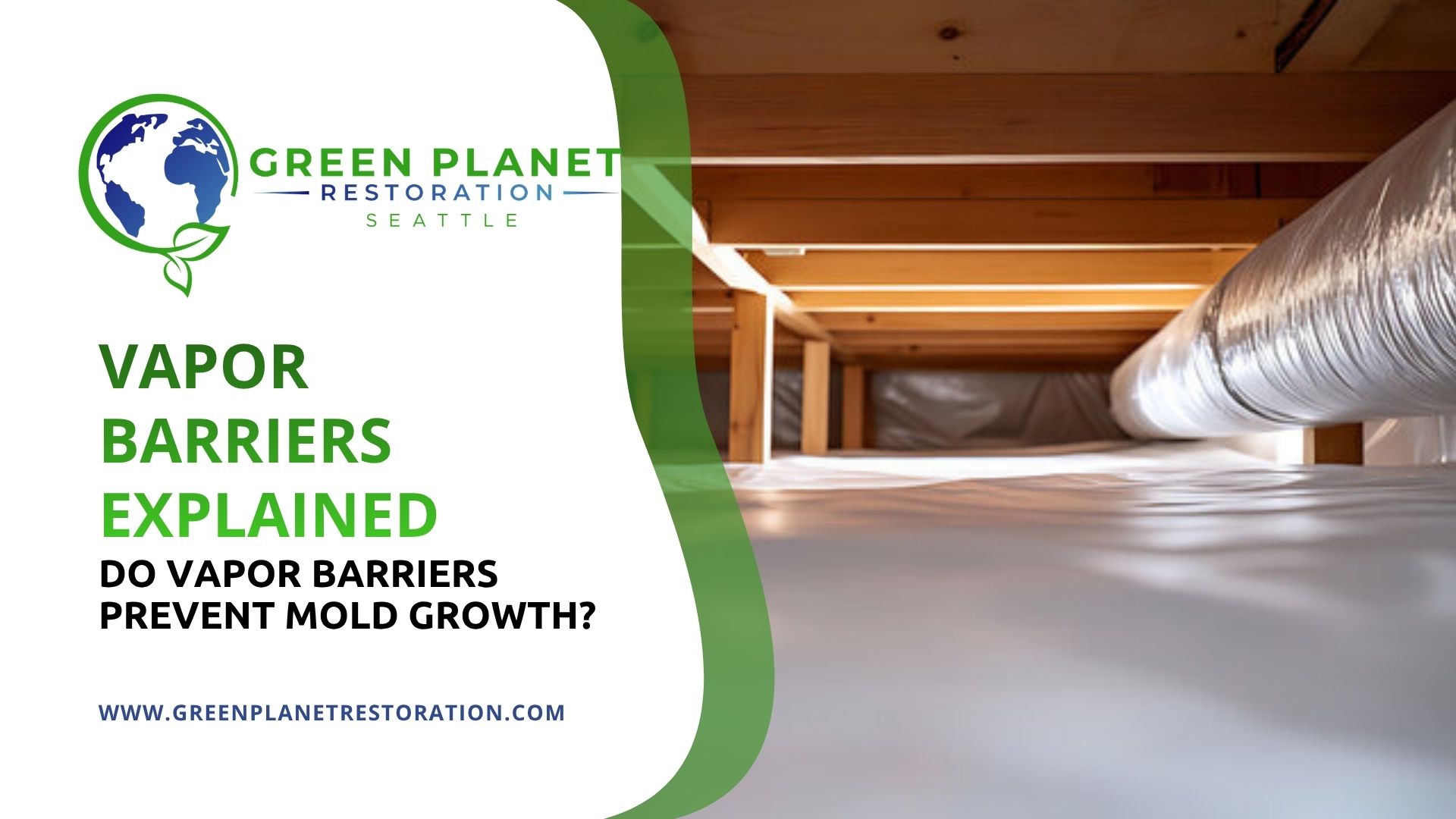
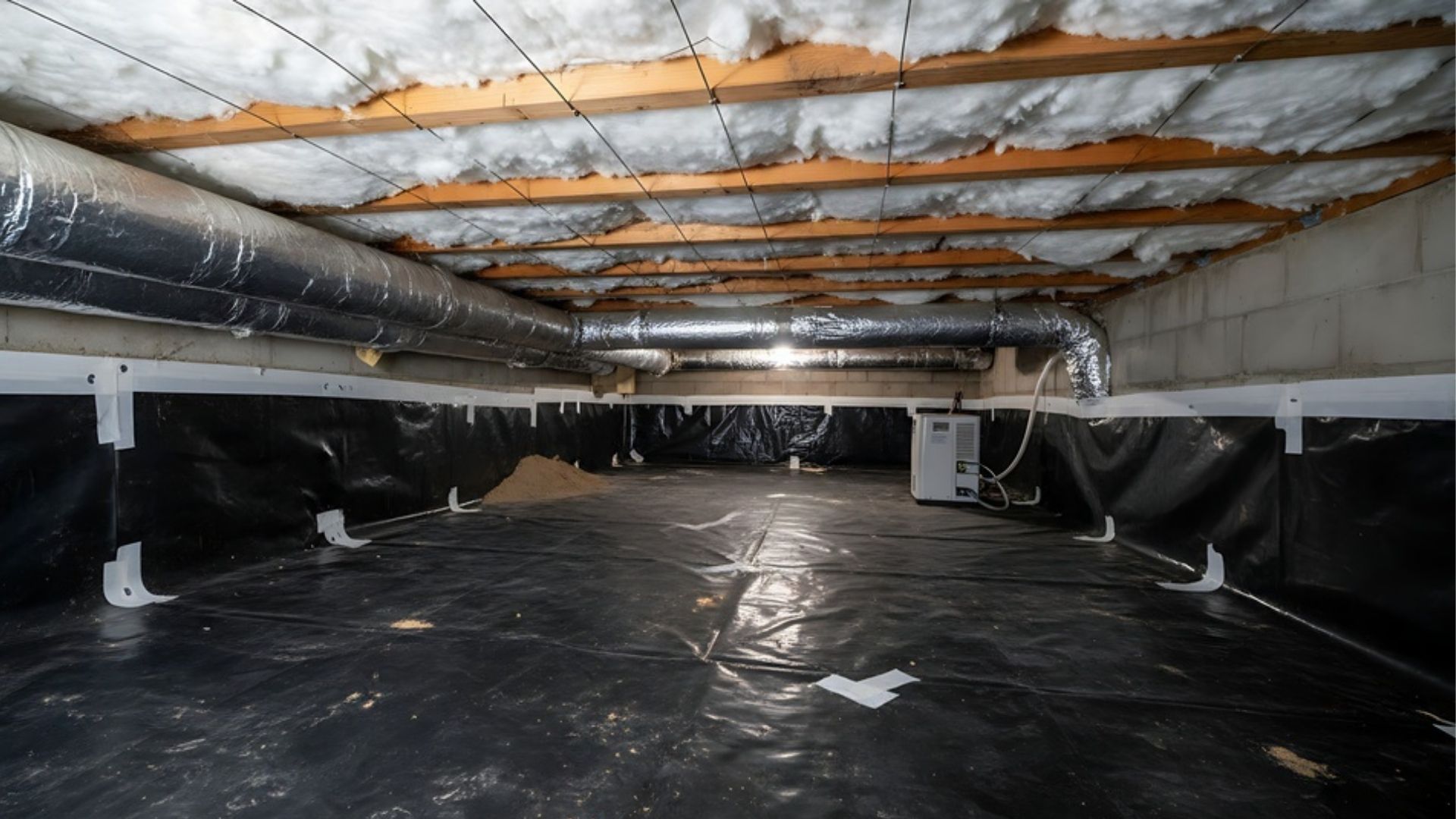
Moisture continuously evaporates from exposed soil in crawl spaces – even in vented systems. A properly installed crawl space vapor barrier placed over the ground prevents moisture from rising into floor joists and insulation. This significantly reduces mold growth, wood rot, and musty odors.
The EPA notes that ground moisture evaporation is a major contributor to indoor humidity levels. Mold can form within 24 – 48 hours when relative humidity exceeds 60%, which is frequently observed in unsealed crawl spaces in marine climates.
Installing a sealed vapor barrier over soil:
- Blocks ground moisture evaporation
- Reduces humidity levels inside the home
- Prevents mold growth on joists and insulation
If your Seattle home has persistent humidity issues, musty odors, or a history of mold, a vapor barrier in a crawl space or basement may be part of the solution. But installation should always be guided by a moisture expert.
If you are already seeing signs of mold, reach out to water damage restoration experts at Green Planet Restoration of Seattle.
Our restoration experts can install crawl space vapor barriers to keep your home dry and healthy until professional mold inspections.
Where Vapor Barriers Should Be Installed
Vapor barriers are not universal. Placement depends on climate and assembly:
- Crawl spaces: Always on the ground (high priority in Seattle)
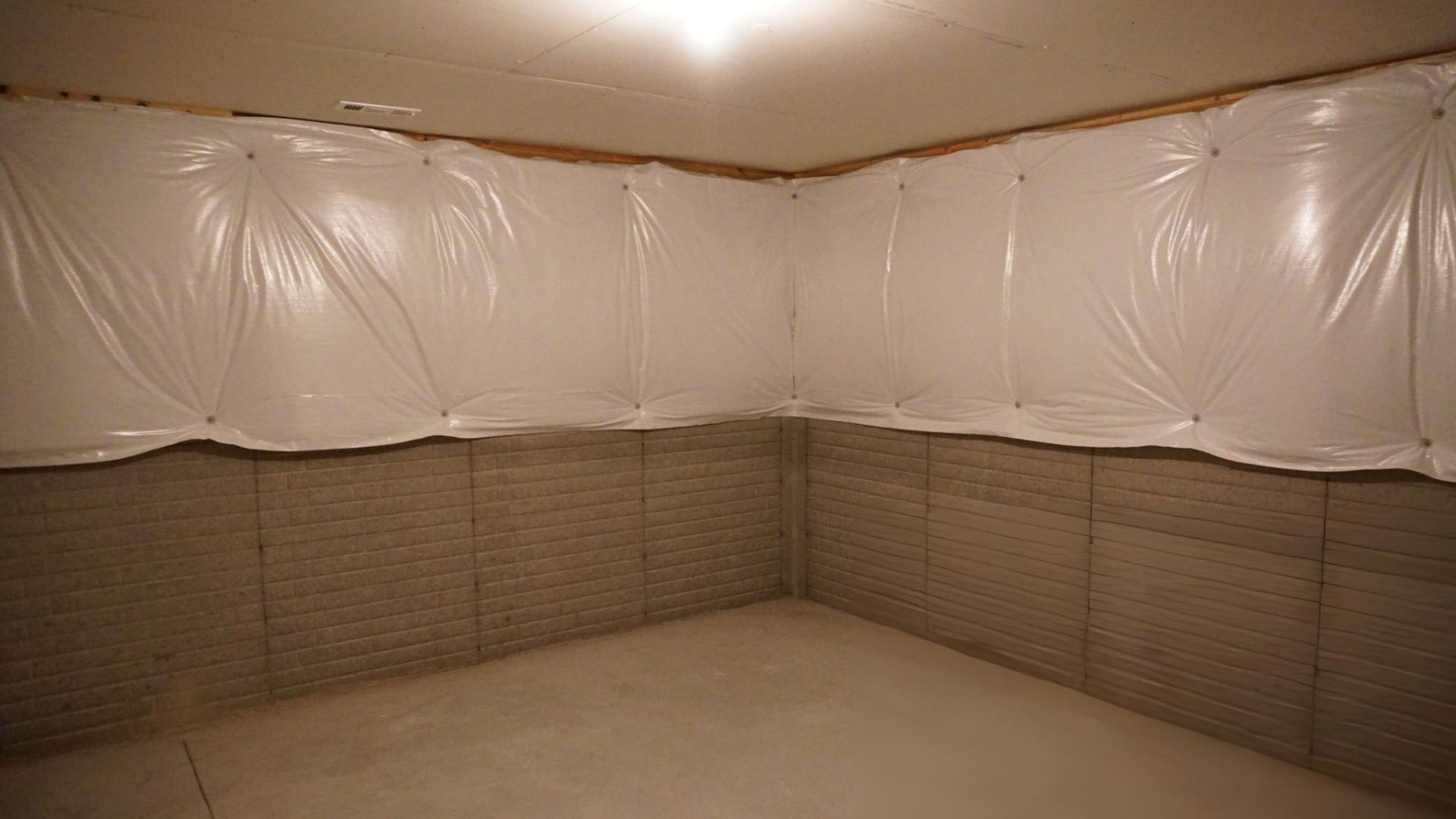
- Basements: Interior walls depending on insulation system
- Walls: Typically on the warm side in colder seasons (but varies in mixed climates)
- Attics: Rarely used as traditional barriers – attic ventilation is preferred
Incorrect placement is worse than no barrier at all.
When Vapor Barriers Fail (Common Mistakes)
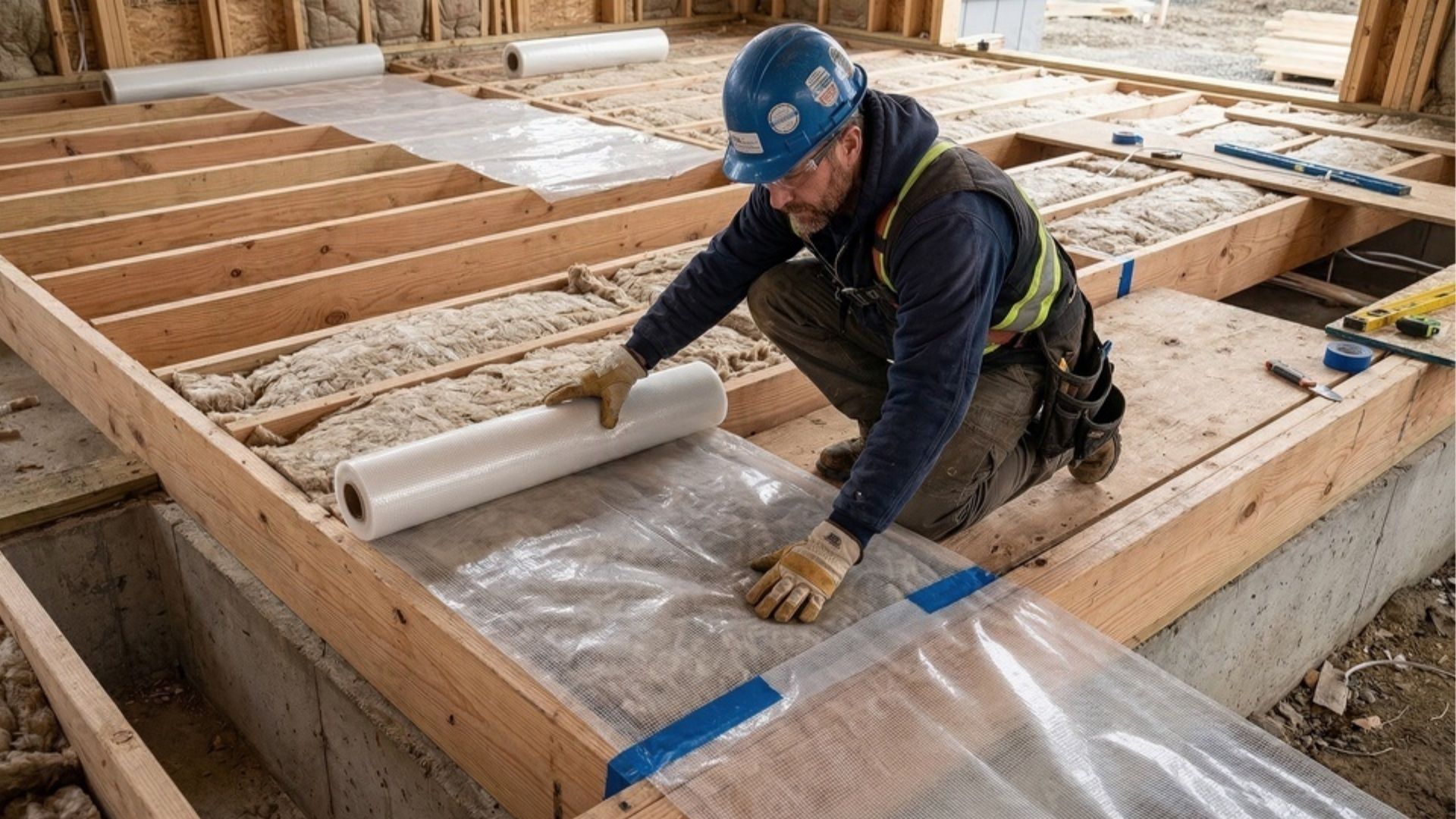
Vapor barriers are not a one-size-fits-all solution. Incorrect installation can trap moisture.
1. Using the Wrong Climate Strategy
In a wet or mixed climate, an interior vapor barrier can be installed to entrap warm and damp air that is outside the walls. As this air cools, it condenses, causing hidden growth of molds.
2. Creating Double Vapor Barriers (Moisture Sandwich)
Installing vapor-resistant materials on both sides of a wall, such as foil-faced insulation on the inside and foam sheathing on the outside, creates a moisture sandwich. If water enters the cavity, it has nowhere to dry, almost guaranteeing mold.
3. Poor Sealing and Penetrations
Open seams, bolts or holes in the wiring and plumbing permit the moisture vapor to bypass the barrier. After being trapped, condensation may take place behind the barrier, where mold develops without being noticed over several years.
Do Vapor Barriers Prevent Mold Growth? (Final Answer)
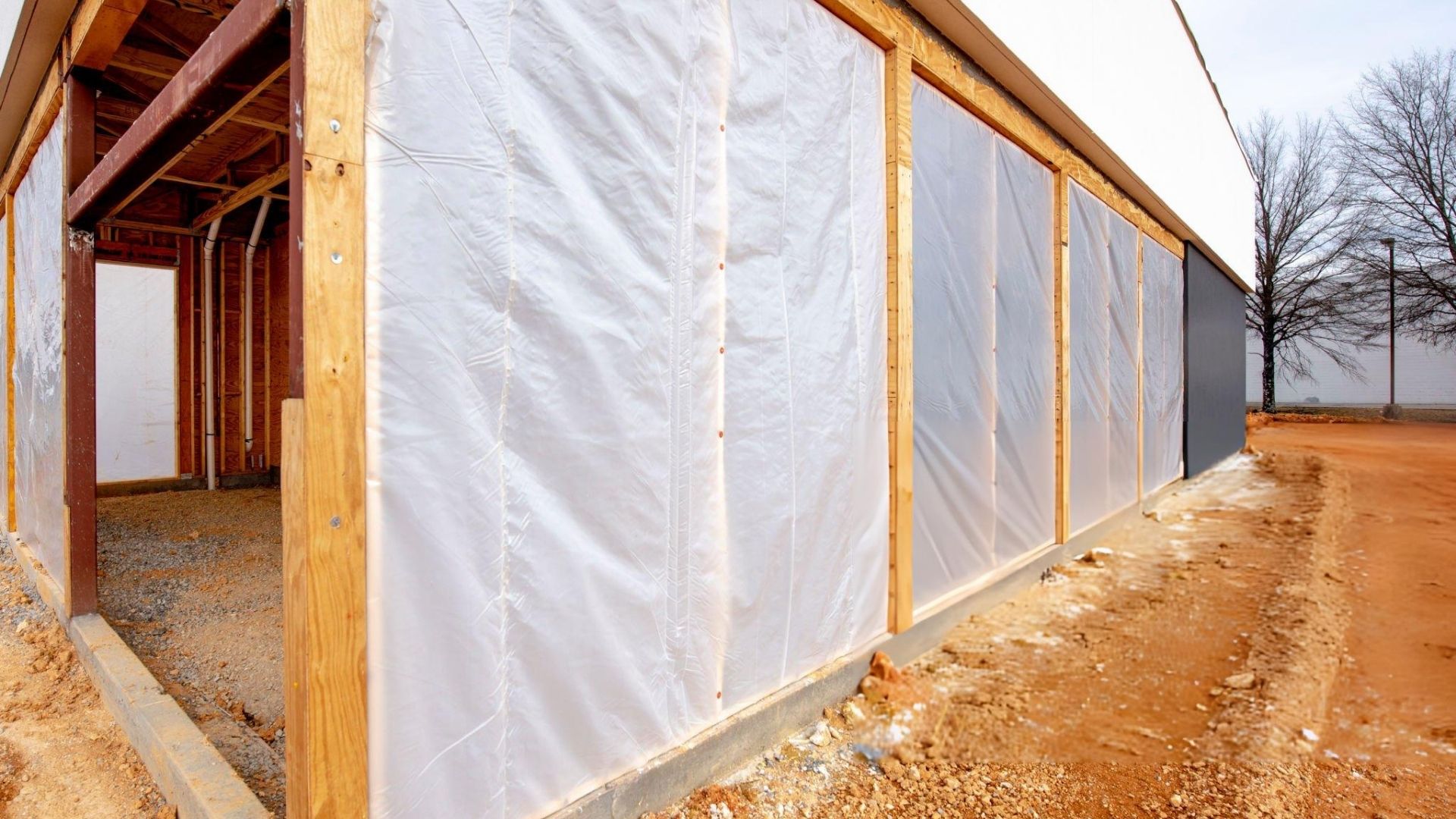
Yes! Vapor barriers help prevent mold growth only when:
- They are correctly selected (Class I, II, or III)
- They are installed in the right location for the climate
- They are properly sealed and continuous
- They are combined with ventilation, drainage, and humidity control
Vapor barriers alone will not fix mold problems. Proper drainage, ventilation, humidity control and professional assessment are also important.
What Research Actually Says
According to the U.S. Department of Energy and EPA:
- Moisture control – not just mold removal – is the primary factor in preventing mold growth
- Mold can begin forming within 24–48 hours in damp environments
- Properly installed vapor barriers can significantly reduce interstitial condensation, a key cause of hidden mold
Additionally, research from Building Science Corporation emphasizes that incorrect vapor barrier placement is one of the most common causes of wall system failure in mixed and marine climates like Seattle.
The takeaway: Vapor barriers work – but only when applied correctly within a complete moisture control strategy.
The Bigger Picture: Moisture Control System
Mold prevention requires a system approach:
- Leak repair and drainage control
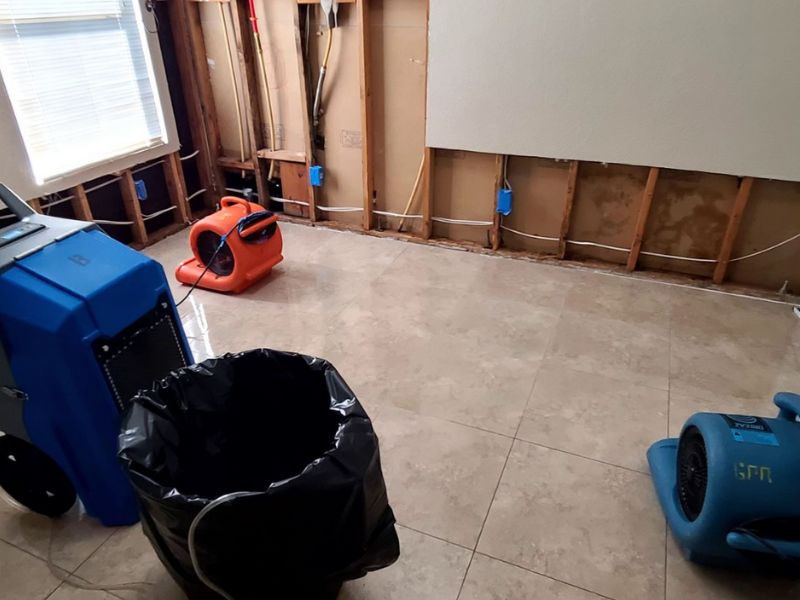
- Structural drying
- Airflow and humidity regulation
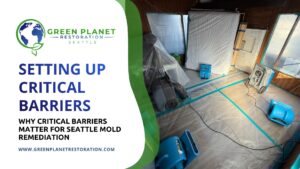
- Proper containment during remediation
- Negative Air Pressure
- Accurate moisture measurement
Air filtration also plays a role. Read about how HEPA air scrubbers capture mold spores
When You Should Consider a Vapor Barrier
You should seriously evaluate installing one if you notice:
- Persistent musty odors
- High indoor humidity
- Condensation on walls or floors
- Mold returning after cleaning
In these cases, surface cleaning alone is ineffective. You may need professional mold testing.
Professional Mold & Moisture Control in Seattle
If moisture is already present inside structural components, simply adding a vapor barrier will not resolve the issue. The underlying source must be identified and corrected first.
A proper assessment typically includes:
- Moisture mapping
- Air quality evaluation
- Source identification
- Targeted remediation strategy
Understanding when to intervene is absolutely critical. This is the point where certified mold testing and reporting becomes necessary. Mold can pose serious health risks if not properly addressed, so it is important to consult with professionals who can provide comprehensive solutions.
Final Perspective
Vapor barriers are neither a myth nor a magic fix. They are a precision tool in building science.
Used correctly, they reduce moisture movement and prevent mold. Used incorrectly, they accelerate hidden damage.
Most homeowners don’t have a vapor barrier problem—they have a moisture management problem.
Call the Restoration Experts at Green Planet Restoration of Seattle.
Green Planet Restoration of Seattle is your trusted partner for water damage restoration Seattle and the surrounding areas. Our licensed and certified team of technicians and contractors restores your property to its pre-state in minimum time. We not only restore water damage, fire damage, and mold infestations but also future-proof your property against other unforeseen disasters.
Call us now at (206) 707-9656 to book an inspection and find out whether a vapor barrier or another moisture control strategy is right for your home.