Storms do not knock before they show up. They arrive suddenly, shake things up, and leave a mess behind. Whether it’s a late-night windstorm, heavy rain, or a burst of hail, your home can take a serious hit. Some damage is obvious, but a lot hides quietly until it becomes a bigger and more expensive problem.
That’s why understanding the most common types of storm damage isn’t just helpful. It’s a lifesaver for your home and your peace of mind. Let’s break it all down in a simple, easy-to-understand way so you know exactly what to look for after a storm rolls through.
1. Wind Damage
Wind may not look dangerous at first, but once it picks up speed, it can damage a home in more ways than you’d expect.
Wind Uplift
This is one of those things you don’t really notice until the damage is already done. Wind uplift happens when strong winds get underneath roofing materials and start tugging them upward. Even a slightly lifted shingle can turn into a leak during the next rainstorm. If the uplift is severe, entire sections of shingles or roofing panels can loosen.
What makes it tricky is that you don’t always catch it from the ground. The roof might look fine, but one quick inspection reveals shingles curling, shifting, or no longer sealed tightly. It’s subtle damage with big consequences if ignored.
Falling Debris
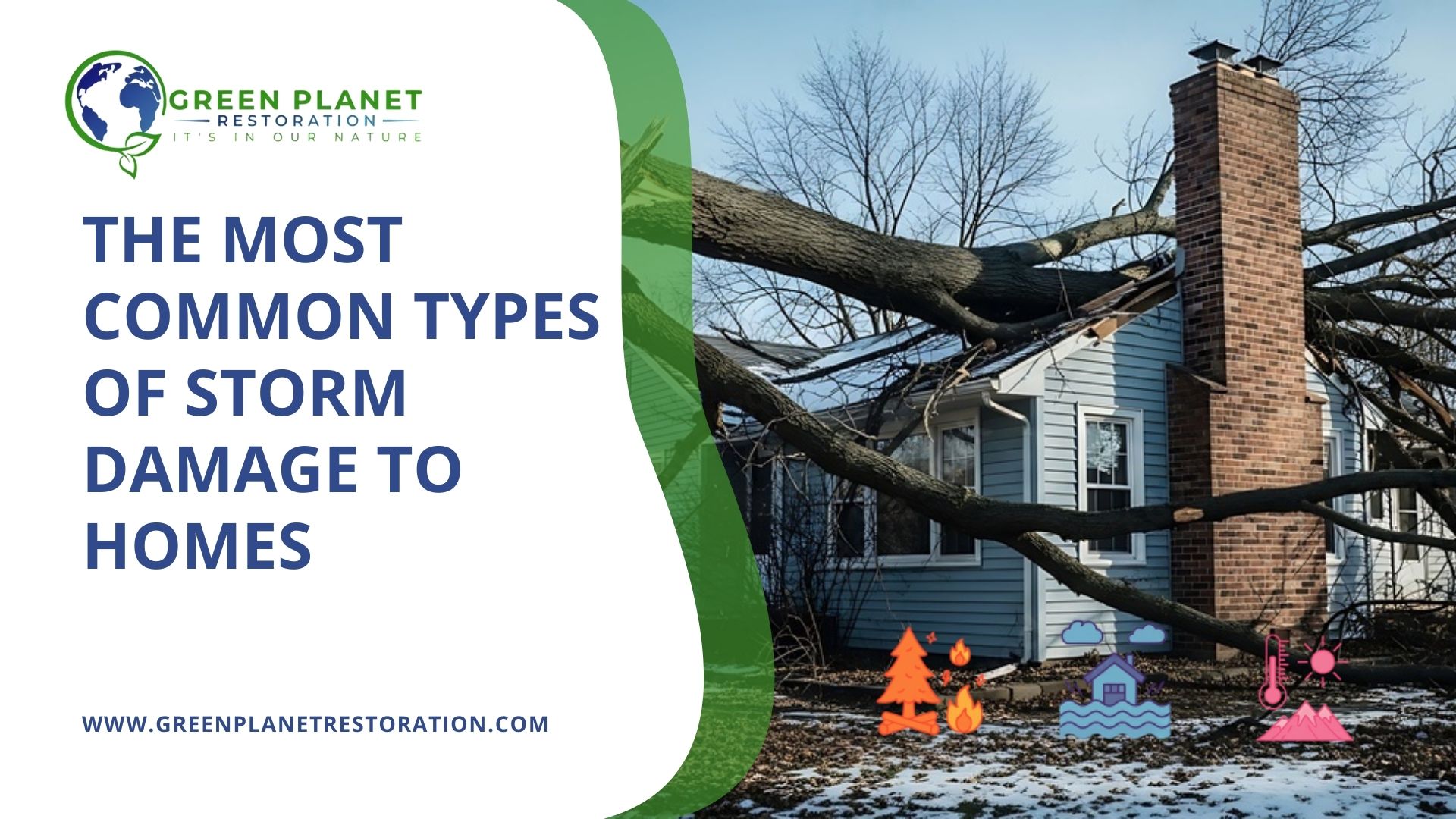
We all love tall trees until a storm arrives. Falling debris is one of the biggest causes of sudden storm damage. Branches, tree limbs, loose outdoor furniture, or even random objects blown by the wind can hit your roof, siding, or windows.
Debris doesn’t have to be huge to cause trouble. Even smaller pieces can scratch siding, break shingles, or dent gutters. The worst-case scenario is when a heavy tree limb crashes down, causing structural damage or even roof punctures.
2. Roof Damage
Your roof deals with everything, from heat to cold to wind, and still stands strong. But when a storm hits, it really gets pushed to the edge.
Roof Punctures
The most serious types of storm damage are roof punctures. These happen when sharp debris, hail, or broken tree branches hit the roof with enough force to break through. A small hole may not seem like a big deal, but it’s basically an open invitation for water to enter your home. And once water finds a direction in, it spreads quietly and quickly.
Punctures also weaken the roof’s structure over time, creating hidden exposure. That’s why homeowners should always check for dents, holes, or soft spots right after a storm.
Shingle Damage and Loss
If your home has shingles, storms can be brutal. Wind can rip shingles completely off, or it can crack them, curl them, or remove the protective granules that help them shed water.
Missing or damaged shingles may look like a cosmetic issue, but they’re actually one of the biggest reasons roofs start leaking. The layer beneath the shingles isn’t designed to handle long-term exposure to rain.
3. Exterior Damage
The outside of your home may look strong, but it takes a beating during every storm.
Siding Damage
Whether your home has vinyl, wood, or fiber cement siding, storms can still harm it. Siding damage usually shows up as dents, cracks, chips, or pieces that look bent or warped. Wind can push siding panels out of place, and debris can hit them hard enough to leave long-lasting marks.
Damaged siding doesn’t just affect curb appeal. It creates tiny openings where rainwater can creep in. Over time, this moisture can lead to mold, rotting, and insulation damage inside the wall.
Gutter Damage
Most people don’t think about gutters until something goes wrong, but storms target them constantly. Gutter damage can happen when wind bends them out of shape or when debris fills them up until they pull away from the roofline.
A damaged gutter stops water from draining properly, which means rain spills over and collects around your home’s foundation. That’s how you end up with basement leaks, soil erosion, or even cracks in concrete surfaces. Just one broken gutter bracket can cause a chain reaction you’ll regret later.
4. Hidden Types of Storm Damage
Heavy rain is one thing, but stormwater finds every weak point your home has, especially after wind or hail has already caused damage.
Water Damage
Water damage is also the number one reason homeowners end up dealing with mold. And mold spreads fast, especially in warm, humid areas.
Water can enter through:
- loosened shingles
- cracks in siding
- gaps around windows or doors
- roof punctures
- damaged gutters
Once water gets inside, it spreads through insulation, walls, and ceilings. And here’s the biggest problem: it doesn’t always show up right away. Sometimes it takes days for stains, dampness, or musty smells to appear.
Hail Damage
Hailstorms may be short, but they can cause long-term headaches. Hail can dent metal surfaces, break shingles, and bruise the layers underneath. Even if the surface doesn’t look too bad, hail can knock off the protective granules on roofing shingles. Without those granules, the roof ages faster and becomes more vulnerable to leaks.
It can also damage your siding, window screens and outdoor air conditioner unit. One good technique to spot hail storm damage is by checking for tiny dents or soft spots on shingles or metal surfaces.
5. Structural And Electrical Damage from Storms
Some storms are strong enough to shake the entire structure of a home. Debris impact or long-lasting wind pressure can weaken beams, break fence panels, loosen railings, or crack exterior walls.
Electrical systems also take a hit during storms. Downed power lines, water intrusion, or lightning strikes can cause electrical surges, damaged wiring, or malfunctioning outlets. These are safety problems and should always be managed by professionals.
How to Protect Your Home from Storm Damage
Storm damage often escalates when homeowners wait too long to get repairs. Although you can’t stop storms from happening, you can reduce damage. Quick action saves money, prevents bigger issues, and keeps your home safe.
These are some steps:
- Get regular roof and siding inspections.
- Clean your gutters before storm seasons.
- Keep trees trimmed so branches don’t fall.
- Secure outdoor furniture and loose items.
- Fix small problems before they turn into big ones.
- Call a professional after any major storm to check for hidden damage.
Also read: 8 Common Causes of Household Water Leaks and Water Damage
Don’t Face Storm Damage Alone
After severe weather, storm damage restoration becomes necessary to inspect the affected areas and restore the property so homeowners don’t have to deal with the aftermath alone. Storm damage restoration San Diego from Green Planet Restoration helps homeowners with these post-storm concerns.
The restoration crew inspects for water damage, soaked insulation, roof leaks, mold growth, and weakened structures. They provide water extraction, structural drying, mold removal, sewage cleanup, and full restoration when needed. A fast response keeps damage from spreading and helps your home stay safe, dry, and stable.
Final Thoughts
Storms will always be a part of life, but handling the result doesn’t have to be stressful. Types of storm damage can hit every part of a home, from the roof to the foundation, and even small damage can grow quickly if it’s not handled in time.
A storm may leave your home shaken, but with the right awareness and quick action, you can keep your house strong, safe, and ready for whatever the next season brings.