
Why Fire Smoke Smell Is So Hard to Remove
During a fire, microscopic soot and volatile organic compounds (VOCs) are released into the environment. These particles do not simply float in the air. They are embedded in almost every surface they touch.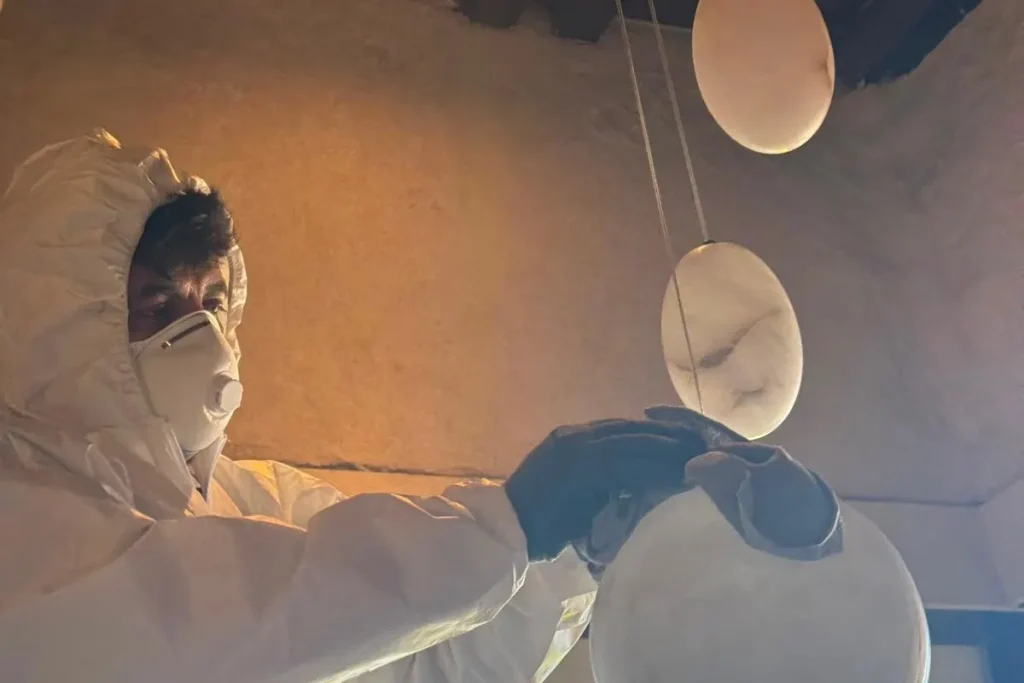
- Walls and ceilings
- HVAC systems and air ducts
- Electrical outlets and wall cavities
- Insulation, framing, and baseboards
Start with Safety and Ventilation
Before any cleaning begins, safety comes first.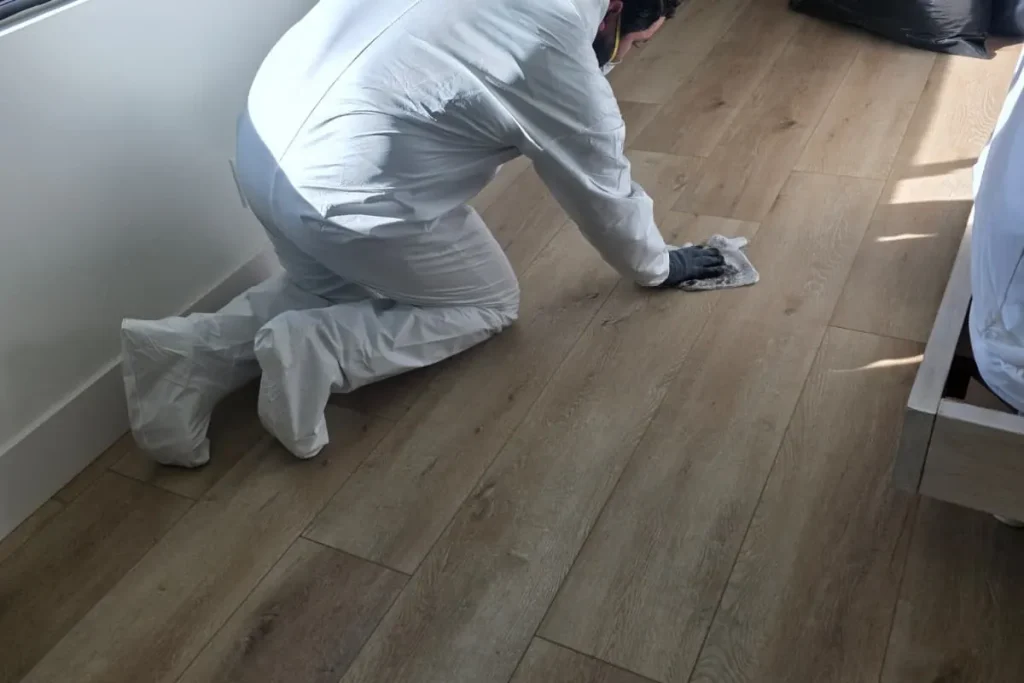
- An N95 mask or higher-level respirator
- Gloves
- Eye protection
- Long sleeves and pants
- Place one fan blowing air out of a window
- Place another pulling fresh air into the home
Safe Methods for Treating Minor Smoke Odor
For light smoke damage, such as a small kitchen fire, basic cleaning methods can help reduce lingering odors.Cleaning Walls and Ceilings
Use a mild, non-scented cleaner or a simple vinegar-and-water solution. Avoid scented products, as they only mask odors instead of neutralizing them.Cleaning Hard Surfaces
The smoke residue sticks to cabinets, countertops, doors, trim and light fixtures. Cleaners designed to eliminate soot and VOC residue are needed because standard household cleaners are not always effective.Dry-Cleaning (Chemical) Sponges
Specialized soot sponges can remove dry soot without water, making them ideal for painted walls and ceilings. They help prevent soot from being smeared deeper into surfaces. Even if the fire was limited to one room, every area of the home should be addressed. Smoke travels far from visible damage and settles in multiple spaces. These methods can be effective for minor smoke exposure, but they are not appropriate for moderate to severe fire damage.When Professional Odor Removal Is Necessary
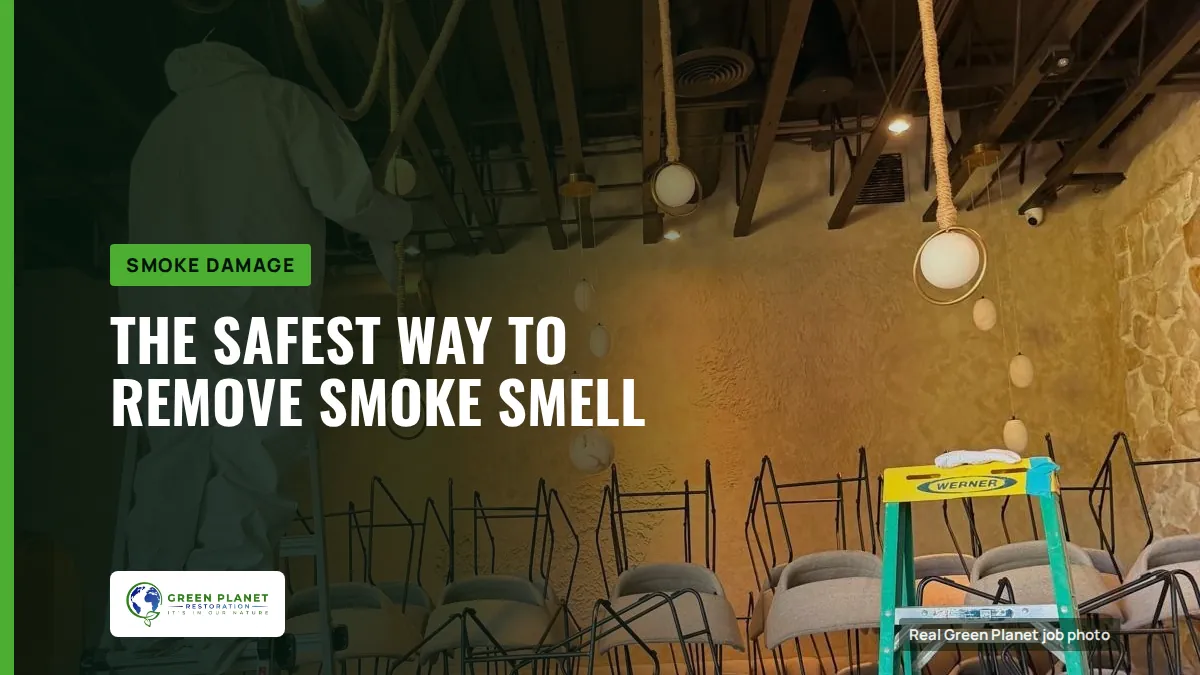
If smoke odor returns after cleaning, or if the HVAC system was exposed, professional restoration is very important. Professional fire damage restoration does more than surface cleaning. It focuses on neutralizing odor at the molecular level and addressing hidden contamination. Our modern and industry-approved methods safely and permanently get rid of the smoke odor.How Green Planet Restoration Removes Fire Smoke Smell
Green Planet Restoration is a trusted fire damage restoration company serving Seattle and the surrounding areas. Our licensed and certified team members apply modern equipment and the safest techniques to restore homes completely.Smoke Odor Neutralization
We utilized professional odor removal technologies such as:- Thermal fogging, which releases deodorizing particles that move the same way smoke does, reaching deep into cracks, pores, and cavities
- Hydroxyl generators are a safe and effective option that neutralizes odors without leaving harmful residues
Soot and Residue Removal
We remove soot from walls, ceilings, framing, and hard-to-reach structural areas using specialized cleaning agents and methods for fire-damaged materials.Air Duct and HVAC Cleaning
Most of the time, smoke moves through a building via the ductwork. We fully clean HVAC systems using industrial vacuums, agitation tools and approved treatments to remove soot and odor-causing particles and improve indoor air quality.Floor and Carpet Restoration
Carpets, tile, and wood floors are professionally cleaned and restored when possible. In cases where materials are more damaged for saving, we provide expert recommendations for replacement.Contents Cleaning and Restoration
Furniture, electronics and personal belongings are carefully cleaned using material-specific methods to remove smoke residue and preserve their condition.Structural Cleaning and Decontamination
When necessary, we use the latest techniques such as pressure washing, media blasting, or targeted chemical treatments to treat smoke damage on structural components.The Safest Way for a Smoke-Free Home
Proper fire smoke odor removal protects your health, your home, and your comfort of mind. Green Planet Restoration handles the entire fire recovery process, from odor removal to full reconstruction. We make your home feel clean, safe, and comfortable again without shortcuts. If smoke odor is lingering after a fire, contact us today to learn how our professional fire and smoke damage Seattle restoration services can help. ___________________Related Posts
Top Tips for Smoke Protection: Protecting Your Home and Health During and After Wildfires 10 Tips for Choosing the Right Disaster Restoration Company The Role of Restoration Services in Mitigating Climate-Related Disasters Step-by-Step Guide to Rebuilding a Fire-Damaged House The Difference Between Professional Mold Testing, Mold Inspection, and DIY Mold Test Kits Smoke Damage Restoration Process Maintaining Good Indoor Air Quality After a Fire Incident Top 10 Common Causes of Fire in Homes What Are the Five Major Elements of a Typical Disaster Recovery Plan? What Is the Fire Damage Restoration Process? What to Expect During a Reconstruction Project How HEPA Air Scrubbers Capture Mold Spores in Water-Damaged Properties How Negative Air Pressure Prevents Mold from Spreading During Restoration Ideal Air Mover Placement: Where to Place Air Movers for the Fastest Drying After Water DamageProperty damage right now?
We find the damage, dry or clean the structure and repair it. On site in about 45 minutes, 24/7.

Written by the Green Planet Restoration team
Our articles are written and reviewed by the crews who handle water, fire and mold damage every day across Southern California, Seattle, Miami-Dade and Las Vegas. About us